


[F]or Michael Wood-Lewis, whose 16-year-old son died in 2016, the removal of a tax deduction for medical expenses meant his family suffered a secondary blow after spending down their college savings to help another child who had health problems.
Wood-Lewis testified before the Legislature’s Senate Finance Committee Tuesday on the topic of S.126, a bill that would restore a health cost tax deduction that lawmakers removed when they were rewriting state tax code in 2017. Most taxpayers didn’t hear about the removal of the deduction until they started doing their 2018 taxes, when some found out their Vermont taxes would double or triple.
In the last several weeks, these taxpayers, as well as tax preparers and advocates for the poor and for health care users, have been asking lawmakers to restore the deduction.
Wood-Lewis, a Burlington resident who founded the Front Porch Forum social media site, lost his oldest son to cerebral palsy. Then another child’s illness cost the family $150,000, he said, expenses that put a large dent in the family’s college savings and retirement funds.
“As we struggled with this, we were shocked when the state changed the tax law and charged us additional $7,000 in 2018 taxes. We couldn’t write off an unexpected one-time $150,000 medical expense as was possible for Vermonters in previous years,” he said. “I ask you to fix this tax law so it stops kicking Vermont families who have already been knocked down by unexpected medical expenses.”
Lawmakers in 2017 removed all itemized deductions and replaced them with one standard deduction. Another deduction that surprised some taxpayers was for charitable donations, and that prompted testimony last year, although the deduction was not restored.
But most people who have spoken up on the tax changes this year said they didn’t hear about the removal of the health care deduction until their accountants let them know their tax bills would be higher than expected. In response, Rep. Kate Webb, D-Shelburne, sponsored a proposal to restore the health expense tax deduction. The House Ways and Means Committee took testimony on that bill but didn’t vote to send it on for consideration by the full House.
The latest proposal, introduced by Sen. Michael Sirotkin, D-Chittenden, would also restore the health expense deduction. After hearing testimony on Tuesday, Sen. Ann Cummings, chair of the Senate Finance Committee, said she supports the measure.
“It’s my intention to find a way to restore this,” Cummings, D-Washington, said Tuesday.
The fiscal impact of the tax change outlined in Webb’s bill was originally estimated at about $5 million. That estimated impact has been lowered to between $3 million and $4 million, testified Jason Cadwell, a CPA. The state’s Joint Fiscal Office has estimated the health expense deduction affects about 2,500 taxpayers.
“Denying a deduction for medical expenses harms our most vulnerable neighbors,” said Cadwell, adding that many of his clients whose bills were rising sharply this year could ill afford the unexpected expense. Denying the deduction would just send more people onto Medicaid, he said — adding costs to an already burdened system. “While it provides a short-term fix for revenue, it causes severe long-term problems with costs of care covered by the state and it frays the social contract on which the tax system is based.”
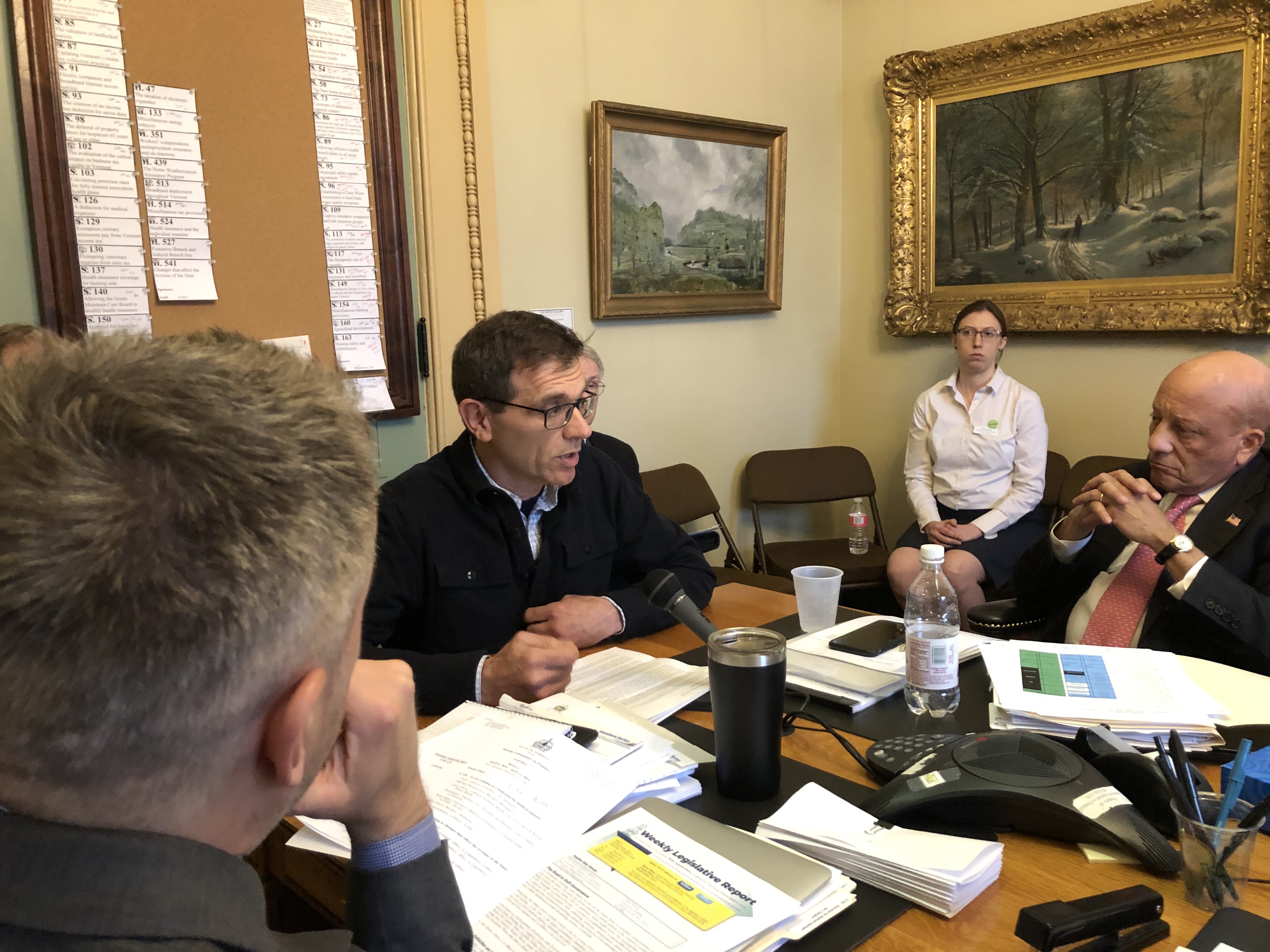
Kaj Samsom, the state’s tax commissioner, said the discussion going on now about health care expenses is predictable in light of the changes made in 2017.
“They all have good reasons why policymakers would want to bring them back in,” he said of tax preferences like the health expense exemption. “The challenging discussion is the cost, and how it will be paid for. Where the administration will start to have discomfort is where they start to raise other taxes. We are watching and trying to be helpful in moving to mitigate at least the most extreme impact of the loss of reduction.”
Gary Wheelock of Colchester estimates the change increased his Vermont tax bill more than threefold this year. Wheelock’s wife was ill for four years and died just three weeks ago, he said. He took $40,000 out of his retirement to help pay for her at-home care last year, and said he was shocked when he found out what his Vermont tax bill would be.
“I couldn’t believe what my accountant was telling me, because there had been no publicity about it whatsoever,” Wheelock said Friday.
“I can’t believe that was the intent of the Legislature, to take people who had desperately ill loved ones, who needed a nursing home or caregivers in the home, and punish them financially if they dared take money out of their retirement funds to pay for caregivers,” Wheelock said. “I’m about to pay that enormous tax bill, and it just strikes me as incredibly unfair and uncharitable.”

