


Nine students who used amplified megaphones indoors as part of a racial justice protest at the University of Vermont are now facing disciplinary hearings.
Before the Feb. 26 protest at UVM’s Waterman Building — which participants said was aimed at drawing attention to racism on campus — organizers were notified they would face disciplinary action if they used bullhorns inside the administration building. The students, however, decided to continue their protest as planned and used megaphones anyway.
After the protest, the administration sent letters to the students who spoke, asking them to choose between acknowledging a violation of university policy or facing a formal disciplinary hearing about their conduct. However, the first option required unanimous agreement, which the students did not have. Instead, all nine students will now face disciplinary hearings, though they have been given the choice of whether they want to be heard separately or as a group.

“To me, the whole situation has always felt like it’s about more than just the use of a megaphone,” said Syd Ovitt, one of the protesters.
She said the administration warned the leaders of NoNames for Justice, the organizers of the rally, against the use of megaphones, but that not all the protesters knew about the possible consequences. Right before Ovitt spoke, however, she was warned what the repercussions for using the megaphone would be. She decided to use it anyway.
“Our message is more important. Being heard and facing the consequences is more important,” Ovitt said. “Being silenced is not anything new for me. UVM tries to silence me whenever I speak out against them.”
A letter signed by 33 UVM professors and staff members was sent to the administration this week in support of the protesters. It said taking disciplinary action against the students was a willful misapplication of UVM policy that targeted marginalized groups and students of color.
Ovitt said one student who spoke into the megaphone — who was cisgender, white and male — did not receive the disciplinary charges the other students had.
The faculty letter called on the university to drop all charges and issue a public apology.
“We are concerned that this judicial process that purports to protect the campus and students from harm will instead negatively impact their academic work and emotional well-being,” the letter said. “Additionally, this course of action will further alienate students whose aim was to better the situation for everyone by creating a more egalitarian university.”
The university responded to the letter point by point, saying the university protects the right of free speech, and just takes issue with the disruption caused in this instance, something officials say they heard concerns about leading up to the protest.
“This is simply about the University’s responsibility to impose appropriate and reasonable time, place and manner restrictions to avoid disruption of classes and work functions in order to protect the rights of all members of the UVM community,” said Vice Provost for Student Affairs Annie Stevens in an emailed statement. “There are places on campus where the use of amplified sound does not lead to disruption, and it has been used in those spaces without consequence.”
Sarah Alexander, one of the faculty members who signed the letter in support of the students, said Stevens’ response wasn’t enough.
“It seems like an inadequate response,” Alexander said. “We don’t feel it really addresses the issues that we described and it doesn’t adequately justify the action that the administration appears to still be willing to take.”
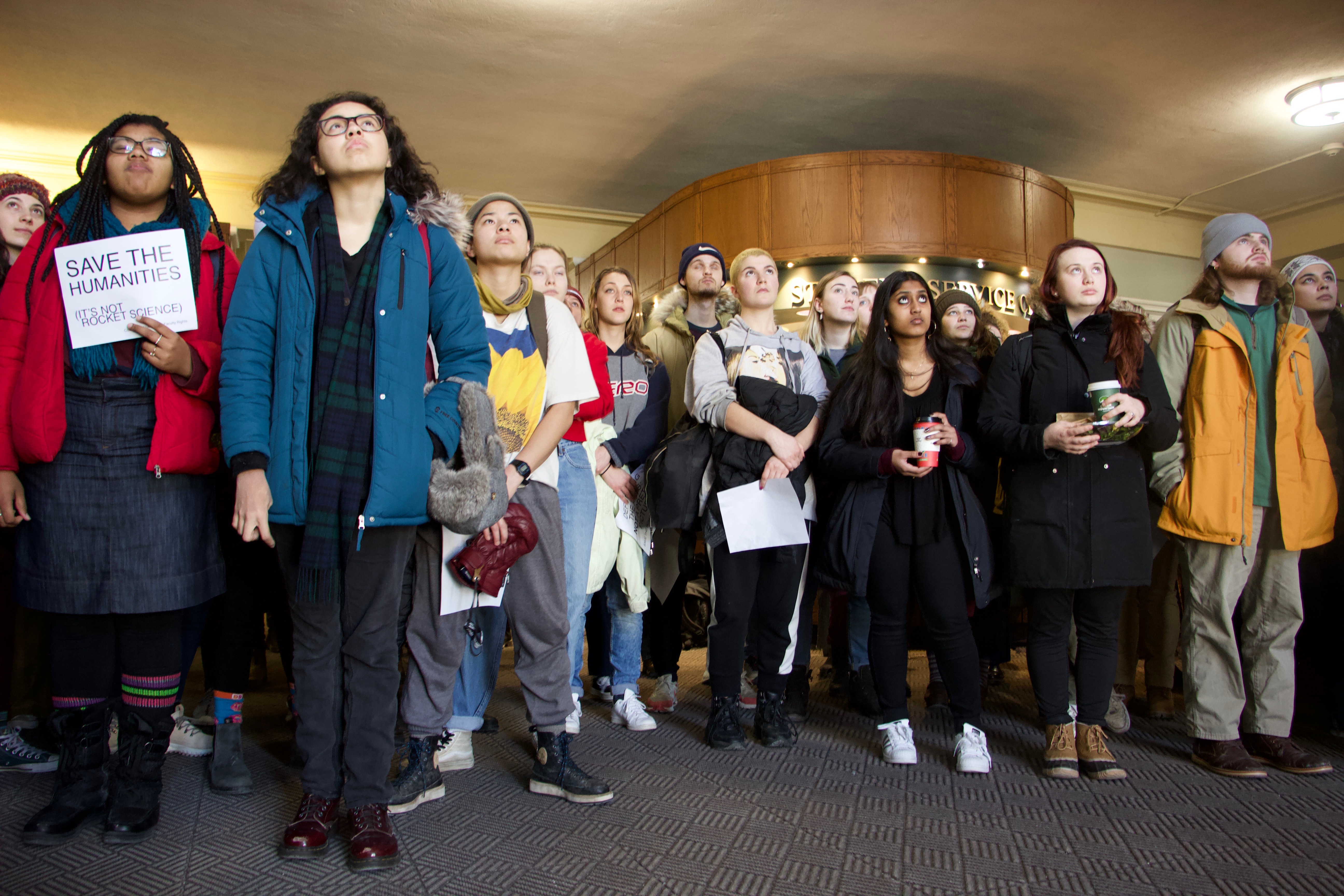
Alexander said she’s heard from numerous faculty who work inside Waterman saying they found the protest to be respectful and appropriate. One education professor even told her using a megaphone was a great accommodation, as many people need amplified sound to hear.
At a NoNames for Justice protest a year earlier, hundreds of UVM students took over Waterman to protest racism, leaving the building at the end of the day only after threats of arrest.
“Last year’s activities resulted in classroom, workplace and event disruptions,” Stevens said. “After last year’s experience it became clear that the University cannot allow such disruptions to continue to take place without holding participants, whom we believe may be in violation of University policy, accountable through the student conduct review and adjudication process.”
If it is determined that the students violated a university policy, sanctions may include a disciplinary warning, probation, educational sanctions, fines or fees, community restitution, financial restitution, suspension from residence halls, suspension from the university, and dismissal.
