


[A]ll eight Superior Court judges — and one magistrate — up for judicial review this year will retain their positions on the bench for another six-year term.
Among that group is Judge Samuel Hoar, who faced scrutiny during the retention process after two female attorneys accused him of sexist, aggressive and condescending behavior in the courtroom. He was retained by a ballot vote of 129-36 in the Joint Assembly.
Hoar developed a plan for his own rehabilitation that includes mentoring from two retired judges, reporting to the state’s chief judge, and attending a training at the New York State Judicial Institute. Additionally, Hoar will participate in implicit bias training, along with all Vermont judges.
“Judge Hoar has reviewed all this and taken the situation to heart very seriously,” said Sen. Alice Nitka, D-Windsor. “Judge Hoar has skills and value to the judiciary and people of Vermont who are heard before him.”
The Vermont Bar Association has revised the process for overseeing the judiciary, with a check-in three years into each judge’s tenure to identify areas of concern. Nitka, chair of the Joint Committee on Judicial Retention, said judges strongly support the change.
The joint committee recommended Hoar’s retention in a 7-1 vote.

Earlier this month, several lawmakers raised concerns about Hoar. Rep. Jean O’Sullivan, D-Burlington, said she is unsettled by the idea of having a judge sit on the bench while undergoing trainings and rehabilitation for less-than-judicial behavior.
“I do not want anyone presenting in front of that judge while they’re being trained for implicit bias,” Sullivan said. “I do not want one Vermonter harmed by implicit bias that we have identified.”
Allison Wannop, one of the attorneys who first spoke against Hoar, said she feels conflicted about the process.
She said her motivation was not for Hoar to lose his position, but, rather, she felt she had to speak up about courtroom behavior she didn’t think was OK.

Wannop, an attorney in the Department of Public Service, said seeing one in five legislators vote “no” was validation that others agreed that behavior wasn’t acceptable.
“I would just hope, out of this process, that people don’t look at the fact he was retained as meaning that it doesn’t matter to speak out at public hearings whenever you see a judge or somebody in power doing something wrong,” Wannop said. “The whole process was taken very seriously and these things were addressed, and the people of Vermont will be better for having this behavior corrected.”
Wannop and Ashley Hill, the other attorney who testified against Hoar, met with the judge earlier this month. Both women said they felt Hoar was genuine, and really listened to what they had to say.
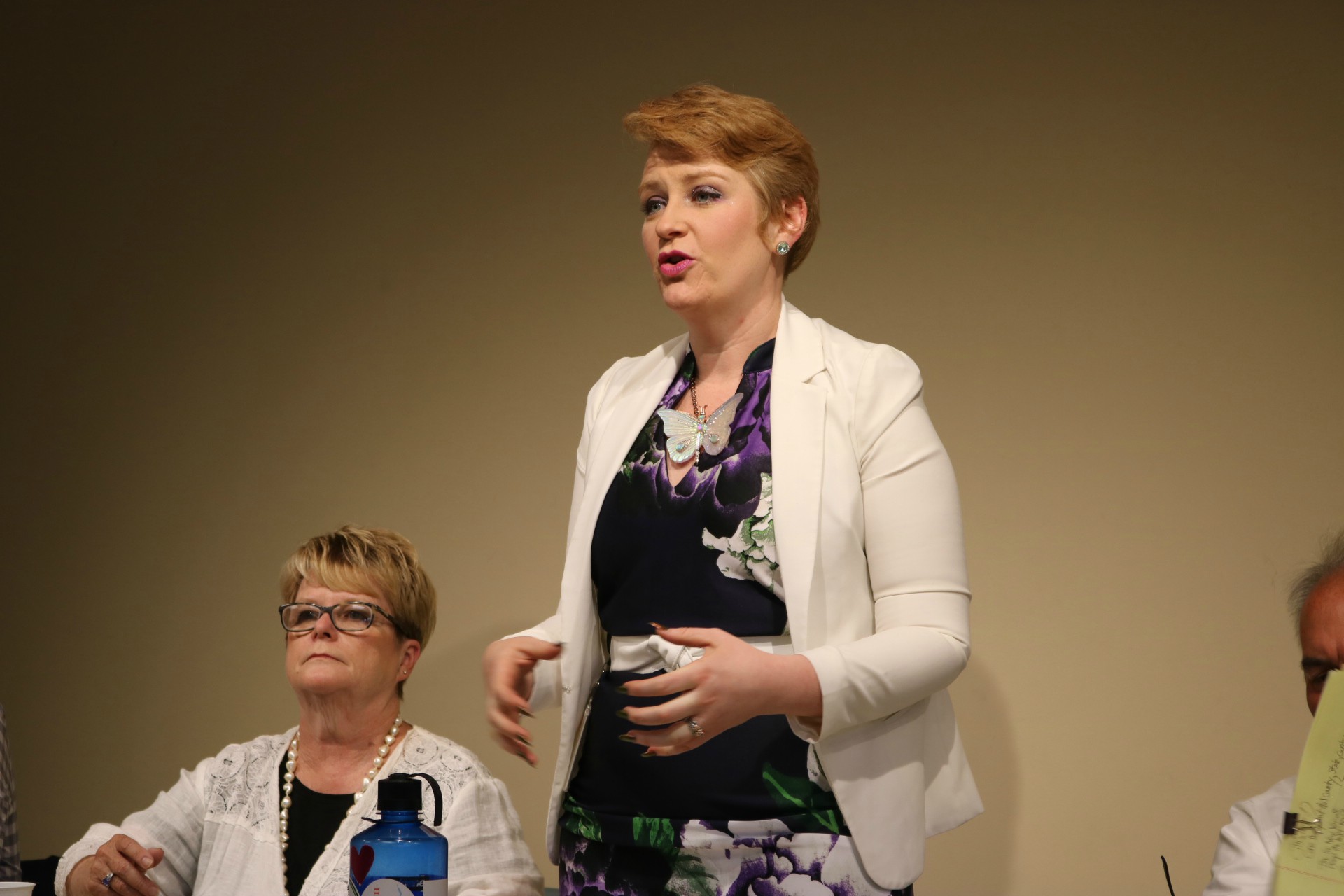
“It takes a long time to fix these issues,” Hill, a Washington County deputy state’s attorney, said. “This is ongoing work and I think the legal system is a bit behind. And systems and structures take longer to change than individual people.”
She continued, “I am really glad that we have an opportunity to have this conversation in a really productive way. I think that these are hard conversations and uncomfortable conversations, and that they are hard and uncomfortable for everybody.
“I really welcome the willingness that I’ve seen on behalf of Judge Hoar and, frankly, even the bar, to really dig into this,” Hill said.
During the Joint Assembly balloting, Judge Timothy Tomasi received 10 votes against his retention, and Judge Megan Shafritz received one. The other five judges, William Cohen, Elizabeth Mann, Robert Gerety, Kevin Griffin and Thomas Zonay, as well as Magistrate Alicia Humbert, were retained unanimously.
CORRECTION: Jean O’Sullivan was quoted for this story, not Mary Sullivan as originally stated.
