


[V]ermont universities plan to use a one-time infusion of state cash to boost the mental health and addiction-treatment workforce.
Lawmakers decided last year that $5 million should be allocated to “make strategic investments” that would address staffing shortages as more Vermonters struggle with substance use disorder and psychiatric issues.
State officials now have a multi-year plan to send that money to the Vermont State Colleges and the University of Vermont. The funding would support programs to train new mental health counselors; alcohol and drug counselors; psychiatric nurse practitioners; health and wellness coaches; and apprentice addictions professionals.
Both schools are committing to continue those programs after the state allocation runs out. So officials are hoping the investment will have a long-term, positive effect on the state’s health care workforce.
“If we could help people get degrees, and they would live in our communities and help our communities, this could be something that could impact Vermont for 20 to 25 years,” Human Services Secretary Al Gobeille told lawmakers.
Vermont’s medical providers have been struggling for years to attract and retain nurses, doctors and other health care staff. Despite offering hiring bonuses and other incentives, hospitals are spending significant amounts of money on temporary help to fill shifts and maintain vital services.
That difficulty extends to the mental health and substance use disorder realms, including the state’s growing “hub and spoke” system of medication-assisted treatment for opiate addiction.
“There is no question and there is no doubt that we need more mental health clinicians, more licensed alcohol and drug counselors, more nurse practitioners that are capable of prescribing Suboxone … and more of other parts of the care continuum for mental health and substance use disorder,” Gobeille said.
The state’s windfall tobacco industry settlement last year provided an opportunity to address the workforce problem in a different way. Legislators put $5 million from that settlement into the fiscal 2019 budget bill “to expand the supply of high-quality substance use disorder treatment and mental health professionals available to Vermont residents in need of their services.”
The legislation also set up a work group, which included representatives from UVM and the Vermont State Colleges, to decide how best to allocate the money.
“We had very little time, because the budget wasn’t passed until the end of June, as we’re all aware, and this had to be done by December,” Gobeille said. “But we had a great group of people who came together.”
The plan, as recently presented to the Senate Health and Welfare Committee, is to send a little more than $3 million to UVM. The bulk of that money is for training psychiatric mental health nurse practitioners who “would be substance abuse (treatment) providers and would be in primary care settings across the state,” said Patricia Prelock, dean of UVM’s College of Nursing and Health Sciences.
There currently are only 57 psychiatric mental health nurse practitioners in Vermont, Prelock said. Most of the state’s general nurse practitioners work outside Chittenden County, so the idea is to boost their education so that they also can provide mental health and addiction services in those areas.
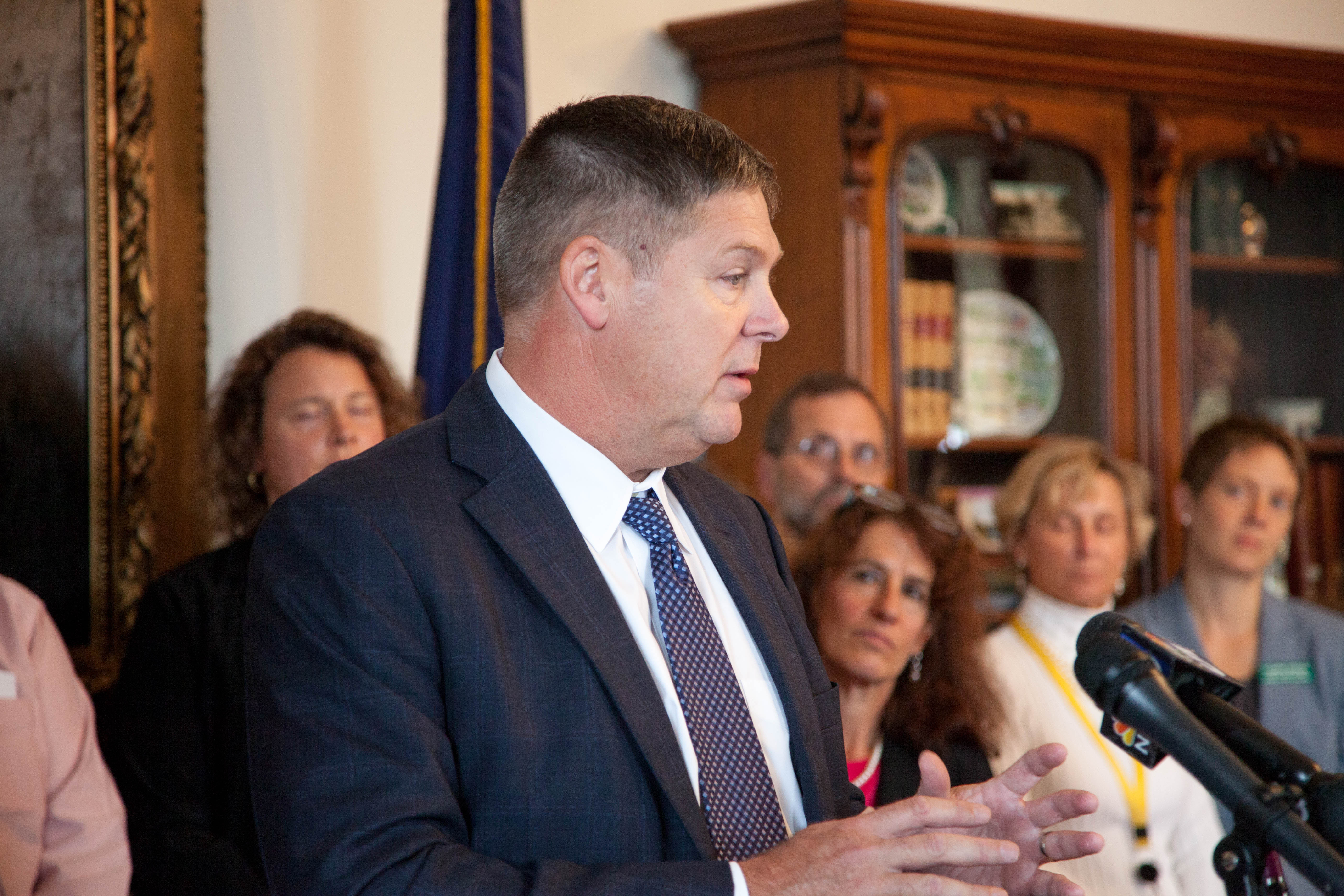
“We’re really trying to support the efforts in the rural communities across the state of Vermont, and put our nurse practitioners back in the places where they can make the biggest difference, especially in our hub and spoke model,” Prelock said.
The university previously had a similar program for psychiatric mental health nurse practitioners, but “we put that on hold because there wasn’t the enrollment that we needed for the program to continue,” Prelock said.
Now, “we believe that the context has changed,” she added. “It’s been almost 10 years, and the crisis is significantly different.”
She added that a significant portion of the coursework will be online, allowing nurse practitioners to continue their education without giving up their practices.
The university also plans to invest in new training and educational programs for integrative health and wellness coaches specializing in recovery and addiction. That work will happen via a partnership with the Vermont Association for Mental Health and Addiction Recovery.
“Our hope is that the proposed program becomes a national model, not only of integrative health education but a model to aid recovery from our country’s substance use disorder epidemic,” Prelock wrote in a proposal submitted to legislators.
The state also is proposing to send nearly $2 million to the Vermont State Colleges. The focus is on Northern Vermont University, where officials plan to increase the number of licensed mental health counselors and certified alcohol and drug counselors.
There also are plans to offer apprentice addiction professional courses to as many as 126 students.
The programs cover master’s, bachelor’s and associate’s degrees. “We are proposing to enhance the existing workforce and to expand it by providing opportunity at multiple levels,” said Nolan Atkins, Northern Vermont’s provost.
Much of Northern Vermont’s funding would go to scholarships to help students cover the mental health counseling program’s $37,000 cost. That price “is a barrier for many students” given entry level salaries in the field, Atkins said.
“We believe that we will successfully enroll additional students by providing scholarship support,” he said.
Even though both universities have submitted detailed plans for the state’s funding, and both of those plans have the Agency of Human Services’ endorsement, no money has been spent at this point.
Legislators spread the workforce money over four years, from fiscal 2019 through fiscal 2022. But statutory language required the agency to withhold fiscal 2019 spending on the initiative until this year’s budget-adjustment bill passed, and that still hasn’t happened.
Furthermore, the latest version of the budget-adjustment bill punts any decision on the special workforce funding until the fiscal 2020 budget is passed.
Gobeille said he’s OK with that, as long as there are no further delays. “We would like to start this for next year’s school year, so closure on this issue would be really helpful,” he said.
