

BURLINGTON — Raspberries. Brie. Spinach. Ground turkey. Orange juice.
That eclectic mix is just a sample of Jon Brandom’s early morning grocery haul on a recent Wednesday. He was picking up for Feeding Chittenden, a hunger relief organization based in Burlington that provides meals, a market, cooking classes and more to Chittenden County residents experiencing food insecurity.
UVM researchers estimate that 40% of Vermonters experienced food insecurity in 2022. Meanwhile, Feeding Chittenden helps feed more than 12,000 people a year.
“I feel like this is an answer,” Brandom said, as he criss-crossed the Burlington area in a boxy white van.
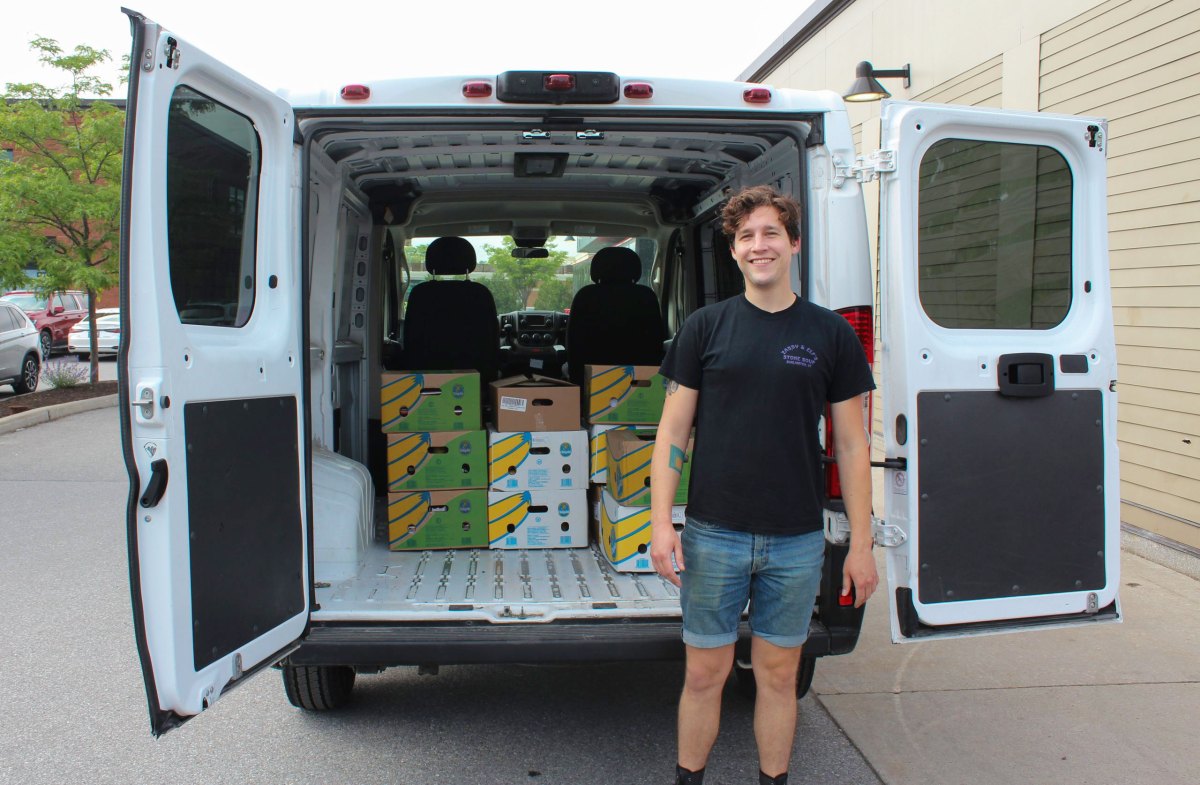
Brandom, Feeding Chittenden’s food rescue coordinator, makes trips like these five days a week in the Burlington area to grocery stores such as Hannaford, Trader Joe’s and City Market. The stores designate items up for donation with a “Food Shelf” label, and Brandom is left to search fridges and freezers to snatch as much as he can. He begins his day at 8 a.m., and he hopes to bring back fresh produce before the Feeding Chittenden doors open at 9.
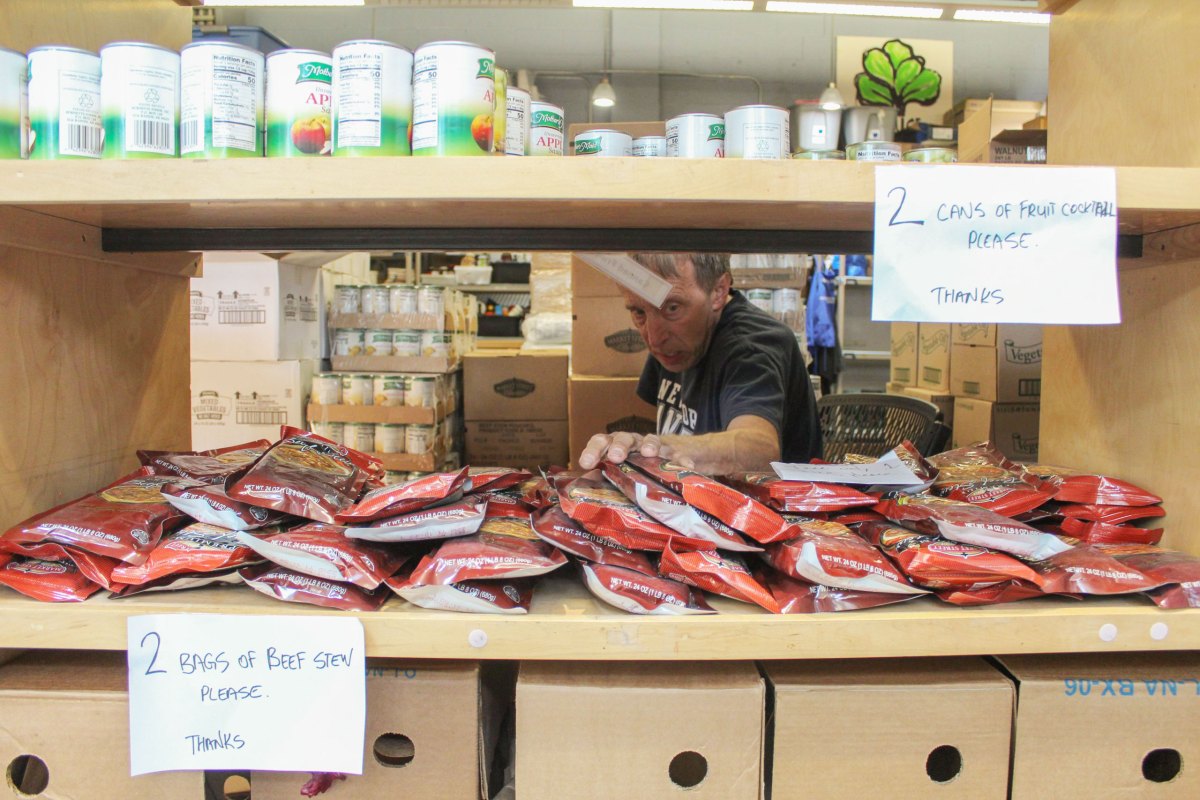
Once he scours the shelves, Brandom returns to the organization’s headquarters at 228 N. Winooski Avenue in Burlington to help put away the bounty and set up Feeding Chittenden’s food market — a self-service setup where people who don’t have enough food can get sustenance, no questions asked.
“You get what you want and that’s all that counts,” said a Burlington resident who declined to give her name as she left with a bag of pork, beans and other items. She has been going to Feeding Chittenden since 2004, she said. “It’s a good place to be.”

Brandom’s job is a sliver of the pie at Feeding Chittenden, where the vast array of offerings separate it from other food relief operations in the area. As one of nine organizations that are part of the Champlain Valley Office of Economic Opportunity, it is able to offer a wealth of diverse programs to underserved Vermonters.
Its headquarters also house CVOEO’s Community Resource Center, which helps connect people experiencing homelessness to medical, transportation or housing resources, among others.
“What sets us apart is just the variety of programs that we provide. It isn’t just about giving people food there,” said Anna McMahon, associate director of Feeding Chittenden.
“We’re truly trying to change the way that we’re interacting with marginalized populations so that we can better serve them and trying to continually evolve our programming to better meet the needs of economically disadvantaged Vermonters,” she said. “I think we’re definitely at the forefront of this in Vermont.”
‘Helping people out’
Brandom’s collections are part of the over 2 million pounds of food the organization procures every year, most of it donated. They are items that have not yet expired and are always safe, but not quite up to snuff to be sold in stores.
For example, many bags of oranges and apples contain only one or two bad ones. The rest of the fruit is usable, but supermarkets ditch the entire bag.
If food does spoil, Feeding Chittenden has an array of trash and compost bins on-site, something Brandom admits didn’t sit right with him when he joined the organization in January.
“I used to feel squeamish about it at first,” he said. “But we’re literally the last possible stop before it gets thrown out.”

A 2016 graduate of the University of Vermont, Brandom said he enjoyed studying sociology because “it felt nice knowing I had answers.” He also majored in environmental science and analyzed food waste systems and poverty, inspiring him to return to the area in 2020 to pick up where he left off.
He arrived at Feeding Chittenden over five months ago after working for City Market Co-op in Burlington, a major supporter of Feeding Chittenden’s work. He enjoys the physical aspects of the job, carrying boxes of food in and out of trucks and always being on his feet, but admits that it’s “put a dent in my running.”
“And I obviously enjoy the aspect of helping people out. That definitely helps me sleep at night,” said Brandom, accelerating through a yellow light — something the self-proclaimed “defensive driver” said he rarely does — to make it back to headquarters before the doors open.
Brandom finishes his day by hitting the road again, this time on the delivery side, handling both emergency and scheduled drop-offs for Chittenden County residents in need — another arm of its work. People in need who leave voicemails and send emails to the organization help him plan out his day. He leads a team of about 10 other delivery drivers who help with smaller food pickups in the latter half of the day.
A multipronged approach
Feeding Chittenden’s flagship program is the market that Brandom stocks, a pick-and-choose setup open Monday through Friday from 9 a.m. to 4 p.m. People can come in once a week and take anything they need, with options ranging from pork to fresh produce to canned applesauce.
More than 160 volunteers help the 18-person staff with stocking shelves, delivering and picking up food, prepping the kitchen, and filling any other gaps that crop up.

That is where most of the donated food Brandom picks up comes into play. McMahon said the organization also purchases items that are less frequently donated, such as milk and eggs, to ensure people have a lot of good choices.
“It’s very important to us that it’s a dignified experience,” said Ansley Laev, volunteer and receiving coordinator. Feeding Chittenden prides itself on being organized, well stocked and an overall welcoming space for people dealing with food insecurity.
A mural painted by artist Tara Goreau coats the walls around the shelves, with the goal of erasing stigma around seeking food-related help.
Hot breakfast is served every weekday from 9 to 11 a.m. and grab-and-go lunches are offered through the early afternoon. Many people will come in for coffee, eggs, bacon, and other early morning staples and, after eating, leave with items from the food shelf, too. An average day sees between 140 and 200 people come into the facilities.
Linda Cooper of Burlington has volunteered with Feeding Chittenden for over 15 years, and has seen the evolution from food shelf to food network firsthand. Before the pandemic hit in March 2020, she was doing mostly doing clerical work — checking people in and handling other computer-based tasks — but switched to stocking after Feeding Chittenden fully reopened in October 2022.
“It’s always been fun,” she said. “The people are my favorite part. I’ve gotten to know some really great people.”
These days she works closely with fellow volunteer Kevin Newman of Essex Junction, a wheelchair user who has been volunteering with Feeding Chittenden for six years. Cooper puts food items within his reach so he has no difficulties placing them on a shelf. This “accommodating environment” is part of the reason he hopes to go back to two shifts a week — his pre-Covid schedule — instead of the one he works now.
“I want to be here more,” he said. “It’s something to do, and more fun than anything.”
Going to school
Feeding Chittenden was launched in 1974 as the Chittenden County Emergency Food Shelf but rebranded to its current name in 2019, to indicate it was offering broader services. It has relocated twice over the years, most recently in 1994, expanding all facets of the operation in response to a growing need for food relief.
“It’s all exciting, you know. We’ve continued to innovate and we’re not stagnant,” McMahon said. “We’re not just doing the same-old-same-old over the last nine years that I’ve been with the organization.”

Part of that development has been its Community Kitchen Academy, where chefs train aspiring culinary artists, helping both in and out of the kitchen with reading over resumes, interview prep and, of course, food-based training.
The meals they prepare are made exclusively with donated food, giving the chefs a chance to showcase their creativity and make recipes on the fly. Their creations are served to residents both on-site and, historically, out of Feeding Chittenden’s food truck — a Covid-19 casualty that McMahon said will be back on the road soon.
Nearly 300 people have graduated from the Community Kitchen Academy since 2009, and Feeding Chittenden says 91% of them found jobs in the food industry.
Feeding Chittenden has also grown to help people who are experiencing food insecurity, but face access barriers to food pantries or other meal sites. The Food Access Network, launched in 2020, partners Feeding Chittenden with various health care institutions, nonprofits and farms in an online marketplace that helps bridge that gap.
People select what they want using a software program called PantrySoft, personalizing their orders and making sure they get clean, quality food. The network served more than 3,000 people in 2022, mainly migrant farm workers, Head Start families and medical patients, among other disadvantaged groups, the organization says.
“We’re really trying to reduce those reasons why people aren’t coming in to get food,” McMahon said, “whether that’s transportation or stigma or a language barrier.”
The work of providing for a diverse range of people, many of them among Vermont’s most marginalized, is “tough but definitely worthwhile,” McMahon said. But the fact there is a need for that work at all is disappointing for many at the hunger relief institution.

“It’s sad when organizations like this have to exist,” she said. “We used to say, ‘Oh, we hope to work ourselves out of a job.’ But that just doesn’t really seem feasible at this point.”
Feeding Chittenden works closely with City Market Co-op in Burlington to help with fundraising initiatives and community outreach. Co-op members can earn up to 12% off their grocery bill by volunteering four hours per month at Feeding Chittenden. The market has the same arrangement with two dozen community partners, but Cheray MacFarland, City Market’s director of community and marketing, said Feeding Chittenden is one of the most popular for volunteering and other forms of support.
Over the past three years, City Market has also donated over $85,000 to Feeding Chittenden as part of its roundup initiative called Rally4Change, as well as about $125,000 worth of food products.
“They are top-of-mind in terms of leading the charge in food in Chittenden County,” MacFarland said. “It’s super important for us to be involved with them, and we’re very proud of it.”
