



Sen. Dick Sears, D-Bennington, who has for years played the role of Vermont’s gun control gatekeeper, came around to the idea of a waiting period for firearm purchases, joining two members of his committee Friday to send the bill on to the Senate.
After weeks of indecision, he told the Senate Judiciary Committee on Friday morning that testimony from both opponents and backers of the bill had convinced him that lives could be saved by forcing people to wait before getting a gun.
But he proposed a compromise: 24 hours and only for handguns. The bill as introduced would have mandated a 48-hour waiting period for all firearm purchases. It also included a safe storage component that was dropped before the final vote.
“I’m willing to compromise and go to that level if there’s two others to do that here. I’m not willing to go with 48 hours. I’m not willing to go to all firearms,” he said.
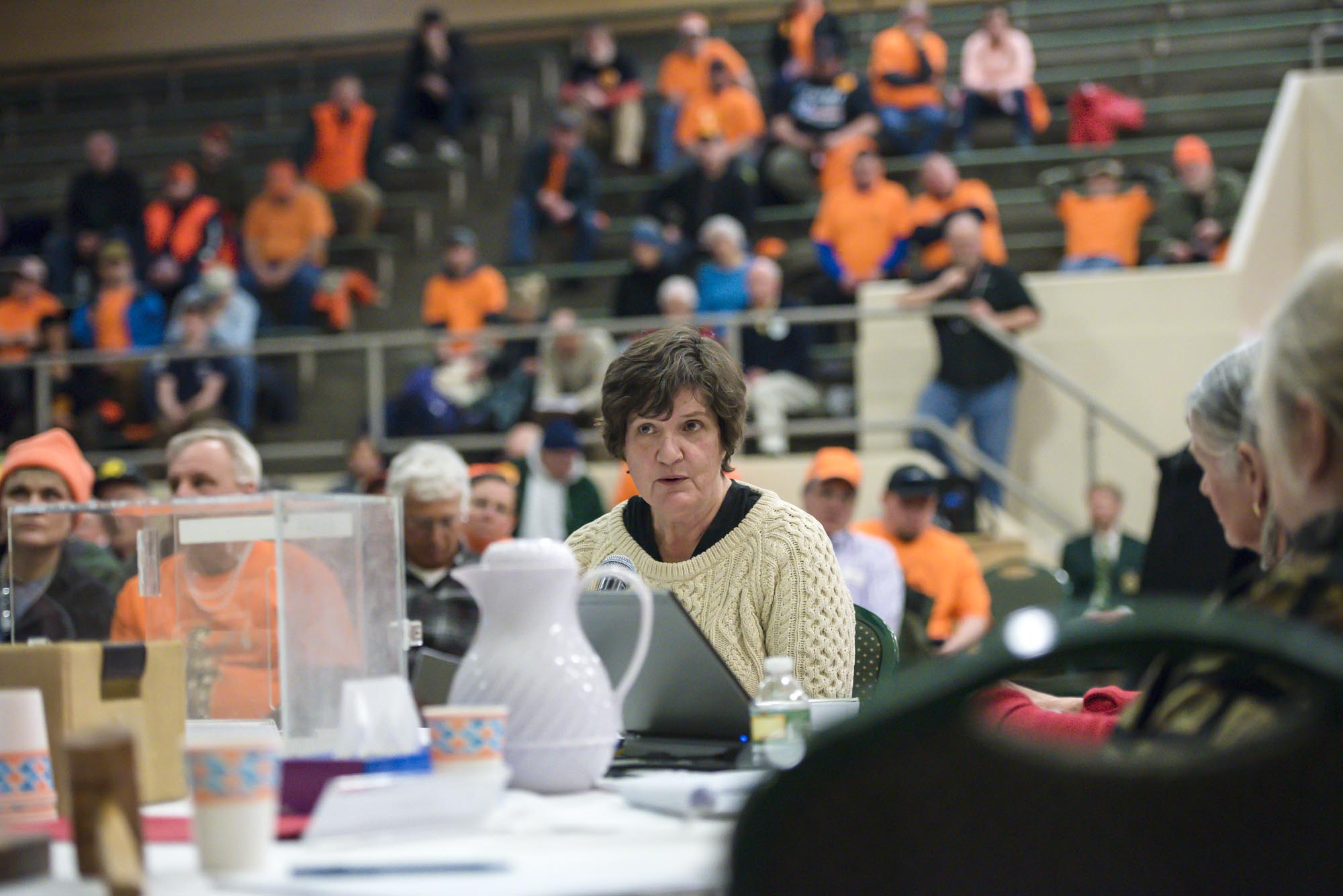
“I realize this will anger many of my constituents. I also have a lot of constituents who asked me to vote for S.72 and S.22, a lot,” he said, referring to the waiting period and another bill he sponsored, which requires annual reporting on extreme risk protection orders.
Sen. Phil Baruth, D/P-Chittenden, who’s been the most prominent gun control advocate in the Statehouse for the past few years, was moved to the judiciary committee this session. He said he preferred the bill as introduced, with the longer and broader waiting period, but that he was willing to settle for the compromise in order to take a step forward.
“If the committee can land on one-day handguns, I do believe that would be an appropriate response to what’s going on in terms of what some people are calling the quiet epidemic of suicide by firearms,” Baruth said.
Before making his proposal, Sears read out sections of messages and research that led to his decision.
He talked about a gun store owner who opposed the bill, but told the senator that most of the purchases in his shop were impulse buys. He read statistics about how quickly suicide victims typically decide to attempt to take their own lives. And he cited a study finding that 90 percent of people who attempt and fail to commit suicide don’t end up dying by suicide.
The wait for handguns only was appropriate, he said, because the vast majority of people who commit suicide use those particular weapons.
Sen. Joe Benning, R-Caledonia, and Sen. Alice Nitka, D-Windsor, voted against the bill.
Benning said he did not believe the evidence was clear that impulse gun purchases were driving suicides in Vermont, and said he would have liked the committee to have commissioned a study before making such a major decision.
He talked about Andrew Black, the 23-year-old man who killed himself last year with a gun that he had bought hours earlier. His parents made a call in his obituary for Vermonters to urge lawmakers to push for a waiting period.
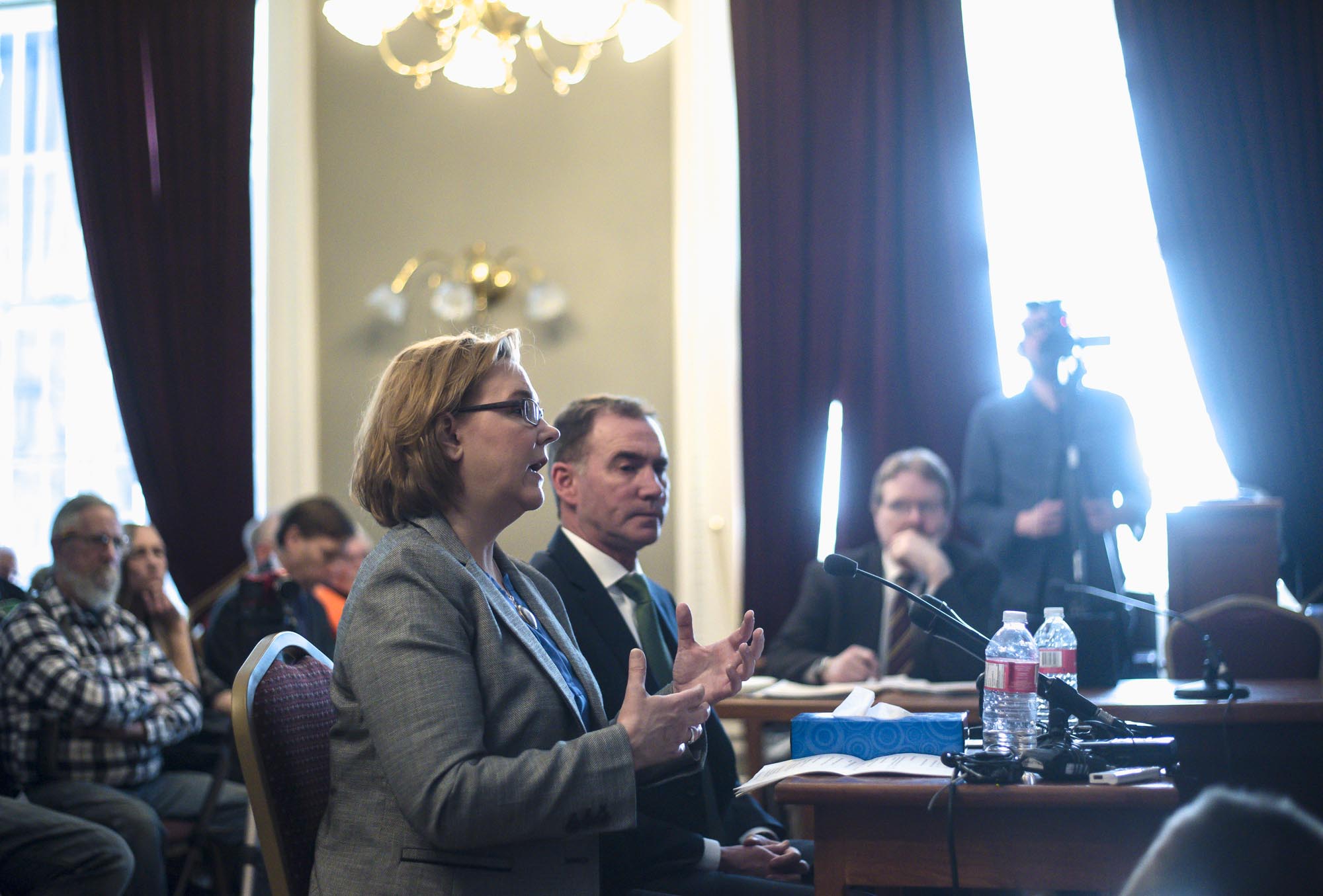
Benning said the death was tragic, but said he was not convinced that a waiting period would have saved Black. Benning believes constitutional protections of the right to self-defense outweigh other considerations.
He said there was an equally important conversation that needed to be had about getting people help before they turn to suicide.
“I just don’t believe a happy-go-lucky person one day wakes up in the morning and says, ‘I’m going to buy a gun to kill myself’,” he said. “I absolutely believe after 30, almost 36 years, of criminal law that individuals don’t make those kinds of decisions on the impulsive 24-hour situation.”
Sen. Alice Nitka, D-Windsor, said she was on the fence about the waiting period, but voted against the full bill, which included about a half dozen smaller changes to Vermont’s gun laws, because she was worried it would be transformed in the weeks to come.
“Given the future of this bill in the Senate and the House I can’t support it because it’s too risky in terms of other things that might be amended,” she said.
The committee spent much of the morning discussing changes to last year’s gun bill, which most members of the committee — apart from Baruth — lambasted due to a high-capacity magazine ban that was added after the bill was sent to the House.
Sears suggested at one point eliminating the ban altogether, calling it “stupid,” but later said changing the law now would probably be unconstitutional because the statute has been challenged in the courts.
The committee agreed to a small change to the ban, proposed by Sen. John Rodgers, D-Essex Orleans. The amendment allows out-of-staters coming into Vermont for shooting competitions to possess high-capacity clips. There is currently a sunset clause in the law that would make that illegal this July.

Concerns were raised that lifting the ban for competitions only for out-of-state visitors would put Vermont shooters at a disadvantage. Baruth said any change to the ban as it applies to Vermonters would weaken the ban, and he wouldn’t support it.
Ultimately, the committee struck another tentative compromise, adding language that would allow Vermont shooters to use grandfathered magazines, which are allowed under the current law, for the explicit purpose of shooting competitions.
The bill also creates annual reporting requirements on extreme risk protection orders, which allow police to seize firearms from people deemed to be a risk to themselves or others, and allows physicians and law enforcement officials to share information about a patient and firearms when appropriate.
Gov. Phil Scott, a Republican, has said he does not support more gun restrictions this year. He made a dramatic pivot last year and signed off on a suite of measures.
CORRECTION: A previous version of this story stated that Sen. Joe Benning, R-Caledonia, said there was not evidence that Vermont had a suicide problem. He said he had not seen evidence that impulse gun purchases were part of the problem.
