

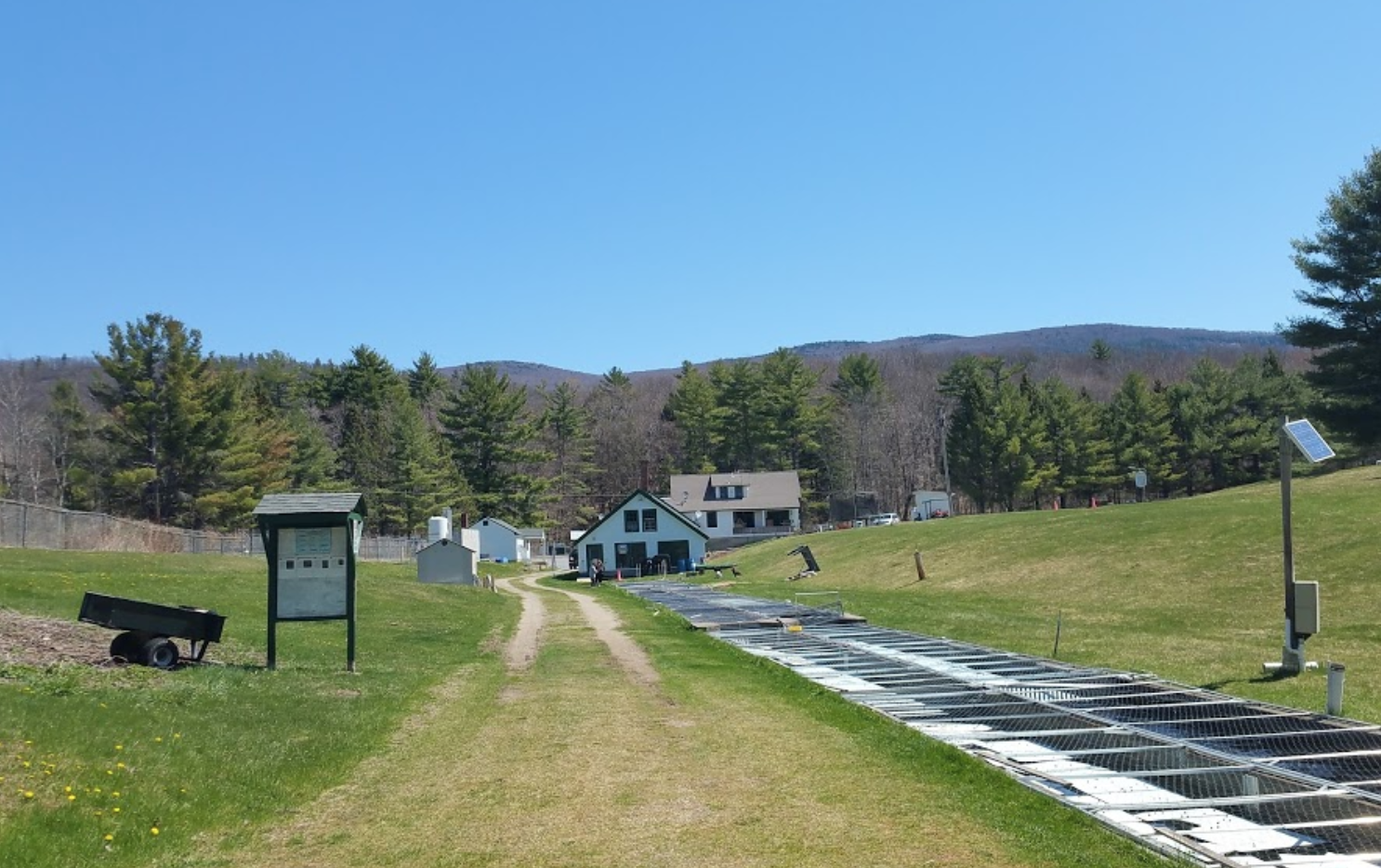
To save money, Gov. Phil Scott wants to shut down a fish hatchery, and the organized angling community is in a tizzy.
That’s not a small community, though smaller than it used to be. Last year, 73,071 Vermont residents got fishing licenses. That’s down from the 83,126 of 10 years earlier, and down even more from the hundreds of thousands in the 1980s.
But it’s “a huge portion of the people of the state,” said Fish & Wildlife Commissioner Louis Porter, who noted that more people fish than do just about anything else except go to work, go to school, and “on a good day, vote.”
When provoked, this community can still get into such a tizzy that some say they would be willing to pay higher license fees rather than see the Salisbury fish culture station close.
Stop the presses!!!!!! Vermonters call for a fee increase!!!!! It’s not quite as man-bites-doggish as Vermonters calling for a tax increase because fees really are different from taxes despite the efforts of so many politicians here (starting with Scott) to conflate them.
What has evoked this uncharacteristic generosity is the fear that closing the culture station will mean fewer fish being dumped into the state’s rivers and lakes. Fewer fish could mean fewer people fishing, meaning fewer fishing licenses sold, meaning less revenue coming in to Fish & Wildlife’s coffers.
So the more fish produced by hatcheries and released into the waters, the happier everyone will be: the folks who fish, the businesses that cater to them, the state agency that produces the stocked fish and collects the license fees. Everybody loves fish stocking.
Except the wild fish.
Such at least is the judgment of an increasing number of fish biologists who have concluded that the introduction of fish bred in the hatchery can endanger the genetic health of fish bred the old-fashioned way.
One reason, according to Trout Unlimited fish biologist John McMillan, is that hatchery fish are “naïve” because they haven’t had to worry about predators. So they take more risks in their search for food. If that trait gets passed to the wild population through interbreeding, “their genetics can be passed onto offspring” who will be less likely to survive in the wild.
Fish stocking “can be a really valuable tool, especially to save species that are going extinct,” said J. Ellen Marsden, a professor of wildlife and fisheries at the University of Vermont. But raising fish in hatcheries tends to “degrade their genetic integrity,” she said, leading to problems when they mingle with the natives.
Scientists who worry about the impact of stocking do not get a big argument from Commissioner Porter.
“We try not to stock where there is a self-sufficient wild population, where there is healthy natural reproduction,” Porter said, adding that the department does not stock the Battenkill or Dog rivers, “or high mountain streams with native brook trout populations.”
In addition, Porter said, Fish & Wildlife has started stocking sterile brook trout (the only species native here) to avoid mixing the genes of hatchery-raised and wild brookies. Eventually, he said, he and his department scientists would like to do away with stocking altogether.
“Every hatchery worker hopes for a future in which we don’t stock fish,” he said.

That day is not imminent, and Porter acknowledged that the policy of not stocking over healthy wild populations is imperfect.
“Fish swim,” he noted, so no one can be sure that a rainbow trout stocked into the Winooski can’t end up in another part of the river where the wild population is healthy and the department is planting no fish.
Even most of the scientists who worry about stocking don’t argue that it should be eliminated. Not only because it can help restore declining populations, but because people want lots of catchable fish. Where can you find lots of catchable fish if state governments don’t provide them?
In Montana, which stopped stocking its rivers almost 50 years ago, rivers are now teeming with large brown and rainbow trout that attract thousands of anglers every year.
Vermont is not Montana, where so much riverfront is public land. “Montana is not as impacted by humans,” Porter noted, dismissing the thought that Vermont could follow Montana’s example. He wasn’t even receptive to the suggestion of another Trout Unlimited scientist, Helen Neville, the senior scientist in its Boise, Idaho, office, that state officials consider saying, ‘let’s stop stocking in this watershed for a while and then let’s monitor the results.’”
Porter says he knows,” There wouldn’t be any fish there,” he said.
Whether he’s right or wrong about that, he seems to know that he walks a fine line. His is, as he says, “an environmental agency, intent on undoing the damage we’ve done to these rivers.” But it is also engaged in providing a consumer good: ready-to-catch fish, effectively manufactured for the purpose and distributed to paying customers.
Those customers are Vermonters who don’t just like to fish, but for whom fishing is “a key to their mental health, to their physical health,” he said. Their license fees help finance his department. They deserve the fish they pay for.
License fees, Porter said, easily pay for the hatcheries, and then some. Fish & Wildlife increasingly gets general revenue funds as it increasingly provides services to the general public, not just “the hook and bullet crowd.” Far more Vermonters (far more Americans) engage in hiking, climbing, canoeing, and wildlife viewing than all the hunters and anglers combined. There’s no license fee for wildlife viewing, or for access to hiking trails. Maybe there should be. Like stocking fish, they alter the natural world. They often degrade it.
As Trout Unlimited’s John McMillan noted, “nature provides a free lunch if we control our appetite.”
