

[S]chool district mergers, the remoteness of rural communities and the opioid crisis play a role in exacerbating child food insecurity in Vermont, according to a new report by the Urban Institute.
The report, commissioned by the National Life Group, finds that 19,000 Vermont children live in households that struggle with food insecurity. One in every eight households in the state is food insecure.
According to the report, school mergers, directed under the district consolidation law Act 46, could potentially be an obstacle for child food insecurity.
The report suggests that when mergers happen, children have to travel farther to school, so they’re more likely to miss breakfast. Even at schools with universal meal programs, students who arrive late will go hungry in the mornings unless their school participates in a Breakfast After the Bell program.
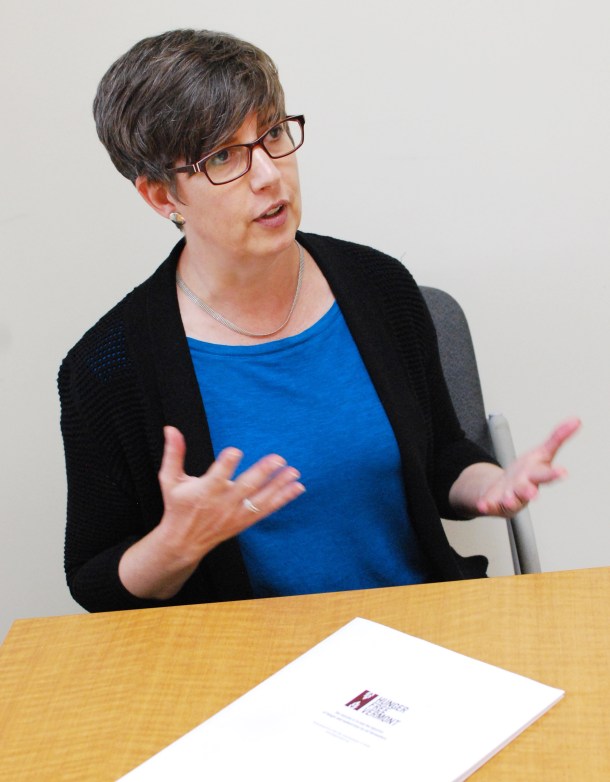
But according to Anore Horton, executive director of Hunger Free Vermont, that’s not what the state’s mergers have been doing. Hunger Free Vermont participated in the report’s research, but was not involved in drafting the report.
“The consolidation of school districts in Vermont is leading, in some cases, to some schools being closed, but that’s not happening in most cases,” Horton said. “In most cases, it’s school boards and administrative funding that consolidates. I wouldn’t say that the long commute is a new challenge caused by the consolidation of school districts.”
Vermont, the third-fastest shrinking state in the nation, has consolidated 157 school districts into 39 unified districts in recent years, with 18 additional districts under consideration for consolidation, according to the report.
Meanwhile, nutritional programs available through schools for children are lacking. The report found that most Vermont schools’ breakfast and lunch programs are limited, and fail to serve the majority of eligible students. It also noted that a huge proportion of ineligible students are still in need — 42 percent of Vermont children at risk for food insecurity are not eligible for free school meals, because their families earn more than 185 percent of the federal poverty line, Horton said.
“Because of increasingly stringent federal requirements, families in need may be disqualified,” the report said. “For instance, if a family member starts working more hours or earning more money, the household can be disqualified from receiving SNAP, Medicaid, or housing subsidies or have its benefits reduced. Families may be eligible but not enrolled, or may be ineligible but still unable to afford nutritious food regularly.”
Horton said this points to the importance of universal free school meal programs. The report identified universal free meals as its first strategy to alleviate child food insecurity in the state. The program is in place in 65 Vermont schools, according to the study. However, one in four eligible students still fail to participate in school lunch programs, and less than half receive free breakfast, according to the report, which identified universal programs as a way to reduce the stigma around getting these meals.
“For some Vermonters, the stigma associated with accessing food programs and the ‘Vermont culture’ of giving and self-sufficiency can also be a deterrent to accessing food services,” the report said.
The report also highlighted how Vermont’s opioid crisis contributes to child food insecurity.
In Vermont, there were 18.4 opioid-related overdose deaths per 100,000 people in 2016 — above the national average of 13.3. This opioid use often results in children being raised by their grandparents, according to the report, which can cause financial stress, and thus, food insecurity.
“Many older adults live on fixed incomes, which means grandparents must stretch funds to include expenses for their grandchildren,” the report said. “This situation causes financial strain and increases the need to access food shelves and other food assistance programs.”
The report suggested that, though the state has placed an important emphasis on addressing the crisis, perhaps more attention could be given to support for grandparents, who are often unaware or unwilling, because of stigma, to participate in SNAP.
Horton, however, said it’s “difficult to really parse out” the role of the opioid crisis.
“It’s very interconnected with a lot of things that cause food insecurity: low wages, lack of stable or meaningful employment, and people who lack transportation in some of more isolated rural areas,” she said.
She said that there is, however, a small but growing group of Vermonters who are raising their neices, nephews, grandchildren or other relatives because of the opioid crisis, and that the state’s foster system disqualifies children in these homes from receiving free school meals regardless of their foster family’s income, as it does with other foster children, though she said these kids are still often at risk for food insecurity.
“It may not be a large group, but it’s a vulnerable group, and a growing group,” Horton said. “There’s a few different things we could do to minimize the food insecurity being affected by opioid crisis.”
Horton said reports like these are “invaluable” in pointing out vulnerable Vermont populations, and in bringing together groups to work toward solutions.
Horton said the report’s findings were not a surprise at her organization or others that work on hunger issues, but said the study was key.
“It can be very important to have a study that pulls together all the evidence, and it’s validating to see the projects that we are prioritising, and the strategies that we believe are the most important to be working on, were the ones identified by the Urban Institute. It validated that we have identified the right levers we need to be pulling if we are going to end childhood hunger in Vermont,” she said.
Beth Rusnock, president of the National Life Group Foundation, said with the results in hand, the foundation will help some of the same groups that they worked with in putting together the report, like Hunger Free Vermont, the University of Vermont, the state and others to work on a more long-term solution.
“One of the immediate things we are going to do is to lead a coalition, and bring together leaders who have been important in this area to bring them together in a more formal way, and build momentum and come up with a collective impact model that will make a larger impact in this area,” Rusnock said.
She said the fact that there are food-insecure children in Vermont is something the foundation keeps coming back to, and a problem they are dedicated to solving.
“We’re going to look at other opportunities we at National Life have to make a larger difference in this area, and we still need to refine what those might look like,” Rusnock said. “We think the report is really important, and you know, anybody is welcome to use it and come up with great ideas so we can affect positive change together.”
