

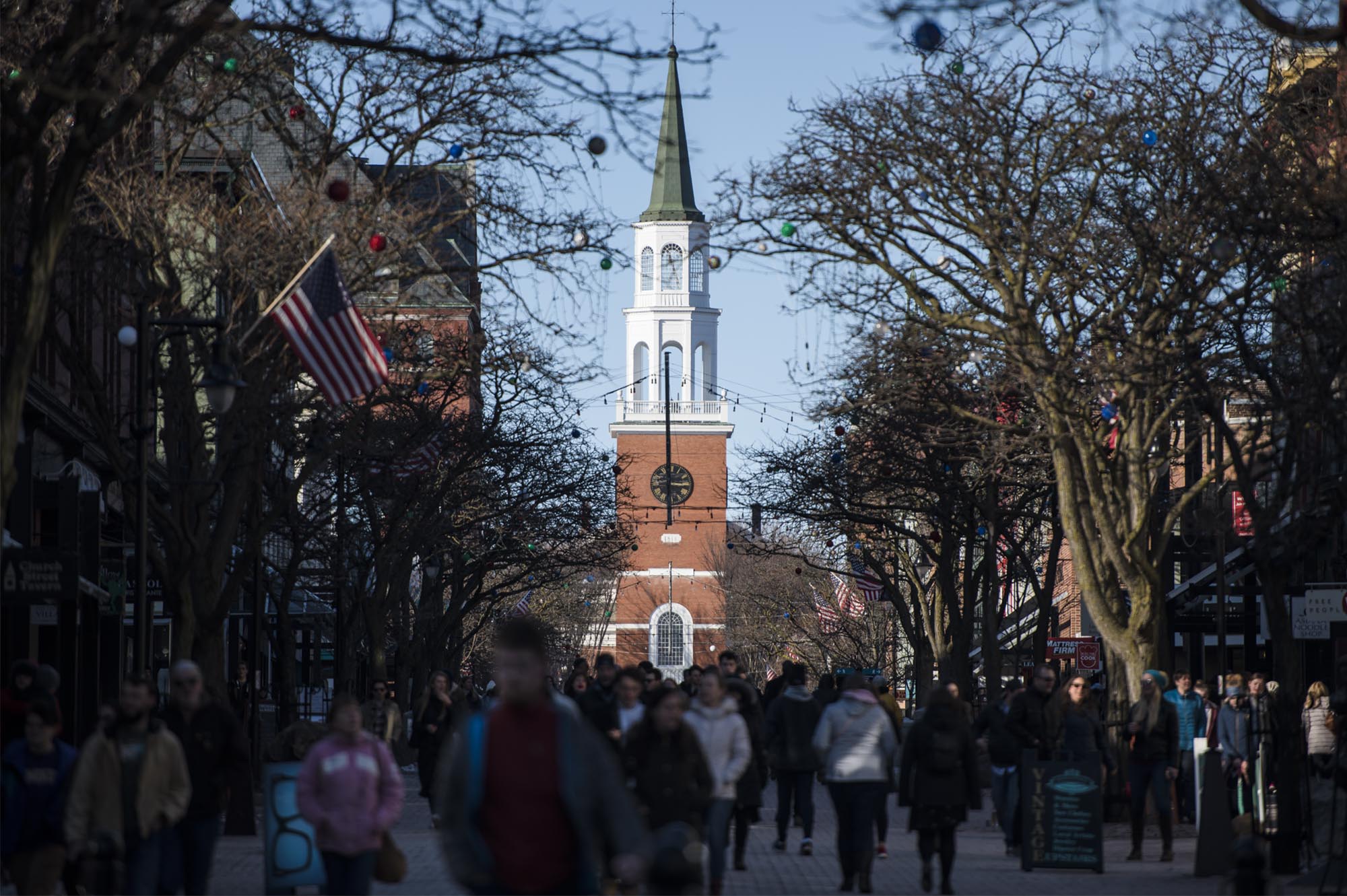
[B]URLINGTON — A proposal to create a Downtown Improvement District has become a hot-button, contested campaign issue in Tuesday’s Town Meeting Day election.
Both proponents and opponents of the charter change — ballot item #4 — are reaching out to voters in the lead-up to Tuesday’s vote. Mayor Miro Weinberger and city Democrats widely support the change, while all four city council candidates endorsed by the Progressive Party oppose it.
Proponents believe that the proposal would help boost the streets surrounding Church Street by adding services that the businesses will pay for themselves through a new fee.
Critics argue the DID would raise rents, make the downtown a hostile place for the city’s homeless population and “privatize” the downtown. The proposal would replace the city’s current Church Street Marketplace department with a new, private nonprofit.
DID structure
The marketplace department currently provides enhanced security, cleaning and marketing services to businesses, funded primarily by a fee that Church Street’s commercial property owners pay.
There’s also a current downtown improvement district, which was established for commercial property owners in the center city area to provide funding for two hours of free parking in Burlington’s three municipal parking garages.
The new district would combine the current DID and the area overseen by the city operated marketplace department. The Marketplace Commission, whose members are appointed by the City Council and set policy, would be replaced by a new board.
The new nonprofit would be governed by an 11-member board, which would include six members appointed by the city and five members appointed by the fee-paying businesses. It would include four residents, two non-profit representatives and five owners of businesses located in the DID.
Why a DID?
In 2017, the the council’s growing concerns about the downtown’s ability to compete with online retail and emerging downtowns in surrounding towns led it to launch an advisory committee to explore a DID.
“The businesses off of Church Street feel like Church Street gets all the love, and they’re left to suffer,” said Adam Roof, an independent who backs the measure. “A lot of times people come to Burlington and they do Church Street right down to the Waterfront, and everyone else kind of gets left behind.”
The nonprofit would use the fees collected from the commercial property owners to pay for extra services.
The nonprofit would be tasked with doing additional cleaning, beautification, marketing and business development. It could also work to increase awareness of parking options and establish transportation modes between the waterfront and downtown.
The proposal has received significant support from businesses and is supported by the Burlington Business Association. Many of the businesses on Church Street and surrounding streets signed a letter to the city council supporting the charter change.
Kara Alnasrawi, the owner of Liebling, a women’s clothing store on College Street, spoke in favor of the DID at the Dec. 17 city council meeting. She said she thought the DID would make the downtown more cohesive.
“I believe that it will be a huge support for the small business, especially those on the side streets and the Waterfront, who don’t feel connected to the heart of Burlington, which is, as everyone knows, Church Street,” she said.
Outgoing councilor Dave Hartnett is another supporter of the DID. He said that as Winooski and South Burlington continue to develop their downtowns, Burlington should take action.
“For far too long, we have just relied on the character of Church Street to get us through, and it’s done a remarkable job for us,” he said. “Other cities and towns are developing their downtowns and are bringing businesses there. If we stay the same, we’re falling behind.”
Concerns and responses
Gene Bergman, a former senior city attorney, has taken the lead campaigning against the DID ballot item and his group has launched a website explaining their opposition.
DID opponents are unhappy that the DID abolishes a city department and instead gives power to a private nonprofit.
A report prepared for the city by consultants with Progressive Urban Management Associates examined both sticking with the city department model and forming a private nonprofit.
The report describes that the city department model was “unconventional” and has led fee payers to want more oversight and input into the management of the district. It stated that 90 percent of downtown improvement districts nationally use the nonprofit model.
Bergman said that he thought the city should have explored more deeply retaining the current public model and simply expanded the existing Church Street Marketplace department.
“I’ve got problems with turning a public entity into a private entity, with raising tax dollars and then turning them over… to a private entity to do X,Y and Z with, I find that to be fundamentally wrong and anti-democratic,” he said.
Since the funds would be raised through the city’s taxing authority, Bergman said he was concerned about the city diverting taxes to a private entity.
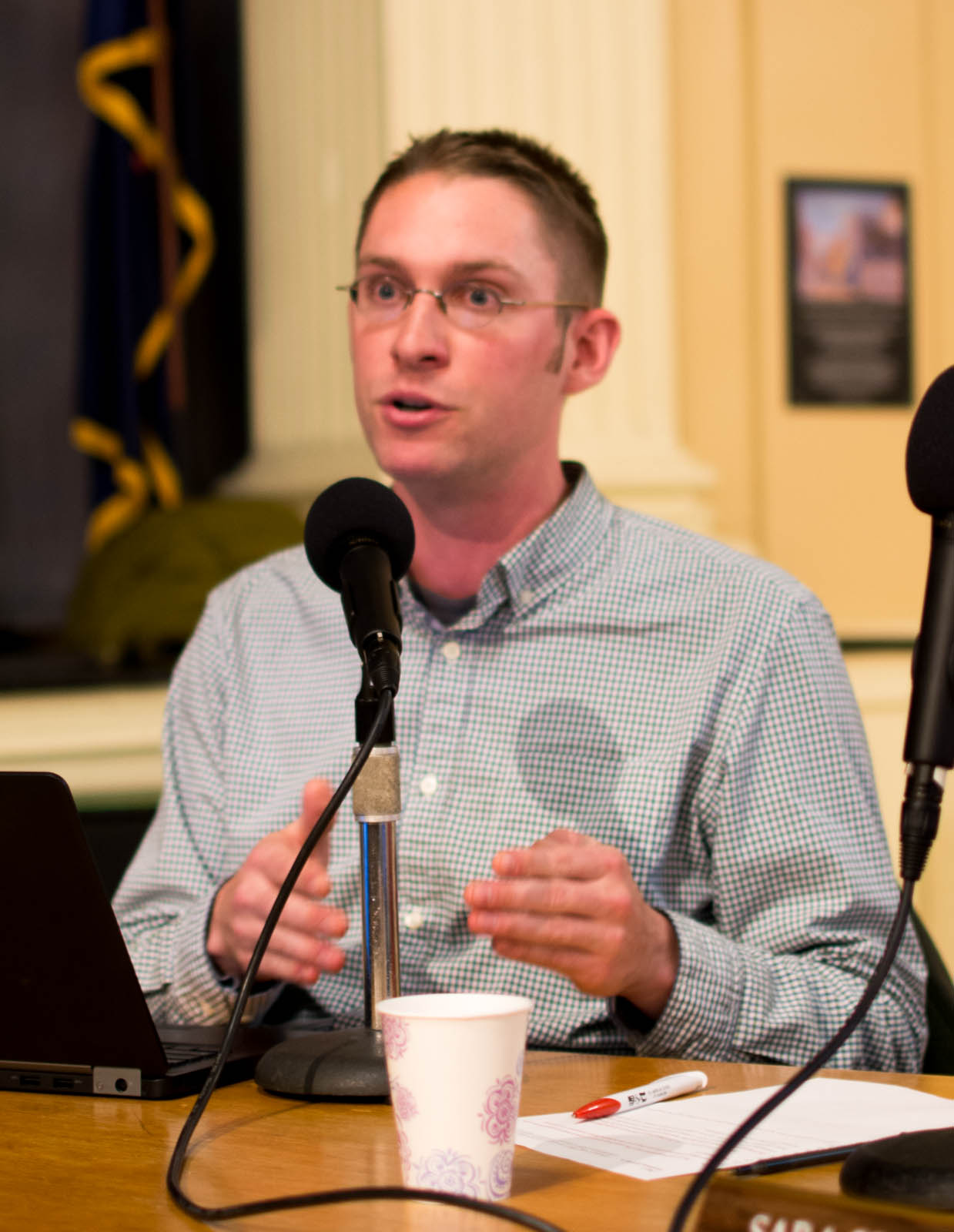
Councilor Max Tracy also opposes the DID. He said that he believes the process was rushed and the public option should have been further explored.
“How is a structure like this going to be accountable to the public, how is the public going to be able to weigh in and how will this organization be able to represent a downtown that maintains its character as welcoming to all?” he said.
Roof said that the city would retain substantial regulatory control over the new nonprofit, and would continue to provide all of the essential city services it does now.
Roof said that the current structure requires the Church Street Marketplace director to report to both the marketplace commission and the mayor. The nonprofit model will allow more input from various stakeholders, especially the businesses on side streets.
He said that the only core government function the marketplace department currently performs is the permitting of public space, which the city will retain.
“This proposal is very intentional in maintaining that responsibility and authority at the city,” he said. “There are no government functions that this entity would be performing.”
Another concern raised by opponents of the DID is the potential that it will raise already-high downtown rents and push out lower-income residents.
A study of business improvement districts in New York City found that while the districts enhance the physical appearance and increase sales, they also often raise rents on both commercial and residential properties.
“If the district is successful, this will lead to an increase in property values, and it is very very likely there will be increased rents, both residential and commercial,” Bergman said. “It’s just the way the market works.”

Bergman said the city should have diverted some of the funds raised by the DID into the housing trust fund to offset some of these affects.
Roof said that improvement districts are usually implemented in places where property values are already increasing.
“To say that it’s the improvement district which had singularly lead to the increase is property values is quite the claim,” he said. “And what’s the alternative? Is the alternative model that we want to see is property values to go down?”
DID opponents fear the district would make the downtown unwelcoming for homeless individuals in the city.
A study of 11 business improvement districts in California found that BIDs seek to exclude homeless populations from public spaces and often lobby for strengthening laws against sitting, sleeping and panhandling in public spaces.
“I think there’s a danger you will have a hyper-vigilant group of ambassadors who will make it very difficult for … homeless folks on Church Street and the side streets to be there exercising their First Amendment rights,” Bergman said.
Roof said the DID would not interfere with the work the Howard Center street outreach team does with the city’s homeless population. He said an ambassador program would help people find their way around downtown and navigate the city’s parking options.
“Just knowing what the fabric of our community is, anything that transgresses any of those values and principles with respect for our folks who are most vulnerable would be unacceptable at face value,” he said.
If the charter change — which needs a simple majority to pass — is supported by voters, the council would have more work to do to establish the new nonprofit entity.
Roof said he would be pushing for the city to require the DID to make an annual financial contribution to the Howard Center street outreach team as the council moves forward in that process.
Tracy said that the proposal was too slanted to business owners at the expense of the general public.
“I think it’s important to understand this as something really being driven by the business community that will really benefit them to a greater degree than the general public,” he said.
Roof said that the small business owners around Church Street “aren’t the Koch brothers,” and that improvement districts have worked in more than a thousand communities across the country.
“Of course, you can Google ‘downtown improvement district nightmares’ and cherry pick things that went wrong in a handful of communities,” he said. “But reasonable people will understand and see the fact of the matter that these things work.”
