[V]ermont state legislators are having a debate about slavery.
And you thought that one had been settled long ago.
You were right. It was, and according to local pride and tradition, settled in Vermont sooner than anywhere else. That’s because Vermont’s first constitution starts off with the words: “All persons born free; their natural rights; slavery prohibited.”
That was in 1777, before Vermont became a state and before any other state made a comparable declaration. Considering that slavery in all forms is banned by the U.S. Constitution and a host of laws, what’s to debate?
The cynical answer would be: “This is Vermont; some people will debate any fool thing.”
Not entirely an incorrect answer, but insufficient. What is going on is a civil, adult, scholarly and interesting (if abstract) conversation about history, law, the parsing of constitutional language, and how best to right a wrong if any wrong has been done.
Well, it’s mostly all that, with also (this being Vermont) a bit of less adult discussion, to be dealt with presently. Still, all in all perhaps another reason for local pride. Where else these days can lawmakers have a civil conversation?
In this case, they started the conversation because of some strange language in the paragraph right after that prohibition of slavery. It says that “no person … ought to be holden by law, to serve any person as a servant, slave or apprentice, after arriving to the age of twenty-one years. …”
Meaning, it seemed, that a child or teenage slave was okay. Instead of being a source of pride, that 1777 constitution threatened to turn into a blemish on Vermont’s reputation.
No surprise, then, that 25 of the 30 senators, a tri-partisan coalition which is about as close to consensus as anything gets, introduced Proposition 2. Because the 1777 ban “was only a partial prohibition, applicable to adults reaching a certain age,” the proposed amendment would completely “eliminate reference to slavery … (to) … serve as a foundation for addressing systemic racism in our State’s laws and institutions.”
Who could be against that?
Sen. Dick McCormack, D-Windsor, could. An avowed liberal committed to racial equality, McCormack said the original language “ought to remain as a historical artifact,” and that the state should not try “putting a smiley face on history.”

McCormack said he understood that he was going to lose this argument at least in the Government Operations Committee, where he said committee Chair Jeanette White, D-Windham, and the other members had been gracious even though he was being “the skunk at their party.”
As McCormack acknowledged, being gracious is easier because a constitutional amendment requires passage by both houses twice – with an election intervening – and then approval by voter referendum. So nothing is imminent, making it easy for all parties to remain calm.
To their credit, the committee members remained calm but also were persuaded to make a change thanks to another objection to the original wording of the amendment. This came from Vermont Law School Professor Peter Teachout, who has impressive credentials for analyzing both federal and Vermont constitutional law. Teachout told the committee that the assumption behind Proposition 2 was flawed. The original Article 1, he said, was not “only a partial prohibition” of slavery.
“There is no evidence that the framers of the first Vermont constitution intended to ban only adult slavery,” he said, or that “the framers intended to condone child slavery.” Removing all mention of slavery, he said, “denigrates the achievement represented by their adoption of Article 1 – making Vermont the first state to abolish slavery in any form.”
He won. The committee has revised the proposed amendment (it could revise it again) “to clarify that slavery in any form is prohibited.” It takes out that business about arriving at the age of 21, and removes the word “slave” from that sentence. But it still mentions slavery, by prohibiting it.
Not everyone totally bought Teachout’s interpretation. Curtiss Reed Jr., executive director of Vermont Partnership for Fairness & Diversity, who supported Proposition 2 before the committee last month, said “if that was their (the original framers) intention, Article 1 would read differently.”
But Reed said he and his organization would “fully support that language that prohibits slavery.”
Now to deal with the not-so-adult adult contribution. The only fervent opposition visible now comes from the Vermont Racial Justice Alliance. Its on-line “alert” includes a hashtag followed by “End Slavery VT.”
Slavery ended in Vermont some time ago. Exactly what the Alliance objects to is unclear from its statement, which is clear only that it wants the committee “to take additional testimony.” But its executive director, Mark Hughes, passed up the chance to appear before the committee, said Sen. White, who noted that he’s still welcome. Hughes did not respond to phone and email messages seeking comment.
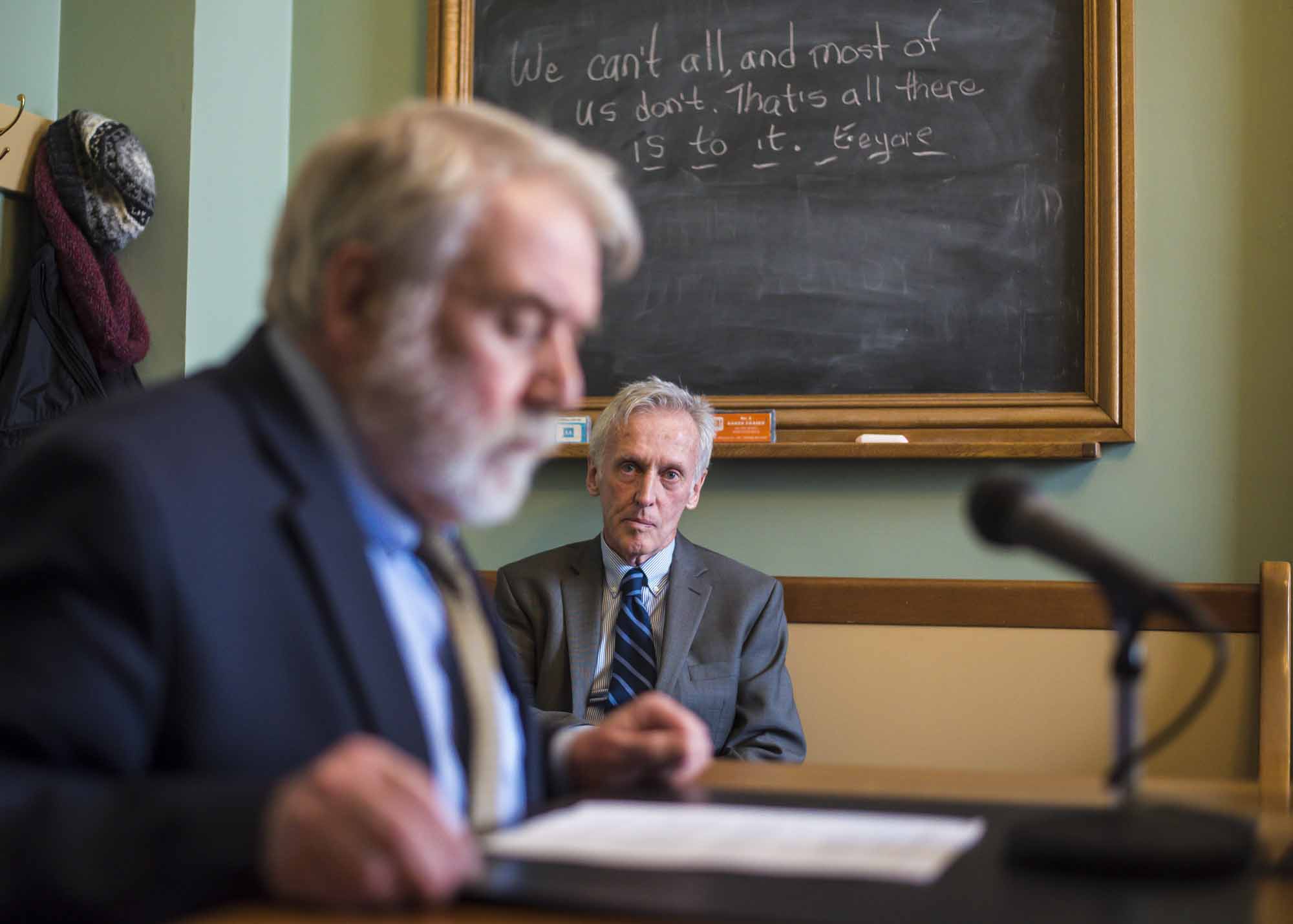
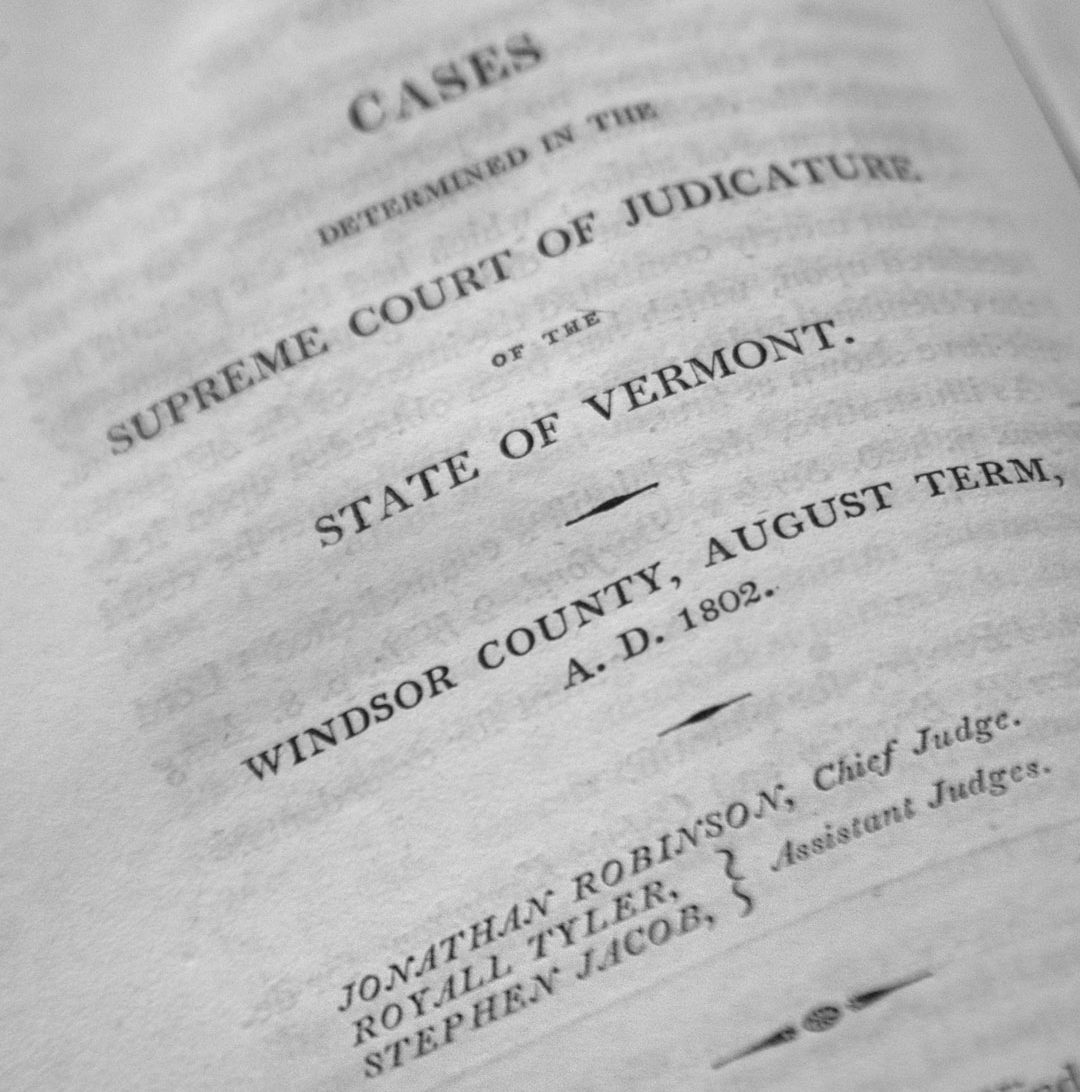
The conversation will continue, possibly for years, with sustained civility if Vermont is lucky. If Vermont is really lucky, the conversation will reveal more peculiarities like the one lurking behind Professor Teachout’s testimony, which included citing a Vermont Supreme Court finding in 1802 that “our state constitution is express, no inhabitant of the state can hold a slave.”
But some inhabitants did, including the defendant in that case, one Stephen Jacob, Esquire. The details are available in one of Mark Bushnell’s “Then Again” historical sketches in VTDigger, this one on April 23, 2017. For here, it suffices to say that Stephen Jacob, Esquire, was a judge (the title then used) of the Vermont Supreme Court.
He recused himself.