

[E]ducation spending in K-12 schools is projected to go up next year by more than was initially expected, according to an analysis by the Vermont Agency of Education.
An earlier forecast by Vermont Tax Commissioner Kaj Samsom, based in part on agency data, had predicted spending would go up by 3.2 percent statewide and that property tax rates would remain flat, largely thanks to growth in the underlying tax base.
But figures from actual school board-approved budgets have started coming in to the state. Brad James, the finance manager for the Agency of Education, told lawmakers he now pegged spending increases closer to 4 percent.
And that means a likely increase in property taxes, which account for most of the revenue in Vermont’s education fund.
The numbers aren’t final. Voters will still have to greenlight budgets on Town Meeting Day (or later). And several school boards haven’t warned budgets yet because of delays tied to state-mandated mergers under Act 46.

But James said he was reasonably confident, given data reported by about 90 districts, that he knew basically how much spending was set to increase.
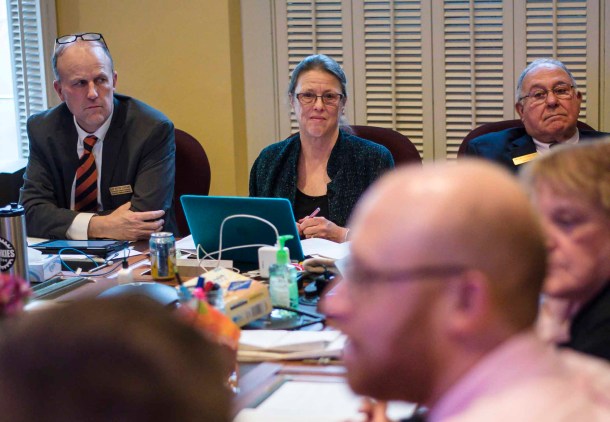
“I think we’re going to end up somewhere in the 3.9 to 4 (percent) range,” he told lawmakers in the House Education committee Thursday.
A big cost driver in education spending next year comes from health care. Insurance rates are set to go up 11.8 percent for the plan used by about 90 percent of active school employees. And offsetting revenues are also down, James noted.
The increase in education spending will put upward pressure on property taxes. But it’s unknown at this point by how much. Late in the session, using data from local budgets, lawmakers set what’s referred to as the “yield,” the key figure used for calculating local tax rates.
That work will begin now in the House Ways & Means committee.
The property tax yield was the final point of contention last year, leading the governor to call back lawmakers for a special session.
Gov. Phil Scott had urged school districts to keep spending increases below 2.5 percent. They did, and more. Statewide school spending increased by just 1.5 percent in 2018 compared to 2017.
However, it wasn’t enough to avoid a property tax increase without using “one-time” funds to artificially buy down the tax rate.
Scott suggested making further cuts to school budgets after they were approved at the local level, but the idea met stiff resistance.
Ultimately, the governor and Democratic leaders of the Legislature agreed to buy down tax rates on primary residences and increase the rate on “nonresidential” properties slightly.
