


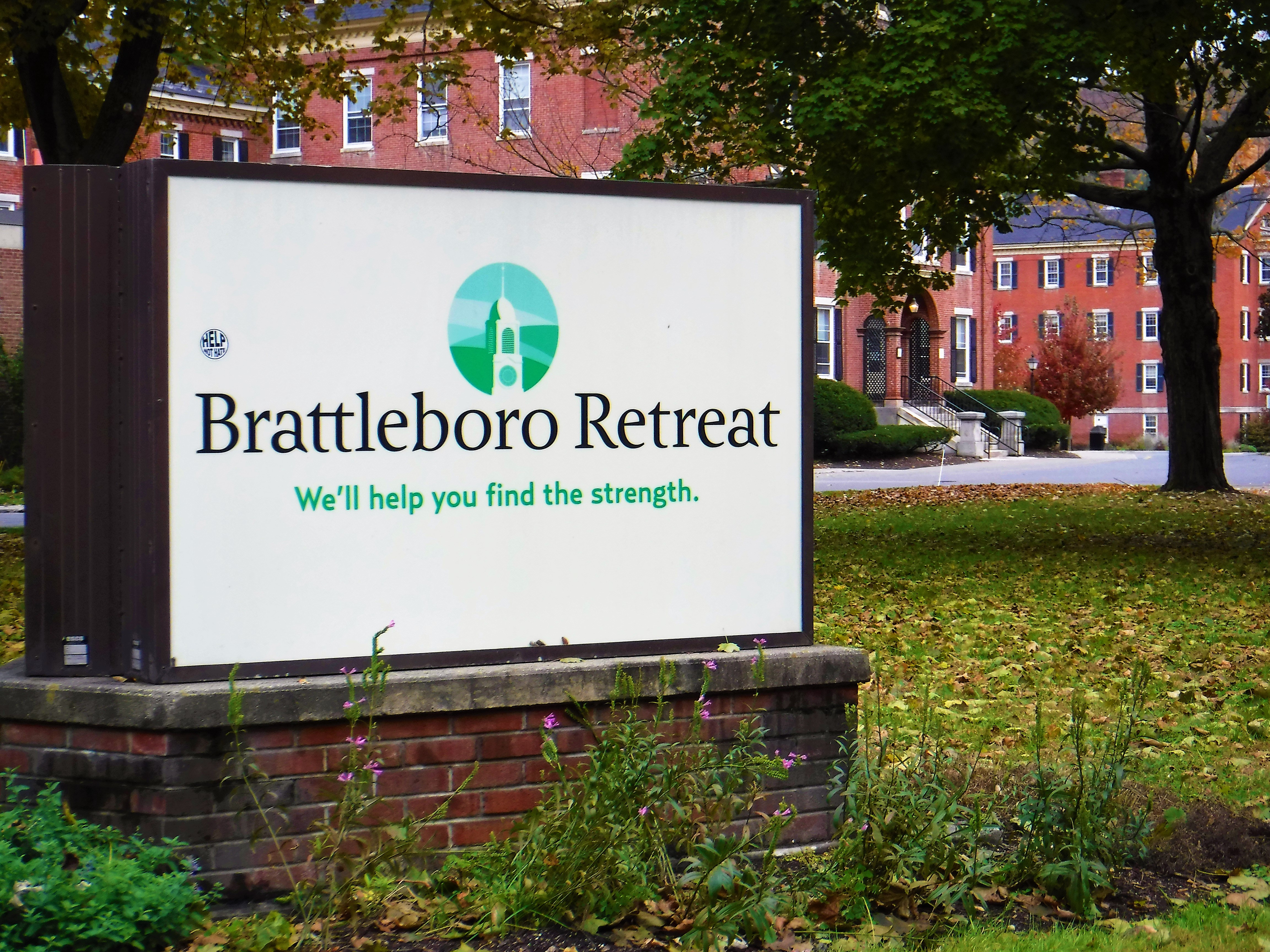
[T]he Brattleboro Retreat is on track to open 16 new inpatient psychiatric beds around this time next year, Chief Executive Officer Louis Josephson said Friday.
The project, funded with $5.5 million in state money, is meant to ease pressure on Vermont’s overtaxed mental health system.
A dozen of the new beds will be contracted for exclusive use by the state. And Vermont Human Services Secretary Al Gobeille said he’s asking the Retreat “to move as fast as possible” to get those beds ready for occupancy.
“I know it takes time, but we need it fast,” Gobeille said. “I’m not frustrated in any way. I’m just cheering them on to move.”
Josephson said the Retreat may be able to accelerate the current schedule, barring unforeseen complications.
“The only X factor for us is, we’re working in old buildings, and our contractors are always cautious,” he said.
The sense of urgency is due to the growing number of Vermonters seeking mental health treatment, and the increasing severity of their needs. A shortage of mental health treatment capacity has left many of those patients waiting in medical emergency rooms, which has led to regulatory troubles for some hospitals.
Psychiatric inpatient beds are just one part of the solution. But there now are two significant efforts under way to boost inpatient capacity: The 16-bed Retreat project is one, and the University of Vermont Health Network is planning to build 25 new beds in Berlin.
Of those two, the Retreat project is on a faster track. In briefings before state officials and legislators on Friday, Josephson said he’s targeting completion for February or March of 2020.
The Retreat is lucky to have “vacant space that could be renovated,” Josephson said, so no new buildings are required. Nevertheless, he said the project is complex because the Retreat must relocate and renovate several offices and treatment programs on its campus to properly accommodate the new beds.
State officials and Retreat administrators also had to work through the details of a new contractual agreement. That’s now complete, and Gobeille said the state is ready for the Retreat to move forward.
Though state capital money for construction has been allocated, “if they were to open today, there’s nothing in our budget to operate it – so we’d have to deal with that in some way,” Gobeille said. “And we would figure that out. So my point to them is, all ahead full. Let’s get this done.”
Josephson said the Retreat has “a very experienced contractor who’s done work with us in the past,” and he said the project is on schedule and on budget. Also, legislation approved last year says the Retreat doesn’t need to seek a Green Mountain Care Board certificate of need for the new beds.
“Right now, knowing what I know, I’d be surprised if we couldn’t beat the timeline” of early 2020, Josephson said. “But I just don’t want to overpromise.”
The project is the second such partnership between the Retreat and the state: In 2013, the Retreat opened a 14-bed adult “intensive inpatient” unit to help replace treatment capacity lost when Tropical Storm Irene’s flooding closed the Vermont State Hospital in 2011.
“The Brattleboro Retreat has been a real partner with the state since we lost the state hospital,” said Rep. Alice Emmons, D-Springfield and chair of the House Corrections and Institutions Committee.
The new Retreat beds will be billed as “temporary” until there’s more psychiatric inpatient treatment available elsewhere in Vermont.
“The beds we’re building right now could be used in other levels of care for patients in the future,” Josephson said – possibly as a “step-down” facility for patients who no longer need full hospitalization.
Josephson gave updates on several other Retreat matters while in Montpelier on Friday, including:
• The Retreat, which employs 665 full-time-equivalent staff, currently operates 119 inpatient beds and has an average daily inpatient census of 107. There were 3,972 inpatient admissions in 2018.
• The Retreat treats both psychiatric and addiction issues, but most patients – about 78 percent in 2018 – had a primary mental health diagnosis. Josephson noted that psychiatric and addiction issues often are co-occurring.
• Half of the Retreat’s patients are insured by Medicaid, and Josephson said the state’s 2018 decision to boost the Retreat’s Medicaid-reimbursement rates for child and adult inpatient psychiatric care has been helpful. “But we had been essentially flat in terms of Medicaid increases for seven years,” Josephson said. “It kind of got us back to where we should have been.”
• Josephson said a Boston-based company has completed an “initial assessment” of the Retreat’s billing practices, as per the requirements of an agreement with the state last year. “There are really no surprises from our standpoint. We feel like we’ve made some significant improvements,” he said. “The report reflects it. But it also documents all the things we know already that we need to do.”
• Josephson is hopeful that state and federal officials can find a solution on future Medicaid funding for mental health facilities like the Retreat. Funding for “institutions for mental disease” is being phased out, though federal officials have opened the door for states to continue receiving that money under special circumstances. Absent some solution, the Retreat “would have to shrink dramatically” if Medicaid money is cut off, Josephson said.
