


[A] proposed change in the Green Mountain Care Board’s budget likely will lead to higher costs for Vermont health care consumers, board Chair Kevin Mullin said Wednesday.
Gov. Phil Scott’s administration wants to shift the manner in which the board is funded by taking away roughly $2.5 million in Medicaid program money and replacing it with “billback” money collected from insurers, hospitals and OneCare Vermont.
The administration says the change relieves pressure on the Medicaid budget and makes sense from a policy standpoint because entities regulated by the care board would be covering more of the board’s budget.
But care board leaders expect hospitals and insurers to simply pass their billback charges onto Vermonters, further exacerbating the pressures of growing health care costs.
“Ultimately, as we all know … the consumer is going to pay,” Mullin told members of the House Health Care Committee.
The care board, which is tasked with improving health care quality while containing costs, oversees insurance rates, accountable care organizations, hospital budgets and major capital investments made by health care providers.
The board also is involved in a host of other health care activities and analyses – a list that grows regularly as lawmakers task the board with coordinating various projects and studies.
In spite of that, documents show that the care board’s funding has been shrinking since fiscal 2017. For fiscal year 2020, which begins July 1 of this year, the board’s proposed budget is $7.98 million – down a little less than 1 percent from the current fiscal year.

The real change for fiscal 2020 is the disappearance of “global commitment” Medicaid money. The board already gets some funding by billing various health care entities, but the Scott administration wants billback to increase by 72 percent to cover the deletion of global commitment funds in the care board budget.
In recent testimony before the House Health Care Committee, Human Services Secretary Al Gobeille detailed two reasons for the change: He said the state is nearing mandatory caps on global commitment spending, and he also believes hospitals and insurers should be footing more of the bill for the Green Mountain Care Board.
“Regulatory entities should be funded by the people they regulate,” Gobeille said.
On Wednesday, however, a parade of witnesses told the Health Care Committee that the change could have negative effects because it represents a significant, additional cost for hospitals and insurers.
Care board figures show that Vermont hospitals’ collective billback payments would jump from an estimated $888,000 in the current fiscal year to nearly $2.97 million in fiscal 2020. Insurers would face a similar hike, from $851,000 currently to $2.37 million.
The proposal “hits hospitals really hard” at a time when they are facing financial pressures due to increasing costs and new health care reform investments, said Devon Green, vice president of government relations for the Vermont Association of Hospitals and Health Systems.
“Hospitals have had to make tough choices, get lean and become more efficient,” the association’s testimony says. “Before adding further cost to hospitals, the Green Mountain Care Board should focus on their statutory duties, and the Legislature should take a hard look at the work it is asking the Green Mountain Care Board to do.”
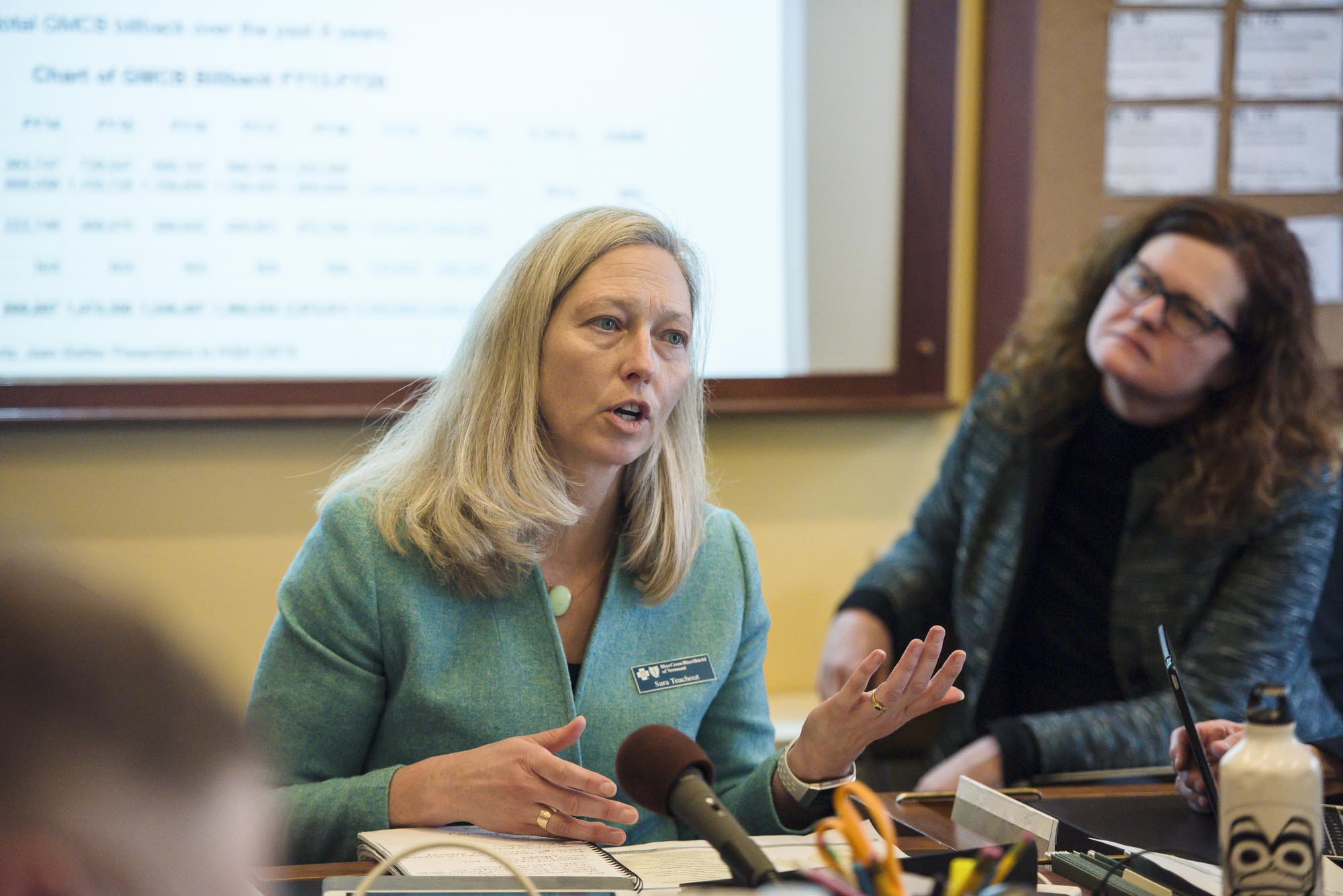
Insurers also protested. Sara Teachout of Blue Cross and Blue Shield of Vermont told lawmakers that the Scott administration’s proposal is a “policy choice to have these costs paid for by select health insurance ratepayers rather than through broad-based tax sources.”
Given that the care board has duties that go beyond direct regulation of hospitals, insurers and accountable care organizations, “it is inappropriate to pass the costs for those additional activities to the directly regulated consumers,” Teachout said.
OneCare Vermont, the Colchester accountable care organization coordinating the state’s [all-payer] health care reform program, is a relative newcomer to billback obligations. Under the Scott administration’s plan, OneCare’s payments to the care board would go from an estimated $154,000 in the current year to $593,000 next fiscal year.
Tom Borys, OneCare’s finance director, said the increased either would result in fewer health care reform investments or would be passed on to hospitals.
The potential for passing on the new billback cost worries care board officials. The board submitted calculations showing that the proposal would have an average annual impact of $3.87 per Vermonter due to increased hospital costs and $10.42 per Vermonter due to increased insurer costs.
The assumption, board documents say, is that “hospitals will pass the (billback) increase on to insurers,” and insurers then will spread the increase among their customers.
Teachout confirmed as much, saying Blue Cross “builds these billback amounts into the premiums paid by our members.”
Even a recipient of billback money protested the change. The Office of the Health Care Advocate, which gets some funding via the care board, is opposed to switching the board’s funding mechanism.
“We argue with all the regulated entities … about their rates and budgets every year, always with the perspective that it costs too much,” said Mike Fisher, chief health care advocate. “Let’s not push more costs into those rates and budgets.”
The Green Mountain Care Board’s budget is subject to change throughout the legislative process. Mullin made clear that, however the board is funded, any cuts could have a big impact.
The board already sliced expenses for the current fiscal year, Mullin said. Further reductions, he said, “would get into some very tough decisions.”
