


[A]dvocates of a new mandatory waiting period bill for firearm purchases are focusing this year’s gun reform debate in the Legislature on suicide prevention.
A panel discussion this week at the Capital Plaza Hotel, organized by supporters of bill proposed in the House and Senate, centered almost entirely around the role guns play in Vermont suicides, and the role of legislation in preventing them.
Vermont has the lowest suicide attempt rate in the country, but a 35 percent higher suicide rate than the national average — with statistics showing that home gun ownership accounts for about 80 percent of the variance between states.
Hannah Shearer, a lawyer at the Giffords Law Center to Prevent Gun Violence, talked about the myth that people who commit suicide have reached a point of no return. “When in reality,” she said, “we know most suicide attempts are an impulsive, desperate reaction to an immediate stressor.”
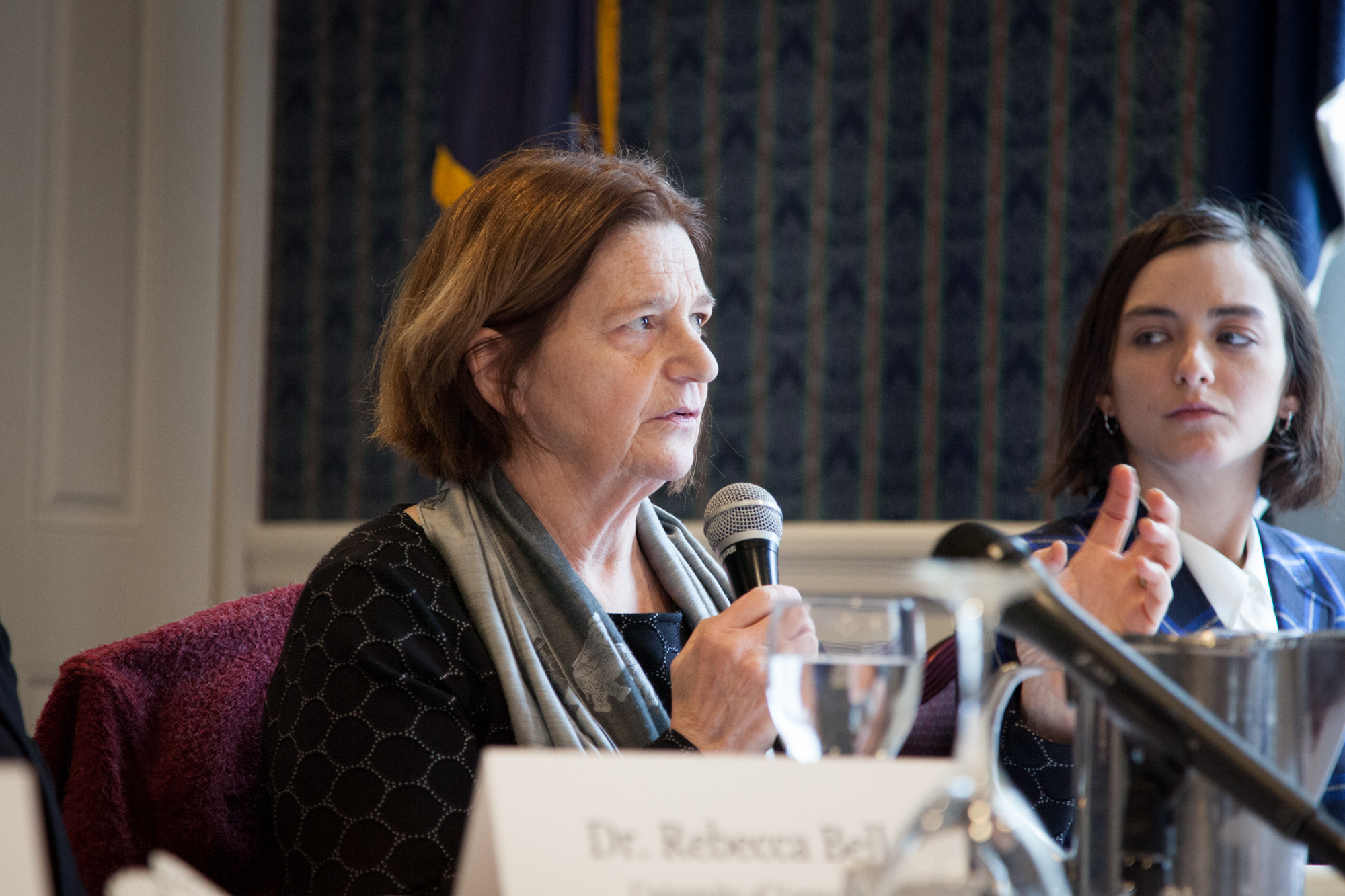
Surveys of young people who attempted suicide show 24 percent wait less than five minutes between deciding to commit suicide and attempting, and 71 percent wait less than an hour. And those who use more lethal methods, like guns, tend to be doing so more impulsively, according to Becca Bell, a pediatric physician at UVM Medical Center.
Those on the panel countered some of the arguments put forward by some opponents of a waiting period — such as the idea that people determined to kill themselves will find a way if guns aren’t available, and that the problem that really needs to be addressed is mental illness.
Bell said suicide and mental illness aren’t as connected as people think.
Alison Krompf, a senior police adviser in the Department of Health, said research shows that only 38 percent of people who die by suicide were seeking mental health treatment, and the majority have no known mental illness.
The relationship between suicide and guns, however, is far more pronounced, according to Bell.
Firearms account for just 5 percent of suicide attempts in the United States, but 50 percent of suicide deaths. Shearer cited research disproving the idea that without immediate access to guns, people considering suicide will just “find another way” — noting that 90 percent of people who attempt suicide and survive don’t go on to die by suicide.
Krompf identified several reasons why Vermont faces a far higher suicide rate than its neighbors: Vermont’s population is far older, whiter, more rural, and has more veterans than other states — all groups with disproportionately high suicide rates. And gun ownership only exacerbates those factors.
Last year, Gov. Phil Scott signed gun legislation expanding background checks, raising the age limit to 21 for firearm purchases, limiting magazine sizes and banning bump stocks. But Scott says he opposes further gun control legislation this session, including the waiting period bill.
“I’m always willing to listen,” Scott said at a press conference last week. “But I think we’ve done a lot in terms of gun safety measures over the last year.”
The waiting period bill in the Statehouse follows that of nine other states and the District of Columbia, all of which have some form of waiting period in place. Additionally, 13 states have license requirements for firearm purchases (which tend to create de facto waiting periods).

“[Waiting periods] provide a short but critical cooling off period,” Shearer of the Giffords Law Center said. “As we discussed, suicide attempts are typically quite impulsive, and so a waiting period law means that a person who’s in acute and temporary crisis doesn’t have access to the most lethal means they can get to attempt suicide.”
Clai Lasher-Sommers, executive director of GunSense Vermont, said the waiting period bill is an important addition to the gun legislation that passed last session.
“What a waiting period bill will do is build the success of all of the bills that we passed last session,” Lasher-Summers said. “Passing a waiting period bill allows the idea of silence and suicide to be not so prevalent. Just by a state saying, ‘We have a problem, and this is a bill that will address that problem,’ is very powerful.”
