


New statistics show a small increase in fatal opioid overdoses last year, but state officials say they’re making progress by investing in prevention, treatment and recovery initiatives.
State Health Commissioner Mark Levine on Thursday said preliminary statistics show that 110 Vermonters died from opioid overdose in 2018. That’s up slightly from 108 deaths in 2017, Levine said.
But Levine and Gov. Phil Scott noted that the annual rate of increase in Vermont overdose deaths has slowed dramatically in recent years. And they offered a new report detailing a variety of programs designed to “turn the tide” on the opioid epidemic.
“It’s hard to use the term ‘success’ when people are dying,” Scott said. “At the same time, to slow down the rate is important.”
State statistics show that 39 Vermonters died of opioid overdose in 2010, and the general trend has been upward since then – albeit with occasional downward dips. There were 74 deaths in 2015, 96 in 2016 and – via the state’s initial count – 101 the following year.

Levine on Thursday said the 2017 overdose numbers have been revised to 108 to account for additional reports of Vermonters who died of overdoses in other states.
While the Health Department is still finalizing a data brief on 2018 overdose statistics, “we believe that the number that we’re going to have … is going to be 110,” Levine said. “So, essentially the same. Certainly, a marked reduction in the so-called rate of increase.”
Levine said about three-quarters of those deaths have a connection to fentanyl, continuing an upward trend. The powerful synthetic drug represents “a whole new challenge across the country to try to keep people alive,” Levine said, and it makes the state’s addiction programs “even more critical.”
Those programs were the focus of the governor’s press conference on Thursday, as officials released the latest update from Scott’s Opioid Coordination Council. Scott called it “a roadmap for the future,” but it also featured ongoing efforts to address opioid addiction.
That includes the growth of medication-assisted treatment. Officials cited the recent expansion of treatment in prisons as well as the continued growth of the state’s “hub and spoke” treatment system.
“There is effectively no waiting list for anyone who wants to receive treatment services … that’s a remarkable accomplishment for any state in this country,” Levine said. “We now have the capacity to treat anyone who so desires.”
The state also is emphasizing syringe programs, not just for the benefit of clean needles but also because such programs are important points of contact for those who are addicted to opioids. For instance, Safe Recovery in Burlington now can offer same-day access to buprenorphine.
“These provide a real connection for individuals with opioid use disorder to a community of caring individuals,” Levine said.
There’s also an emphasis on those who are in recovery from addiction. For example, there are now hundreds of trained recovery coaches in Vermont in a variety of settings, including hospitals.
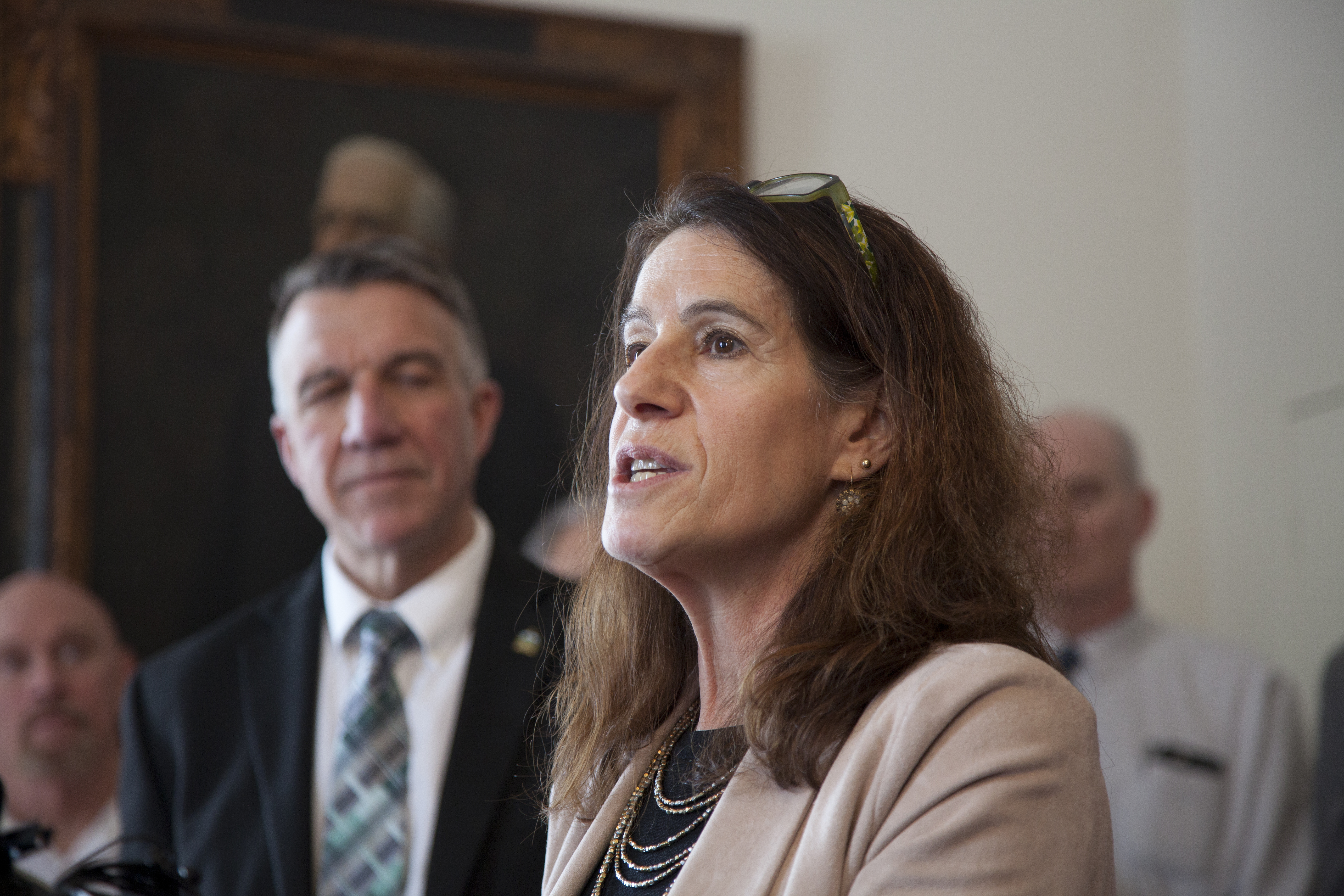
The goal is to “meet people where they are,” said Jolinda LaClair, the state’s director of drug prevention policy. She said many recovery coaches are in recovery themselves, which “makes your connection to a person who is not yet in treatment much more powerful.”
Officials also want to expand available housing for Vermonters in recovery; LaClair said there is an inventory and needs assessment under way. “The first thing you need if you’re a person with addiction, in treatment and in recovery, is a home,” she said.
After housing, employment also is a necessity. LaClair said the Labor Department has placed a consultant in recovery centers around the state, and she said officials are working to “provide employers with the tools that they need to be successful in employing people in recovery.”
Prevention is another priority. That takes a variety of forms including education campaigns; after-school programs; drug-disposal kiosks; and an expanded nurse home-visiting program focused on mothers and young children.
“Vermont has identified a gap in specialized support for pregnant and parenting women,” LaClair said.
Some of those initiatives are supported by allocations from tobacco-settlement funding obtained by the state last year. Human Services Secretary Al Gobeille said those funds either have already been approved by the Legislature or are in the pending budget adjustment bill for fiscal 2019.
Federal funds also have played an important role. For instance, LaClair said recovery coaches are “to a great extent funded” by money from the U.S. Department of Health and Human Services.
While Vermont officials are embracing a variety of strategies to deal with the opioid epidemic, they’re still steadfastly opposed to creation of any supervised injection sites.
A report from the Opioid Coordination Council last year declared that injection sites were “virtually impossible to accomplish legally” in Vermont due to federal law.
The council “came to the conclusion based on the facts that it wasn’t something that would be a priority for us right now,” Gobeille said Thursday. “And I think that we made the right decision. We have limited resources.”
