


[T]he Vermont State Police would rather spend more than $560,000 allocated for officer body cameras on weapons instead, including AR-15 semi-automatic service rifles, but lawmakers are balking at shifting the funds.
Col. Matthew Birmingham, the head of the VSP, said Vermont is one of the few states where state police do not carry service rifles in their regular arsenal. A Jan. 7 shooting in Arlington, where a suspect shot at a cruiser with an AK-47 assault rifle, convinced him and Public Safety Commissioner Tom Anderson to make the reallocation request. Many officers, Birmingham said, bring their own service rifles to work, including a trooper who responded to the mental health call in Arlington.
“These troopers are lucky to be alive, and if not for a personally owned patrol rifle, they might have been killed,” Birmingham said.
Birmingham said he and Anderson were reviewing the need for service rifles when the Arlington incident “ended these discussions.”
“We decided that patrol rifles are now essential officer safety equipment for every uniform trooper and sergeant in the VSP. We are therefore committed to this goal, which is why we requested the reallocation at this time,” he told VTDigger.

Birmingham said his organization is still committed to body cameras, particularly for tactical units, but said prohibitive storage costs, estimated in the millions, made rolling out body cameras impractical without either a change in the records retention law or a higher annual allocation.
Key lawmakers are pushing back on the request by Birmingham and Anderson, two high-ranking Scott administration public safety officials. The lawmakers argue the decision to purchase body cameras for officers came last year after lengthy discussion. Arming officers with service rifles, they said, may be warranted but needs to be debated in committees first.
Sen. Tim Ashe, the head of the Senate, said shifting the funds in the current year’s budget from cameras, which he said provide transparency, to weapons was “incongruous” and combining two unrelated issues.
Ashe, D/P-Chittenden, said if the state police need additional equipment, they should make a separate request through the regular budget process.
“The idea that we would raid a fund that was intended to bring transparency for law enforcement interactions, eliminate the funds available for that in order to solve this other problem, you’re conflating the two. We can have that discussion another day,” he said.

“I don’t know that this should be a choice between properly equipped law enforcement versus one of the most important tools to protect both law enforcement officials and the subjects of police incidents,” Ashe said, adding the body cameras were sought because of allegations that police had acted improperly in some police shootings in which civilians were killed.
The original allocation two years ago of $1.2 million also included funds for replacing cruiser cameras, which state police have had for two decades, body cameras and hiring a consultant to study body camera implementation. The consultant’s report found storage costs could run from $1.2 million to $2.5 million annually, Birmingham said.
The House did not grant the request for the camera-to-weapons transfer; instead the House Appropriations Committee put the $561,782 into next year’s budget just proposed by Gov. Phil Scott, which will allow time for debate.
Rep. Kitty Toll, D-Danville, the chair of the House Appropriation Committee, said she wanted more information about the need for the rifles.
“I just know there was conversation around the need for body cameras and that seemed to be the priority at the time. And so if it was a priority at the time, if those priorities have changed, it’s a bigger conversation not just with us but with the policy committee as well,” she said.
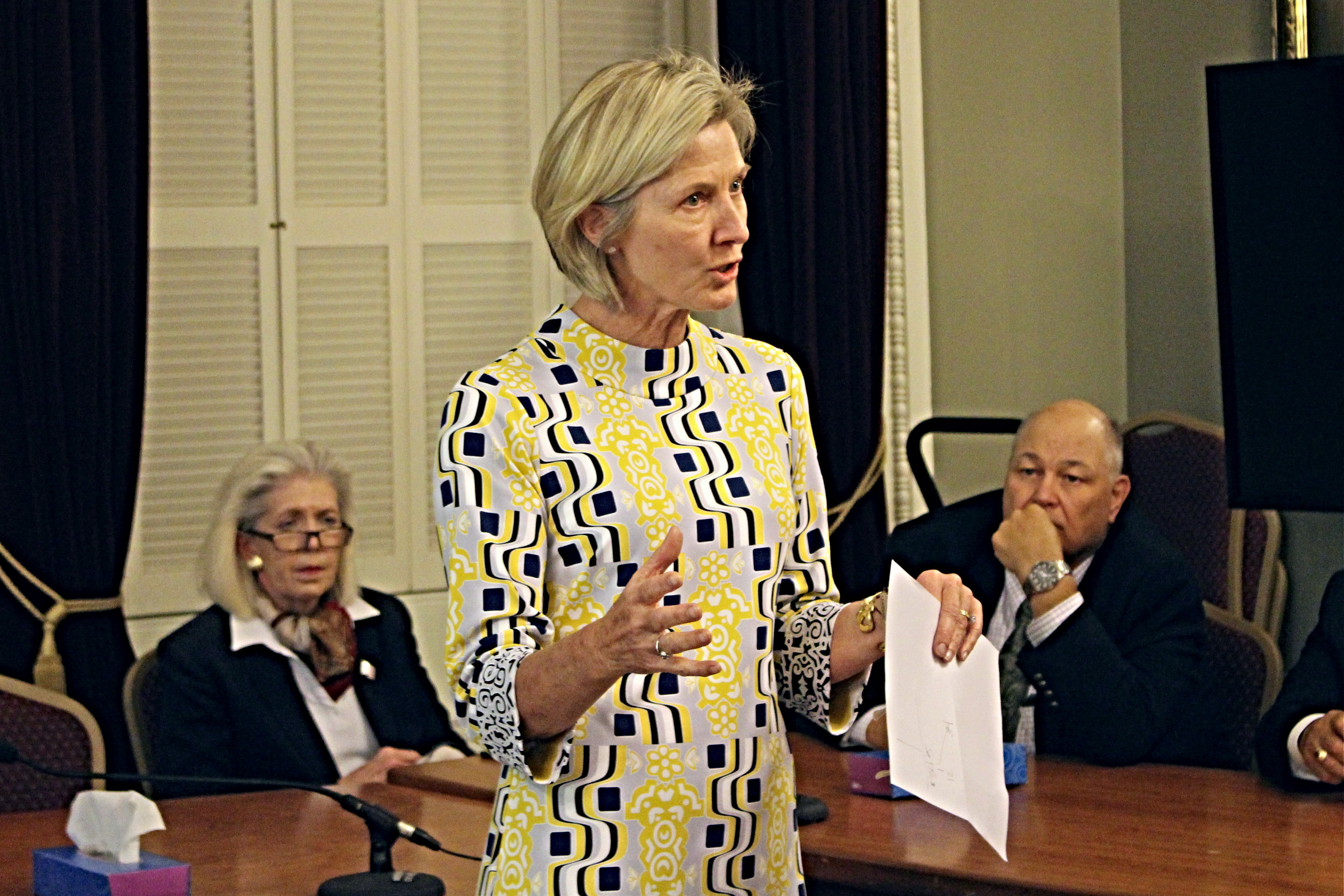
Sen. Dick Sears, a member of the Senate Appropriations Committee and chair of Senate Judiciary, which deals with law enforcement issues, said he was disappointed after all the debate that public safety officials wanted to take the funds from body cameras.
Sears also said the 325 state police officers “certainly” needed more powerful weapons than their services revolvers, but that it should be considered separately. He estimated the cost for the weapons requested at approximately $200,000. In addition to AR-15’s, police requested the reallocation allow for the purchase of service revolvers, radio equipment and other “less lethal weapons.”
“I really think it’s a policy issue, not a budget issue. The way they‘ve attacked it is we’re just not going to do the body cameras,” Sears, D-Bennington, said Tuesday.
Sears, Ashe, Toll and Jane Kitchel, the chair of the Senate Appropriations Committee, said state requirements on retaining public documents could be adjusted to protect the public but also keep down the storage costs.
Kitchel, D-Caledonia, agreed with her colleagues the two issues — body cameras and weapons — should be kept separate.

“We’re not abandoning our policy approach for body cameras,” Kitchel said.
“I think the committee is feeling that they spent hours taking testimony and coming to an agreement and then to have it come in a budget adjustment ‘Oh by the way, it’s too expensive, we’re not going to do it’… to have it come back, ‘Oh by the way I guess we won’t,’ you can understand why people are saying wait a minute, this was very important to us, it’s not something we just want to rubber stamp,” she said.
Kitchel said the proposal would likely be debated as part of next year’s budget and left only a small hope additional funds for guns could be added to the current year’s budget adjustment.
Birmingham said the reallocation request in no way means the VSP doesn’t want body cameras.
“We remain committed to working with the Legislature to secure ongoing funding for body cameras and the storage of data these cameras will generate,” the state police head said.

