



[P]roblems with the rollout of a statewide data collection system have delayed Vermont’s reporting of school-by-school test results by several months, and agency officials still aren’t sure when reports will be ready for the public.
The Vermont Agency of Education typically publishes the results from the spring’s statewide testing in math and English in the fall, and in October 2018, they released top-line statewide results. But school-by-school reports, which are usually put out at the same time, would have to wait until December, the agency said at the time.
Now the state says it’s still cleaning data and release of the results is pushed back indefinitely.
“As yet we don’t have a firm timeline of when that will be completed,” agency spokesperson Ted Fisher said.
Schools, teachers and parents already have access to individual student scores. What’s missing is what the state calls its “spring census,” a collection of demographic data that matches students, scores and schools together. The census is necessary for analyzing how individual schools did overall, with breakdowns in performance for different demographic groups, like low-income students or students with disabilities.
That analysis is necessary for federally-mandated reporting, deciding which schools get extra money, and reports that communities often expect to see from local school officials around budgeting time.
The problem, officials say, stem from the difficult – and itself much delayed – implementation of the agency’s Statewide Longitudinal Data System, a new, streamlined data collection process the state received a $5 million federal grant in 2012 to create. Rollout of the SLDS has been pushed back time and time again, but last year, officials decided to finally use it for the census.
“Even with significant training that was planned and implemented, personnel who had never worked closely with the new system faced some challenges and glitches the first time they engaged with it,” Fisher said.
As of Jan. 2, all supervisory unions have successfully submitted their spring census data. But errors in the submissions are still being reviewed for 14 of 57 unions, Fisher said.
Former agency officials, including Rebecca Holcombe, who was Secretary of Education from 2014 to April 2018, said several things contributed to problems with the SLDS. The original vendor hired to create the system was bought out and backed out of the contract, they said. And the Agency of Digital Services, which was created by Gov. Phil Scott in 2017, took Agency staff away from the project and made it unclear who was responsible for getting the work done.
But the fundamental problem, they said, is that the agency is badly understaffed.
“Over the time that I was there the staff dedicated to implementing the system was the same staff that was responsible for daily work, which exceeded current capacity,” said Amy Fowler, the agency’s former deputy secretary.
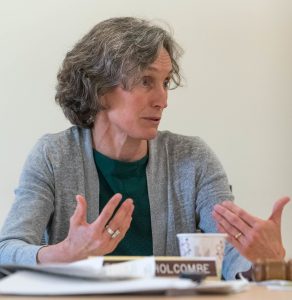
Holcombe, who is active on social media, frequently talks about stagnant funding at the agency, which currently relies on federal grants for about 80 percent of its operating budget. in 2017, she openly defied lawmakers, telling them her staff could not complete a study they had ordered without additional resources. She is quick to note that major new education initiatives – including Act 46, Vermont’s school district consolidation law – were enacted without any additional staff hired at the agency level.
“I think there’s two ways to kill an institution. One is to give it too much to do. The other is to underfund it. I think Vermont does both,” Holcombe said. “The net effect is to make people think government can’t do its job.”
The delay in analyzing test scores has complicated federally mandated reporting to the U.S. Department of Education. According to Vermont’s plan under the Every Student Succeeds Act, the successor law to No Child Left Behind, the state was expected to identify schools that need extra supports, using the 2017-18 scores, by fall 2018. But it can’t do that until the census data is finalized and the school-by-school reports are created.
Those identifications, meanwhile, are necessary for doling out extra federal funds to help low-performing schools. According to the state’s FY19 budget book, Vermont has a little over $2.2 million in federal school improvement money to give schools.
“It’s really unfortunate that the financial resources to help our neediest students are sitting at the agency rather than being given to schools to help their kids,” Fowler said.
With Town Meeting Day coming around the bend, many local officials who typically include test scores in their districts’ annual reports are getting nervous as the ready to face voters.
“We’re usually going to press right now,” said Washington Central Supervisory Union superintendent Bill Kimball. “And we don’t have that information.”
