

Nearly 40 percent of Vermont children under 5 who likely need child care don’t have access to a slot in a regulated program.
That’s according to one of two new reports out today from Building Bright Futures, a public-private partnership established by law to monitor the state’s early care, health and education system.
Building Bright Futures on Wednesday released a package of recommendations for lawmakers to consider as they returned to the Statehouse for the session. The recommendations include addressing workforce shortages in the child care industry by developing a wage scale for early education workers, debt forgiveness and scholarships, as well as better funded child care subsidies and better training around stress and trauma for child care and early education workers.
The reports highlight ways in which families and children are, in some ways, living more precariously. The number of children in protective custody, for example, continues to grow – for kids under 9, the rate has nearly doubled between 2012 and 2016, according to the report. And the number of children under 6 living in poverty also increased slightly between 2010 and 2016, from 38.2 percent to 39.7 percent.
The effects of trauma and chronic stress on development and learning are of increasing concern in education circles, and schools have invested more, in recent years, on social and emotional supports for students. Building Bright Futures argues in its reports that the state needs to double-down on its efforts to scale up strategies for intervention that schools have already begun to pilot.
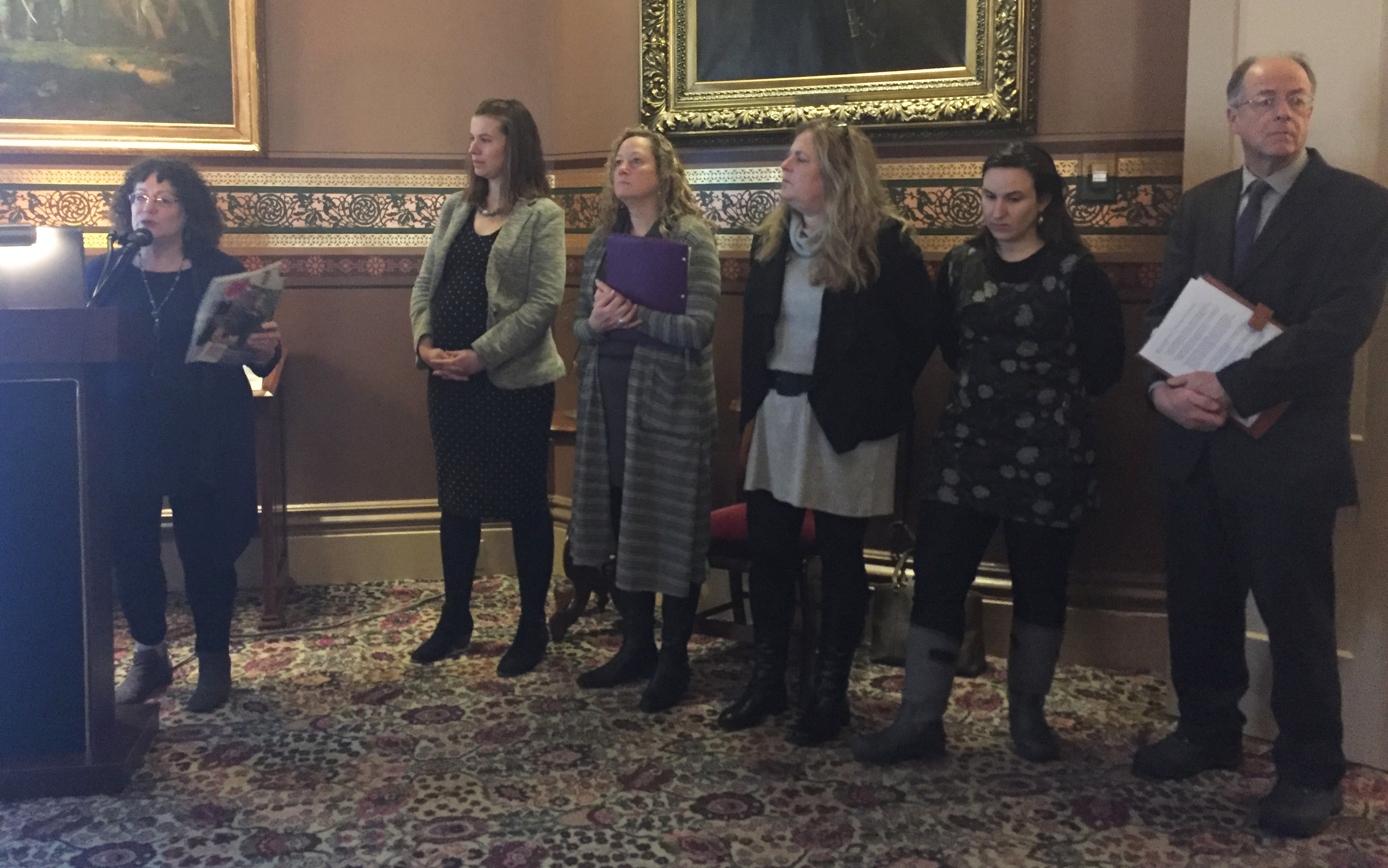
“The good news is that these trends are not irreversible,” Building Bright Futures interim executive director Carolyn Wesley said at a press conference at the Statehouse Wednesday. “Positive, safe, nurturing relationships and environments can have just as much as of a positive impact on healthy development as adverse experiences can have a negative impact.”
The reports also emphasized the twin problems of skyrocketing costs for child care and a shortage of available slots. The annual, median cost for a family with two children in center-based care was $23,660 in 2017, according one report. And even with subsidies, a family with a household income of $50,000 will have spent an estimated 42 percent of the family’s total income for full-time child care in 2018.

Senate Majority Leader Becca Balint, D-Windham, said in an interview that better funding of child care subsidies will absolutely be on the docket this session.
“We can’t do this without an infusion of cash into the system for these families,” she said.
Increasing access to child care is one of Gov. Phil Scott’s key priorities. But his pitch on the subject – to beef up subsidies using new online sales tax revenues – is being met with resistance from public preK-12 leaders, who note all sales tax revenues have already been promised to the education fund.
Balint also believes lawmakers will likely discuss how to better support the early education workforce. The industry pays notoriously low wages, and child care centers report that recruiting and retaining qualified staff is increasingly difficult, and making expanding to meet demand nearly impossible.
“We know we have a shortage of these educators, and we need to make it more possible for them to be in the field,” she said.
The reports suggest loan forgiveness and scholarships for early education workers, and argues the state should create baseline expectations about how qualified early education workers should be – and new wage scales to accompany those expectations.
But for Balint, subsidies and boosts for the child care workers are relatively low-hanging fruit in the reforms needed in the sector. To actually get all children access to quality care will be a “multi-year lift,” she said, and require getting buy-in from those who don’t believe the state should be responsible for child care.
“I don’t think a lot of my constituents, older constituents, understand the precarious situation that these families are in right now,” she said.
Building Bright Futures is also pitching loftier, big-picture goals about how to redesign Vermont’s system for delivering early education. The group calls on the state to create a dedicated Early Childhood Fund, to find new revenues to cover the costs of quality care, and to create early care and learning “hubs” to coordinate resources.
“We should prepare for a marathon, rather than a sprint,” Wesley said.
