


[S]outh Burlington is considering increasing its local option tax to pay for two new projects — an arts center and an indoor recreation facility.
The increase in the local option sales tax, from 1 percent to 2 percent, would need to be approved by voters and the Legislature to go into effect.
The local option tax allows municipalities to generate more revenue by adding an extra 1 percent to the state sales tax, which is currently 6 percent. The additional revenue raised by the local option tax is divided: 70 percent goes to the municipality and 30 percent goes to the state.
Thirteen municipalities in Vermont have the 1 percent local option sales tax, including Burlington, Colchester and Williston in Chittenden County. South Burlington — which already has a 1 percent local option tax — would be the first municipality to raise the tax to 2 percent.
South Burlington City Manager Kevin Dorn said the City Council will be considering this month whether to ask voters to support the increase on Town Meeting Day.
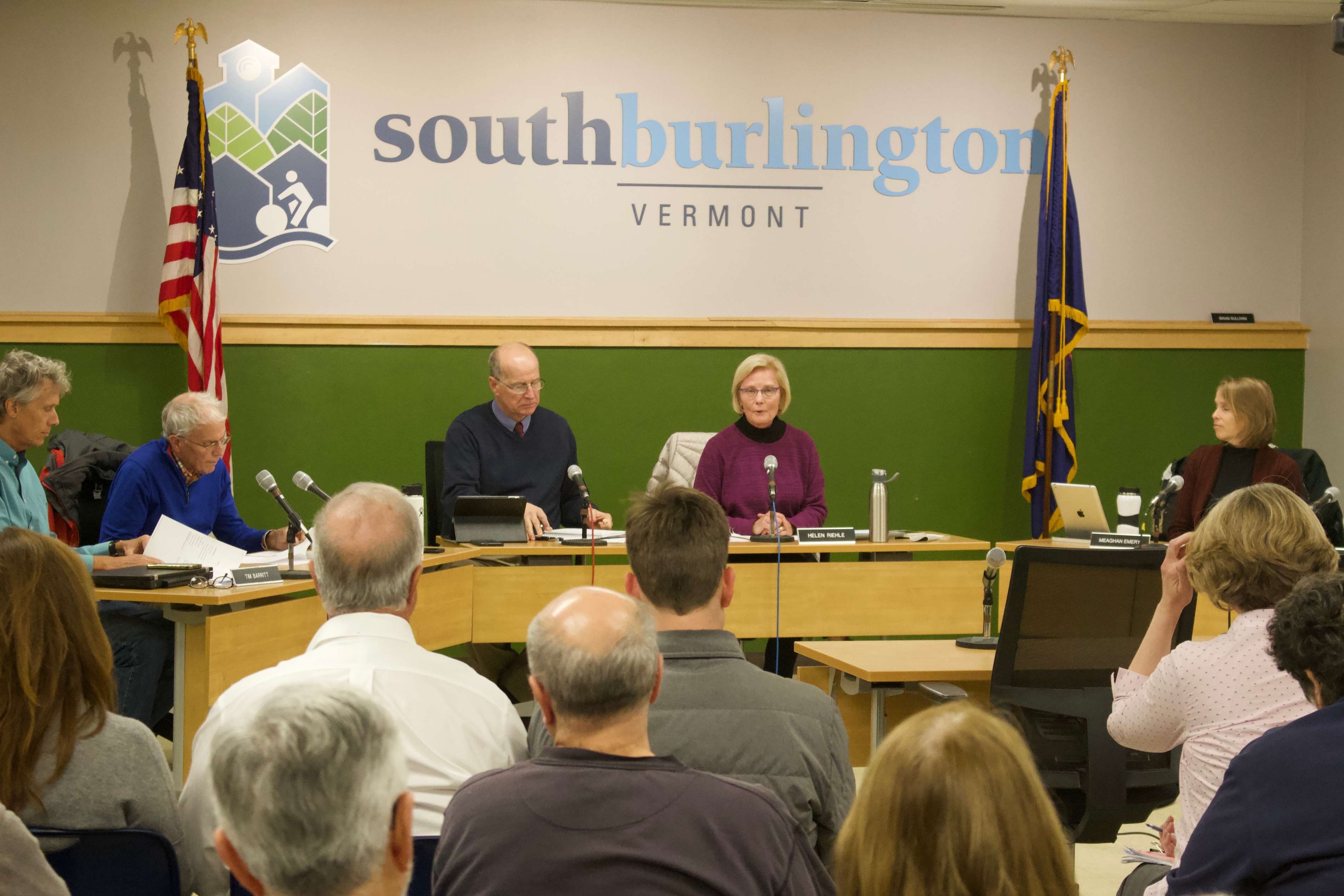
Dorn said the city currently generates approximately $3.5 million a year from the local option tax. The city currently uses that income to pay for the South Burlington police station bond and, more generally, to keep property taxes down, Dorn said.
The city would also increase its local meals, alcoholic beverages, and rooms tax from 1 to 2 percent.
The city expects the school district to be asking voters to support capital projects soon, which has led city officials to consider increasing the local option tax instead of increasing property taxes.
“We could go to the traditional property tax, but we anticipate the school district could have significant capital projects coming along,” Dorn said.
Local Option Tax Statewide
Doug Farnham, policy director and economist at the Vermont Department of Taxes, said municipalities decide what to do with the revenue they receive generated by the tax.
Municipalities need to vote to levy the tax. Voters consider the use of the tax in their votes, Farnham said.
“In general, the benefit to the people in that town who are going to have to pay that tax needs to outweigh the amount of tax they are paying,” he said.
The 30 percent of the revenue that goes to the state is used to reimburse municipalities for state-owned buildings in their town and cover the administrative costs of operating the program.
Since the statute sets the 1 percent sales tax, Farhman said his understanding is the Legislature would have to change the state law to allow South Burlington and other municipalities to increase the local option tax to 2 percent.
City Plans
Dorn said the city had expedited its review of the local option tax as it would need legislative approval.
The question on the March ballot would allow the city to use funds from the local option tax increase on the projects if it is approved by the Legislature. The City Council still needs to vote to put the issue on the ballot.
“This isn’t a direct vote on the projects themselves, only the funding source,” he said. “At a later date, we would come back to voters with more specifics knowing that we have this funding source available.”
He said that he is anticipating a special City Council meeting Jan. 14 for the council to consider the issue.

The city’s hospitality sector and other businesses have expressed concerns about the tax, Dorn said. However, he believes the two projects could stir economic activity in the city, and the public would see the benefit to the projects.
“It would be one thing, I suppose, if we were going up a percent for general government services,” he said. “But when you tie it to projects, if the public can see the projects and say, we want the creative arts facility and an indoor recreation center, that decreases the anxiety over the tax.”
Frank Cioffi, the president of the Greater Burlington Industrial Corp., said that municipalities often struggle to find funds to build infrastructure and do redevelopment projects due to the lack of possible revenue sources.
But the businesses affected by the tax would argue that an increase like this would put them at a competitive disadvantage, Cioffi said. For example, South Burlington’s hotels compete with those in Burlington, and would be required to increase what they charge due to the tax.
“Other business properties are going to say pretty much the same thing, that it makes them competitively disadvantaged, because they have to pay that tax,” Cioffi said. “Ultimately, they’re going to have to find the revenue to pay the tax.”
The indoor recreation center would be a located at Veterans Memorial Park and feature indoor multipurpose courts for adult and child recreation.
The arts center would feature 600 seats and be a modern performance venue, focusing on experimentation and production, Dorn said.
“It would be an educational facility and a magnet for productions coming from New York or other places that want a laboratory to experiment in before taking it on the road,” he said.
It would be smaller, more entrepreneurial and more production-oriented than Burlington’s Flynn Center for the Performing Arts, Dorn said, and would not be in competition with Flynn.
Since the recreation center plans are straight-forward, Dorn said that if the local option tax increase gets through the Legislature, the plan could go before voters in a special election this fall. The creative arts center is more complicated and would take more time in the planning stage, Dorn said.
It’s too early to estimate the total cost of the two projects, Dorn said, but it will likely be under $50 million total. The city would decrease the local option tax back to 1 percent when the projects are paid for, he said.

