

Editor’s note: “The flying fraternity: Female Guard members claim barrage of harassment” is the fifth in a series of stories about allegations that male officials have mistreated women, have abused alcohol and have been given preferential treatment by superiors. Read Part 1: “Top Gun Culture Pervades National Guard” here, Part 2: “Guard commander’s wings clipped after secret rendezvous” here, Part 3: “Africa, alcohol and the Afterburner Club” here, Part 4: “The Ghost Soldiers of the Vermont National Guard” here, Part 6 “Chaplain’s female assistant claims coercion” here and Part 7: “Whistleblower says Guard retaliated against him” here.
[I]n the summer of 2013, members of the Vermont Air National Guard attended a week-long camp at the Combat Readiness Training Center in Alpena, Michigan, a few miles from Lake Huron.
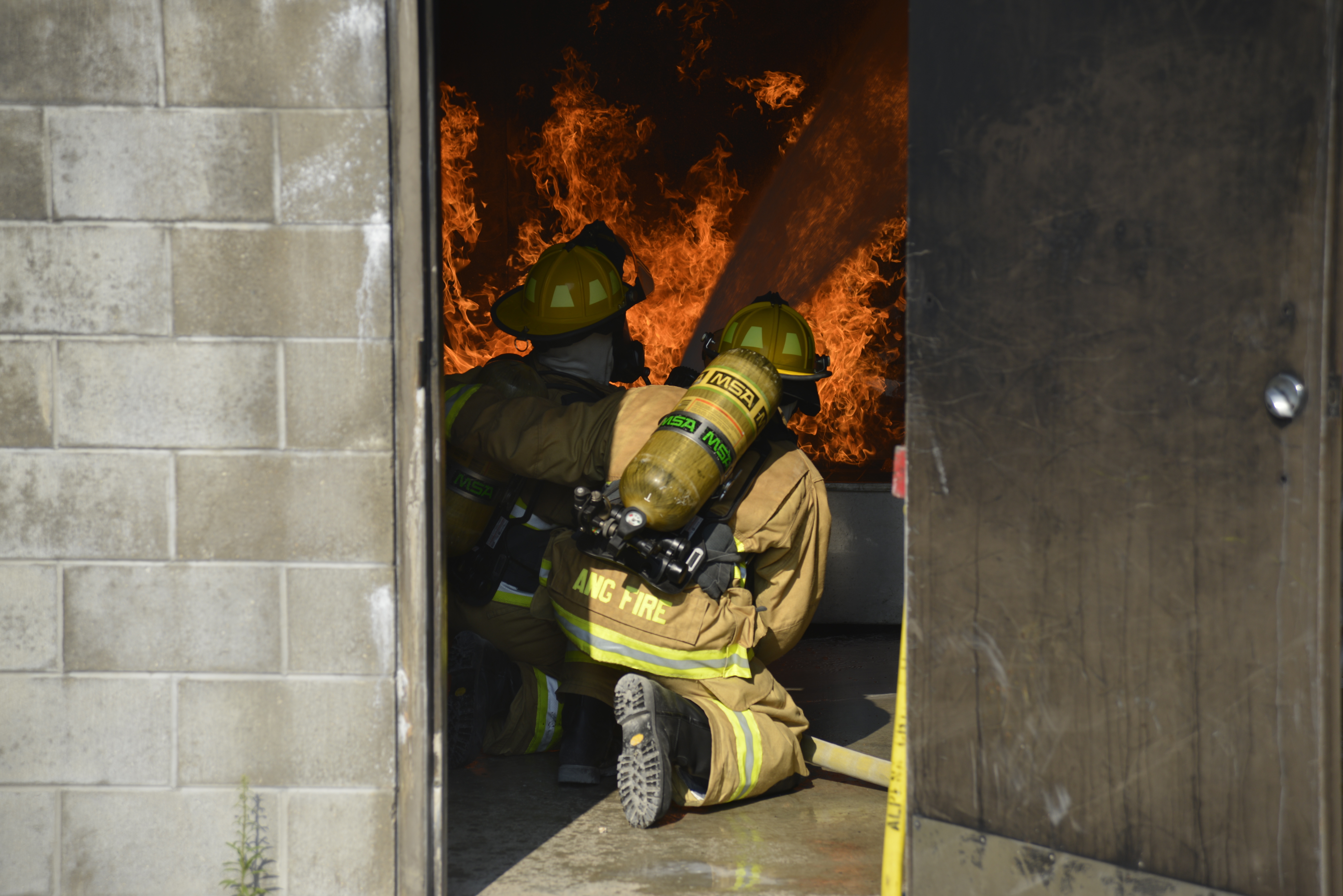
Air Guard Command Chief Brian Marchessault saw the deployment as a way to boost morale and strengthen the skills of enlisted members. The camp included airsoft gun battles, firefighting drills and pep talks from military leaders, who credit the Guard for prepping “today’s airmen to be tomorrow’s leaders.”
After a long day of drills in the stifling summer heat, some Air Guard members shifted into partying mode at the River Club, an on-base bar decorated with squadron patches, autographs and a massive moose head.
Beer at the River Club was cheap — for a few dollars Guard members could buy a 36-ounce stein. According to four Guard members who attended the camp, leadership had to impose nightly patrols to control problem behavior. Some of those put in charge of policing social events felt overwhelmed and unable to handle the chaos, according to a member who served in that role.
Two attendees of the summer 2013 camp said they saw Guard members passed out under work vehicles or on the side of a road, after they had become intoxicated. One attendee witnessed a man pull a woman’s hair inside the bar. Another saw a colonel escorted back to his room after he was observed aggressively flirting with younger women.

A female former Guard member told VTDigger that she was accosted that July in Alpena by Chief Master Sgt. Mark Parish, who was then serving as her supervisor.
Parish, who ran the weapons shop for the base and is now retired, was investigated twice by Guard leadership, in 2012 and 2015. The probes concerned allegations that he made comments about women’s breasts, sent sexually explicit emails and had an “unprofessional relationship” with another Guard member. In both investigations, according to Guard documents, Parish denied the charges to Guard authorities.
Parish did not respond to multiple phone messages from VTDigger seeking comment.
Guard officials would not agree to an in-person interview and would not comment on the Parish investigations. In a response to written questions from VTDigger, officials said in a statement that all allegations of misconduct are investigated and regulations prohibit the release of information about internal probes.
First Lt. Mikel R. Arcovitch, the Guard’s press representative, said in the statement that “the Vermont National Guard has a repeatable, defendable, and transparent investigation process. Personnel matters are investigated and adjudicated accordingly, in line with regulation.”
At the base in Alpena, the female Guard member said she and Parish played horseshoes together near a firepit on the base. The woman, who asked not to be identified for fear of retaliation, said she didn’t consume alcohol that night because of a physical test scheduled for the next morning.
She said that Parish, however, was drinking. He became glassy-eyed and, she said, appeared intoxicated. Later that night, she said Parish flirted with her and was mumbling incoherently when he tried to steer her into some nearby bushes.
“He put his arms around my shoulders, and physically tried bringing me into the bushes,” the woman recalled. “It was coercive and creepy in this ‘come with me little girl’ kind of way.”
The woman said she escaped Parish’s grasp, and fled back to her dorm room. She said she was shocked by the incident, and wanted to report his behavior, but didn’t, because she didn’t believe any action would be taken.
The Alpena incident wasn’t the first time she felt harassed by Parish. In her first meeting with Parish, just after she had completed initial technical training, “he told me the only way to get ahead in his shop was to get under his desk,” a comment she interpreted as a request, perhaps jokingly, for oral sex.
“Those comments set the tone for the whole time I was on that base,” she told VTDigger.
A male former Guard member said he heard Parish make crudely sexual comments about women. The co-worker said he warned young female airmen to avoid Parish when possible. But when he complained to supervisors and officers about Parish’s behavior, he felt his complaints were not taken seriously.
Parish’s alleged improper treatment of women occurred off the base, too. Two former members said during so-called “drill weekends,” when part-time members would travel to Burlington for trainings, Parish followed female Guard members back to their hotel rooms.
“He stalked the younger women who worked in the weapons shop on drill weekends,” one member said. “He would also go to their hotel rooms late at night, banging on doors. If the girls wouldn’t let him in, he’d turn on them the next day at drill trainings.”
The woman allegedly accosted in Alpena confirmed this behavior. She said Parish followed her around the base, too, and, on one occasion, back to her hotel room. “I had to barricade myself inside my room one night,” she recalled.
A second female former Guard member told VTDigger that Parish walked her back to her room during a 2010 deployment in Arizona. The woman said she had been having marital trouble and that Parish sought to comfort her. The two had consensual sex that night.
Afterward, the woman said she began to feel uneasy about the relationship. She said Parish would whisper sexual remarks into her ear during the workday. She came to think of his actions as inappropriate — and exploitative.
“I felt like if I wasn’t giving him what he wanted, then I wouldn’t get anywhere professionally,” the woman said.
Angered, she sought to expose Parish’s behavior, but he threatened to discredit her by raising personal issues about her, she said.
Parish denied to Guard investigators that he had an improper relationship with the female Guard member.
Military regulations prohibit relationships between members under a variety of circumstances, including when they include “the improper use of grade or position for personal gain or demonstrates the abandonment of organizational goals for personal interests” or “is reasonably perceived to be exploitive or coercive in nature.”
Allegations ‘brushed aside’
The 2012 command-directed investigation examining Parish’s treatment of women never led to charges, according to two members familiar with the investigation. The 2015 investigation into Parish over similar allegations included a sworn interview in which Parish denied he had been “intimidating” toward women in the 2012 investigation.
“Did you ever tell anyone that their career could be affected by their testimony?” Parish was asked at one point, according to a transcript of the testimony obtained by VTDigger.
“No,” Parish responded.
The 2015 investigation began after an anonymous letter was placed under the keyboard of the base’s sexual assault response coordinator and senior victim’s advocate, according to a former member familiar with the probe.
The letter, reviewed by VTDigger, urged leadership to aggressively investigate Parish and speak with members who went on deployments to Boise, Idaho, and Tucson, Arizona, with him. “It is my belief that the allegations against Chief Parish have been brushed aside or at the very least not fully investigated,” the letter reads, in part. A fourth alleged victim appears to have submitted the anonymous letter: The three former Guard members who spoke to VTDigger about their experiences with Parish did not write it.
As part of the 2015 investigation, the woman who said she was accosted in Alpena spoke to investigators. She felt as if they didn’t believe her testimony — she said the questions felt “guided,” “accusatory,” and “as if they were trying to get certain answers.”
Allegations of improper sexual comments, many of which were corroborated by multiple witnesses, were put to Parish during a July 2015 interview with Lt. Col. Michael Blair at Vermont Joint Force Headquarters in Colchester.
The colonel questioned Parish about his relationship with the female Guard member in Arizona; Parish said the affair was a “rumor.” He claimed the woman in question was untrustworthy and had alcohol and mental health issues.
Parish denied that he had told the two women who were questioned during the 2012 investigation to “get their stories straight.” When Blair asked about allegations that he intimidated the women, Parish replied: “No, I wouldn’t — I wouldn’t want to do that.”
Under oath, Parish denied allegations that ranged from publicly remarking on a woman’s cleavage to bragging about the dozens of women he’d had sex with without a condom. He was also questioned about sending sexually explicit emails to other Guard members. At one point, Parish denied that he had invited a female Guard member to stay at his home while his wife was out of town.
“Did you ever make a comment to the guys, ‘What about that piece of ass,’” Blair asked Parish during the interview. “No, sir, never,” Parish responded.
“Do you think it’s appropriate for a chief, male chief, for that matter, to make a comment about a female’s bra,” Blair later asked.
“Well, I had to address an undergarment issue with one of our airmen,” Parish replied. “Because she had a — her — she had a colorful, it was a fluorescent-colored bra that was visible through her T-shirt.”
Parish acknowledged in the interview with Blair that he had turned to a colleague and asked, “Is anyone tapping that?” when he saw a new female airman in his weapons shop.
In the interview, Parish said the comments were part of a “guy-to-guy conversation” and that he was “still wanting to make sure we were — that she wasn’t being — felt uncomfortable. … I want to make sure that nobody is, quote, unquote, tapping that.”
In the interview, Parish denied the list of allegations presented by Guard officials.
“I substantiated the stuff that you asked that I have, you know, clear point in time of. It sounds to me there’s a lot of accusations there that absolutely I can say didn’t happen, and then there’s some things that I have no recollection of but won’t deny. But I’m — I’m a little bit hurt that there’s that many things that somebody would say about me, and most of it’s not true,” Parish told Lt. Col Blair in 2015.
Parish told Blair: “I would’ve hoped that I didn’t intimidate people, but it’s certainly possible, it certainly is. It was never my intention. I do know that the people that were used to getting away with less than what I perceived as standard conduct probably felt threatened a little bit. Not by anything I would — I wouldn’t specifically seek out people and threaten them, of course, but now they had to meet the standards, they had to tow the line, so to speak. And a lot of guys responded well.”
When the 2015 investigation was completed, Parish was found to have abused his authority. According to a former member, he was demoted but kept his benefits package with the Guard. He was allowed to quietly retire in the fall of 2015. After he left the Burlington unit, Parish took a position at Lockheed Martin, where he is a quality assurance manager, according to LinkedIn.
In a notarized statement obtained by VTDigger, Parish said Col. Michael “Torch” Ahmann told him that if he testified against a guardsman in another investigation that he would get a lighter sentence for his own misconduct.
“I felt that if I didn’t say something that would help the Vermont [Guard] leadership in regard to [an] investigation, they would change their mind on my retirement conditions,” Parish wrote.
Culture of sexism and harassment
VTDigger spoke to more than 10 female former Guard members who described a toxic culture for women at the Vermont National Guard. The officials say women were routinely objectified, mistreated and passed up for promotions. These women also said that men typically faced no serious repercussions for their sexually crude or abusive behavior.
“The culture for women at that base is terrible all-around,” a female former member said. “Most of top management is male, it’s a band of brothers. They protect those within their circle but everyone else is left to defend themselves.”

Another female former Guard member said male officials routinely commented on her physical appearance in ways that made her feel uncomfortable.
“The undertones of sexual harassment at the Vermont Guard are there – always,” the woman said. “I wanted to say something, but oftentimes I just didn’t. I laughed it off because I didn’t want to make waves.”
“A lot of people were protected — and promoted — because they were men,” another member said.
Six female former Guard members said sexism inside the organization hurt them professionally, and noted that the Guard’s internal promotion boards are dominated by men. One member said that she was denied a promotion three times, despite holding an advanced degree and earning glowing annual evaluations.
Two other members said they believed they lost out on promotions because they rebuffed advances from Guard leaders. Both said women who flirt or engage in sexual activity with superiors quickly rise through the ranks.
“It was a known fact that you if you batted your eyes … or were nice you would get the deployments and the promotions you wanted,” a former member said. “I wasn’t going to do that, I’m not that kind of girl.”
Sources said that extramarital affairs are common, especially during Guard deployments. One male member described a deployment he went on simply as a “fuck fest.” While consensual, affairs between members of different ranks is typically in violation of military regulations.
Reporting system deemed inadequate
In 2013, Rep. Jean O’Sullivan, D-Burlington, spearheaded a new mandated reporting law for sexual assault and harassment of female Guard members. O’Sullivan introduced a bill that would require the Guard to issue annual reports on the recruitment, retention and promotion of women. The bill passed the House, but stalled in the Senate.
Since the mandated reporting law was enacted, Maj. Gen. Steven Cray, Vermont’s adjutant general, has given annual testimony to lawmakers. In his remarks, he has pledged that the Vermont National Guard has made significant strides in combating sexual harassment and assault, largely through a sexual assault awareness and prevention training program.
Lawmakers and Guard officials, including those who spoke with VTDigger, generally believe that the 2013 reforms destigmatized — to a degree — the act of reporting harassment, assault and discrimination to Guard leaders.
But many also believe the Guard must do more to create a supportive environment for reporting abuse. Air Guard members said reporting misbehavior is unnerving and some felt the Guard had historically buried the issue. The location of the office for reporting sexual assault — near offices for top commanders — was intimidating, they said.
The Vermont Guard first hired a full-time sexual assault response coordinator in 2010, then brought on a full-time victim advocate coordinator in 2013.
The new hires, however, did not change the culture of the base, said female airmen, who maintain that harassment, assaults and sexism have continued unabated.
“The tone is that you don’t say anything,” a former member said. “They wanted to squelch this or squash that, at least until the F-35s arrive.”
In statement to VTDigger, Guard spokesperson Arcovitch defended the Guard’s response to sexual harassment and assault through the Sexual Assault Prevention and Response (SAPR) program. He said similar work exists to ensure gender equality in leadership positions though the Guard’s Equal Opportunity office.
“The Vermont National Guard has females in leadership positions all the way up to the battalion command level,” Arcovitch said. “The Vermont National Guard treats all of its service members with dignity and respect. There is no preferential treatment given to service members based on their race, religion, gender, ethnicity, sexual preference, or any other individually identifiable category that does not affect their performance or ability to effectively do their job.”

Since 2013, more than 20 instances of sexual harassment and 31 sexual assaults have been reported to the Vermont National Guard, according to reports filed with the Vermont Legislature.
And while Guard leaders have touted the steps they have taken to encourage reporting, reform the culture and discipline offenders, the data does not suggest marked improvement in conditions. In 2017, the most recent year for which data is available, the Guard received two reports of sexual assault for the year – one alleged rape, and four reports pertaining to alleged assaults that occurred in previous years. Reported cases of sexual assault are spiking throughout the military, with the Department of Defense reporting a nearly 10 percent increase in alleged assaults last year.
The six years of Guard reports provided to the Legislature — which are listed at the end of this story — do not fully explain how the Guard investigated claims. The reports illustrate a wide variety of punishments both for harassment — ranging from a formal scolding by leadership to a letter of reprimand. For assaults, the penalties range from military discharge to criminal investigation. The reports don’t break out which allegations came from members of the Vermont Air National Guard or the Vermont Army National Guard.
“I love the Green Mountain Boys, and I still consider myself a proud Green Mountain Boy,” a former female Air Guard member said. “But many of the people working at that place don’t follow the rules, and they need to go.” •
National Guard Legislative Reports
• Fiscal 2013: There were six reported sexual assaults and three cases of harassment at the Guard.
• Fiscal 2014: There were three reported cases of sexual assault and seven cases of harassment.
• Fiscal 2015: There were four reported cases of sexual assault and seven cases of harassment.
• Fiscal 2016: There were 12 reported cases of sexual assault — three of which occurred during that year and nine that were reported as having occurred in previous years — and five cases of sexual harassment.
• Fiscal 2017: There were six reported cases of sexual assault and four cases of sexual harassment.
Help us investigate: Do you know what’s going on at the Vermont National Guard? Contact Jasper Craven at 802-274-0365 or jclarkcraven@gmail.com
