

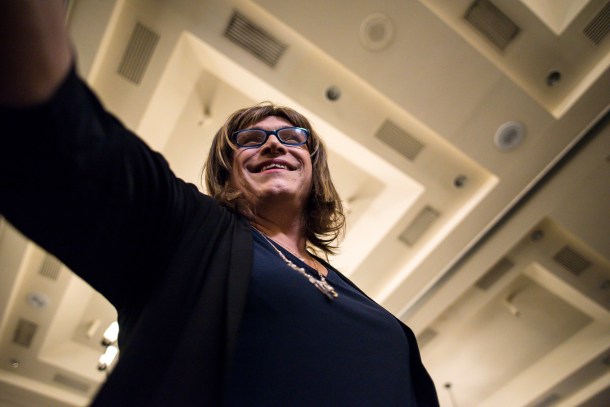
[C]hristine Hallquist’s bid to become Vermont’s next governor was never going to be easy.
Gov. Phil Scott was a first-term incumbent popular among Republicans, independents and moderate Democrats. He mostly made good on his pledge to hold the line on taxes. No established Democratic politicians ventured to run against him.
Still, the prospect of a blue wave fueling high Democratic turnout had given some hope that an upset could be in the cards. The turnout was there — between 55 and 58 percent of registered voters cast ballots — and Democrats saw huge gains down the ballot, picking up 12 House seats.
But in the governor’s race, Scott won 55 percent, well ahead of Hallquist’s 40 percent, a sign that he maintained solid support outside of his own Republican base.
“Democrats were our problem,” said Conor Casey, the former executive director of the Vermont Democratic Party, when asked why Hallquist struggled on Election Day.
Political analysts have said that Scott’s decision in April to sign new gun control laws, reversing his opposition on the issue, likely earned him additional support on the left.
The governor’s decision to legalize recreational marijuana earlier this year also gave him credit among Democrats, said Terje Anderson, the chair of the Vermont Democrat Party.
“I think voters stuck with what they knew,” he said.
No political challenger has been able to defeat an incumbent governor since 1962. Eric Davis, a Middlebury College professor emeritus of political science, said Scott’s victory was an endorsement of his personality more than his policies.
“Yesterday was a personal victory for Phil Scott,” Davis said. “It was not a victory for Phil Scott on the issues, or as a leader of a movement.”
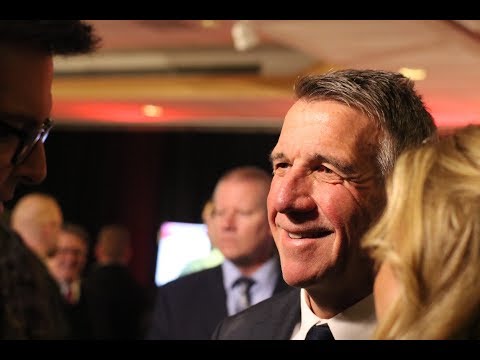
While Scott was acclaimed for his bipartisanship on guns, he was widely criticized for having a combative relationship with Democratic lawmakers, a criticism Hallquist deployed often throughout her campaign.
In Scott’s efforts last year to prevent tax increases and kill proposals he thought would hike the cost of living in Vermont, he vetoed 11 pieces of legislation including two budgets, a bill to raise the minimum wage to $15 an hour and another to establish a statewide paid family leave program.
On the campaign trail, Hallquist argued that Scott’s blanket pledge to prevent new taxes and fees was a “no-brain activity” that signaled his lack of an economic vision for Vermont. She said the governor’s policies hadn’t spurred economic development or increased affordability, but done the opposite by slamming the brakes on investment that could drive growth.
By focusing on lofty proposals including plans to connect every home and business to the internet, offer free college tuition for Vermont college students, and move towards a Medicare-for-all health care system, she sought to convince voters that a more progressive agenda in the executive branch would bolster economic prosperity.
But Hallquist’s campaign struggled to get its message out, Democratic strategists said, in large part because of low fundraising numbers.

As the first openly transgender candidate to run for governor, Hallquist’s campaign received widespread coverage in the national and international press. But Hallquist was never been able to overcome Scott in his fundraising efforts. The governor also received support from the Republican Governors Association, which spent nearly $700,000 on Scott’s behalf, largely on television and online advertisements.
“It was hard to break through and it was particularly hard because she got national publicity but not the national money that the 2016 election did,” said Anderson.
Last month, Hallquist said that at the outset of her campaign she had expected to raise close to $2 million — what Democrat Sue Minter raised in her 2016 race against Scott. She raised about $560,000, according to her latest filings. The campaign couldn’t afford to run advertisements on television until the last three days of the campaign.
“I don’t know if two days before the election, going on TV gave people enough time to know Christine Hallquist,” Casey said. “Because if they did, they’d like her.”
Hallquist won only 31 towns, and her victories were centered in Democratic bastions: places like Burlington, Montpelier, Middlebury and towns in Windham County, which typically vote blue in strong majorities.
Scott dominated in rural areas, and even in Chittenden County, the state’s most populated area, where Democrats have much reliable support.
In her concession speech, Hallquist said she believed Scott was going to be “very committed to the future of Vermont” and told reporters after her speech that she was more concerned about politics at the national level than the political landscape in Montpelier.
“I’m more concerned about the future of America,” Hallquist said. “We’re still a loving state, we’re still a really good state.”
Kit Norton contributed reporting.
