


[R]uth Hardy had a head cold and she’s pretty sure it was not because of the changing weather.
“I’m sorry, I’m sick,” Hardy said, “it happens to every candidate in the last week before the election.”
When Democratic Sen. Claire Ayer announced in May that after 16 years in the upper chamber, she would not seek reelection, she sparked what has become one of the most competitive races in the state.
Hardy, the leader of Emerge Vermont, is one of six candidates who have spent a combined $78,000 in the race and have raised more than $110,000 so far. Both figures dwarf every other Senate race in the state.
Hardy is running as a Democrat in the historically blue county. Sen. Christopher Bray, D-Addison, is seeking a fourth term in the Senate. In addition to Hardy, two independents are running as a combo: Paul Ralston, owner of Vermont Coffee Company, and Marie Audet, of Blue Spruce Farm.
“I think that there’s a sense of urgency that we have both an effective and strong senator for Addison County to fill Claire’s slot and a sense of opportunity,” Hardy said, “for me the reason I jumped in now was there was an open seat. I think the independents probably saw it as an opportunity as well—it’s much easier to win a race with an open seat.”

Ralston, who served as a Democrat in the Vermont House of Representatives for two terms, said it has been a struggle to campaign against the might of the Democratic Party and that if either he or Audet are able to pull off a victory, it would mark a turning point for independent candidates in Addison County.
“Once you are anointed by the Democratic Party, certainly in Middlebury and largely in Addison County, that’s pretty much it,” Ralston said, “I mean it will be a big upset if Marie and I are elected. We want to be elected, we are working hard to be elected but there are a number of structural things that are obstacles to that outcome.”
But Ralston and Audet, who are running as a ticket, have put pressure on their Democratic opponents by spending more than $34,000 on the race and championing the need for diverse opinions in the Statehouse. Together, the two independents have raised more than $40,000.
Ralston, a self-confessed Audet fan, said though he hopes to win a seat, if he can ensure an Audet victory, then he will be content with the election result.
“I would like people to vote for me but I think the most important work I am doing in this campaign is to help elect Marie and I sincerely hope that she and I get elected, but if we both don’t get elected, I just hope she does. Because she is that good,” Ralston said, “I far and away think she is the best candidate in the field, better than I am for sure, and it would be really great for Vermont if she got elected.”

Audet, who has served on the Governor’s Climate Action Committee and pioneered the use of cow manure to generate power in Vermont, has made representing rural Vermont a cornerstone of her campaign. She said there is a disconnect between politicians in the Statehouse and people who are working on the farms in Vermont.
“I think people in my community, and remember we’re a rural community, are saying ‘finally we’re hearing from the working people.’ I think there’s a relief,” Audet said. “I often felt when going to Montpelier there was a lack of representation for the rural people and certainly a lack of representation for small business. And to me, small businesses, when we’re living out here, the small businesses are our neighbors.”
The race has been marked by discussions on climate change, mitigating the environmental impact of phosphorus runoff into Lake Champlain as result of farming, and the need for rural Vermont representation in Montpelier.
Peter Briggs, a 28-year-old dairy farm worker and the only Republican in the race, ran on a platform similar to Audet’s in the 2016 election.
In that race, Briggs, who also ran for Vermont House in 2014, won 21 percent of the vote behind Ayer’s 31 percent and Bray’s 27 percent.
This year, Briggs said Audet and Ralston’s decision to run has allowed him and Archie Flower, the Libertarian candidate in the race, to build on each other’s critiques of the Democrats.
“it’s made a very interesting race. Kind of a lot of fun having this six-way dynamic. Definitely nobody would be paying attention if it had just been myself and the two Democrats,” Briggs said, ”I’m kind of enjoying the splash that Audet and Ralston have made by running.”
In an attempt to build on that 2016 result, this election has seen Audet, Ralston, and Briggs criticize Bray for not doing enough for the agricultural community or on climate change issues.
“I’d say he’s a little disconnected with agriculture. He has some farming experience but he’s not trying to survive off it like we are and he’s just not in the same business,” Briggs said. “A lot of people, like Marie herself, have tried to instruct him but it seems like other entities, other lobbyists have a bigger pull with him than those of us who are his constituents.”
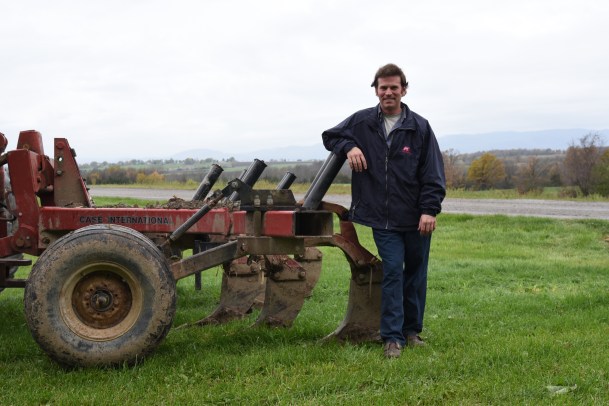
Bray, who has served in the legislature for 10 years and has sponsored a number of bills to support farms and renewable energy in Vermont, disagreed with his opponents critiques.
“I would say in every way possible I’ve looked at stepping up for food and agriculture in Vermont,” Bray said.
Bray went on to say there is a “certain irony in having one of the largest farm-based energy producers in the state overlook” that programs they participate in are programs he “helped to create and maintain.”
Bray has raised more than $25,000 and spent approximately $12,800 so far, according to campaign finance reports. Hardy brought in $34,800 in donations and has spent $26,100 so far, the reports show.
Audet and Ralston said they will bring a politically moderate voice to Montpelier and have distanced themselves from Bray and Hardy on policy issues, saying they do not support a carbon tax, but do support utilizing farm waste for fuel. They also say that farmers must be allowed to participate in order to work on clean water and climate change issues.
Audet said it has been difficult to distinguish herself from Hardy and other candidates on the big issues because most of them all agree on those large problems.
“Affordability has been on the top of everyone’s mind who is calling me. Everyone I see, being concerned about when they retire and the cost of living and so forth,” Audet said, “but beyond affordability, the other issues that are important to people are the same no matter where you are in Vermont. Good education for our kids, good jobs, clean environment. We all share that. All the candidates share that. It’s just our perspective and how we might achieve those goals.”
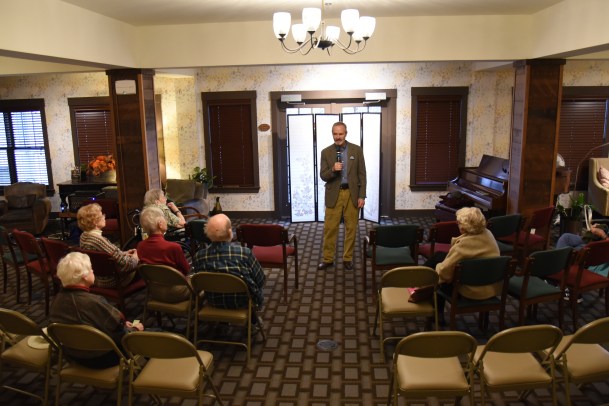
In spite of the competitive nature of the race, Ayer said she was confident that Addison County would remain “loyally Democrat” and Hardy, whom she herself urged to run, would claim her empty seat.
“It isn’t clear cut because Marie has run a good campaign but I believe Addison County believes in the goals of the Democratic Party. And they are loyal to the party that has promoted those ideals. So my money would be on Chris Bray and Ruth,” Ayer said.
Hardy, a first time candidate, has built her reputation on her work training Democratic women to run for office in Vermont and also serving on her local school board for the past eight years. There she said worked on education policy and finance—two issues that she says she is more than capable of working on at the state level.
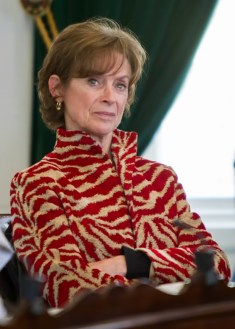
But during her time on the campaign trail, Hardy, who has knocked on more than 2,000 doors and has taken to carrying dog biscuits in her coat pocket to give to the pets of prospective constituents, said she has realized that more than policy stances, it is about connecting with people.
“What I’ve taken from this more than anything, is of course, politics comes into it and I’ve talked policy a lot, and I’ve written a lot about policy, and I’m a policy person, but at the end of the day, people want to feel heard, people want to feel represented and feel like they’re their stories matter,” Hardy said.
Hardy said she is focusing on issues that she has first hand experience with: childcare, education, paid family leave, and healthcare—which she said has been the number one issue people are concerned about in the county.
In addition to serving on school boards, Hardy also co-chaired the Act 46 charter committee that created the unified school district—compressing nine school boards into one.
“I’m the only one of the six candidates that has a really strong record of community involvement,” Hardy said, “It’s required a lot of analysis, a lot of going out to communities and listening to people.”
When it comes to Audet, Hardy said she was glad that there was another highly qualified woman making the race competitive, but that she wished Audet was in her political party.
“I’m happy that she’s running and I’ve tried to be a supportive sort of sister in the race, even though we’re opponents,” Hardy said, “and I wish she were a Democrat. I really like her. I really wish that she and I could be on the same team politically.”
