

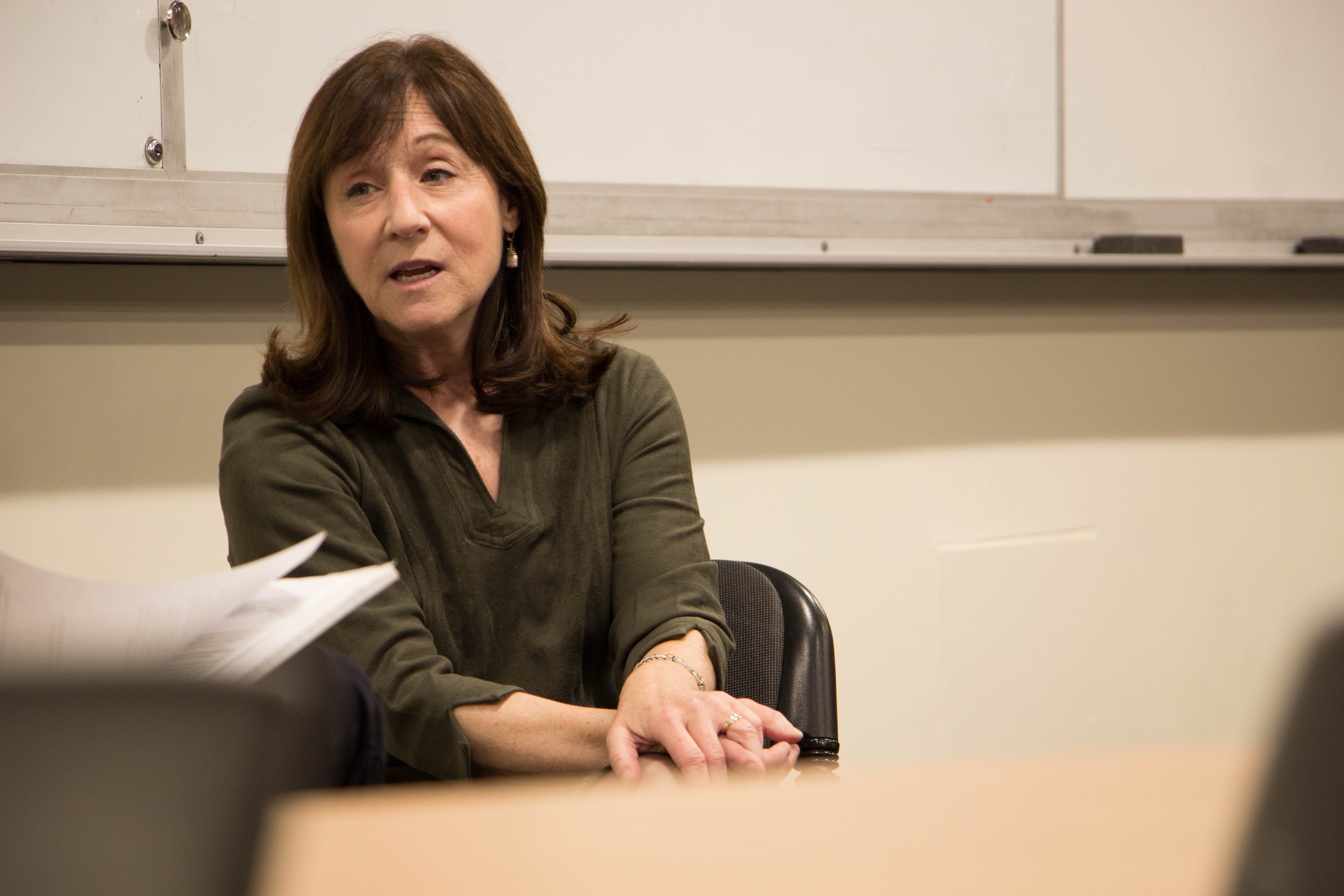
[E]ven with an event-packed schedule that included appearances in Burlington and Montpelier, a recent visit to Vermont proved to be a pleasant homecoming — and a welcome respite from an intense fall season of reporting — for award-winning author Jane Mayer.
Mayer, an investigative journalist with the New Yorker magazine since 1995, returned to the state where she began her reporting career following her graduation from Yale in 1977.
“I wanted to see how history was going to unfold,” said the history major, now 63. “I didn’t know that I wanted to be a journalist particularly; it seemed like the one thing where you could continue to not make up your mind” after graduation.
Mayer’s remarks came during a program at the University of Vermont titled, “Writing About American Politics,” and followed her participation the previous day in an all-day journalism symposium at the Statehouse.
In a sense, she still hasn’t made up her mind.
Mayer’s reporting has taken her from covering the fall of the Berlin Wall for the Wall Street Journal to writing about the war on terror following the September 11 attacks to chronicling the history of billionaire influence on the rise of the far right. At the New Yorker, she has become an influential voice in interpreting the ever-changing American political landscape.
Mayer began developing that voice in Vermont, where she worked for two weekly newspapers — the Weathersfield Weekly and the Black River Tribune — before being hired as a local news reporter at the Rutland Herald. There, her daily tasks included stopping by the hospital to record admissions and discharges for publication.
It was also at the Herald where she wrote about the sale of the historic Vermont Marble Co. in Proctor to the Swiss company OMYA and its impact on the local community.
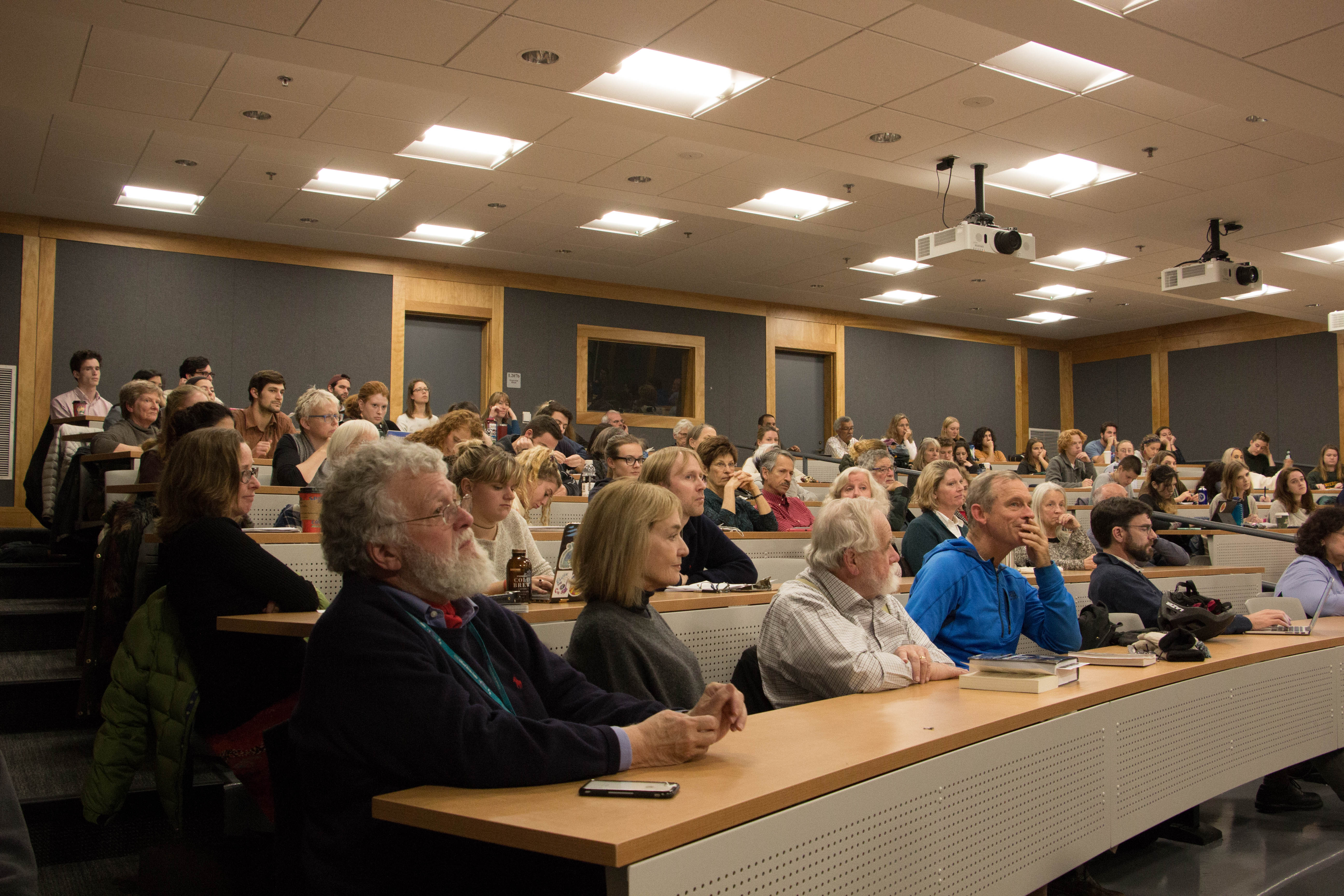
“It was the beginning of global, international, unknown, unseen billionaires buying up bits of America and changing our culture,” Mayer told a filled lecture hall in her talk sponsored by UVM’s Center for Research on Vermont.
Just as American politics have gone through plenty of changes over past decades, she said, so has journalism itself.
“It wasn’t a political fight in the beginning,” Mayer said, but by 2010 the press was being targeted, “particularly the press who was trying to hold the right wing accountable.”
Her latest book, “Dark Money,” tells the story of how the Koch brothers and a small group of their allies invested billions of dollars in trying to influence conservative politicians all over the country.
In response to exhaustive reporting in preparing the book, Mayer said the Koch brothers hired a private eye to investigate her and manufactured a plagiarism charge that was presented to the New Yorker’s editor.
“They attacked me in a way I had never been attacked before, even after covering things like the CIA and torture,” Mayer said. “It was unbelievable. It felt like a bullet coming at my head.”
The charges were shown to have no foundation whatsoever and were eventually dropped, she said, but the incident provided strong evidence that journalists were being increasingly targeted.
Mayer said she and colleague Ronan Farrow, the Pulitzer Prize-winner who co-authored a story revealing allegations of sexual misconduct by Supreme Court nominee Brett Kavanaugh while he was a first-year student at Yale, have received blowback for writing about the charges.
Their work focused on Deborah Ramirez, a classmate of Kavanaugh’s who described an instance of sexual assault involving him and whose recollection was backed by other students who were present at the time or had been told of the incident.
Among the fallout of the contentious confirmation hearings was a sense that Democrats on the Senate Judiciary Committee had overreached in pursuing an investigation of the charges leveled by Ramirez and an earlier complaint by Christine Blasey Ford.
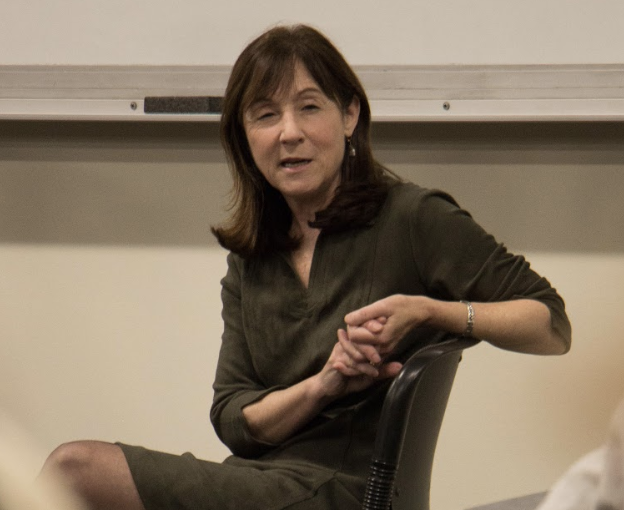
“Ronan Farrow and I have been blamed [that] if the Democrats don’t get the House, it’ll be our fault,” Mayer said. “When I’m working, I try not to write to make something happen one way or another. It’s not a political agenda, it’s to get the story and the truth out there.”
About 24 years earlier, Mayer told a very similar story.
In “Strange Justice: The Selling of Clarence Thomas,” she and co-author Jill Abramson wrote about Thomas’ Supreme Court confirmation hearing and the sexual-harassment allegations brought against him by Anita Hill. The two spent three years reporting and writing the book, and because of that process, Mayer said she had some idea of what to look for in the Kavanaugh case.
“Often what you find in these sexual misconduct cases is if it’s a he-said she-said standoff, one of the things that helps shed light on who’s telling the truth is if there’s a pattern of behavior,” Mayer said.
“It made a difference to me to hear that there were other women,” she said. “So, when Deborah Ramirez’s story reached us, we leapt at it to try to see if it was true and get it in print if it was.”
In terms of the repetition of history, Mayer said, the more recent Kavanaugh case was different because other women had come forward on their own.
“In this MeToo moment, there’s this sense of solidarity,” she said. “That was encouraging in some ways to me.”
However, Mayer said she found the Judiciary Committee’s decision not to back a full FBI investigation to be upsetting.
“I thought we’d come further after all these years,” she said. “After Anita Hill there was a wave of women who voted, so I am curious to see what happens in the midterms.”
Mayer does believe there already is a Kavanaugh effect.
“The effect is that women want to vote.”
Listen to Mayer’s full talk in the Center for Research on Vermont’s Mudseason podcast:
