


As the U.S. Department of Justice contacts dioceses nationwide about clergy misconduct records, Vermont authorities aren’t saying much about their own investigation into allegations of past child abuse by Catholic Church personnel.
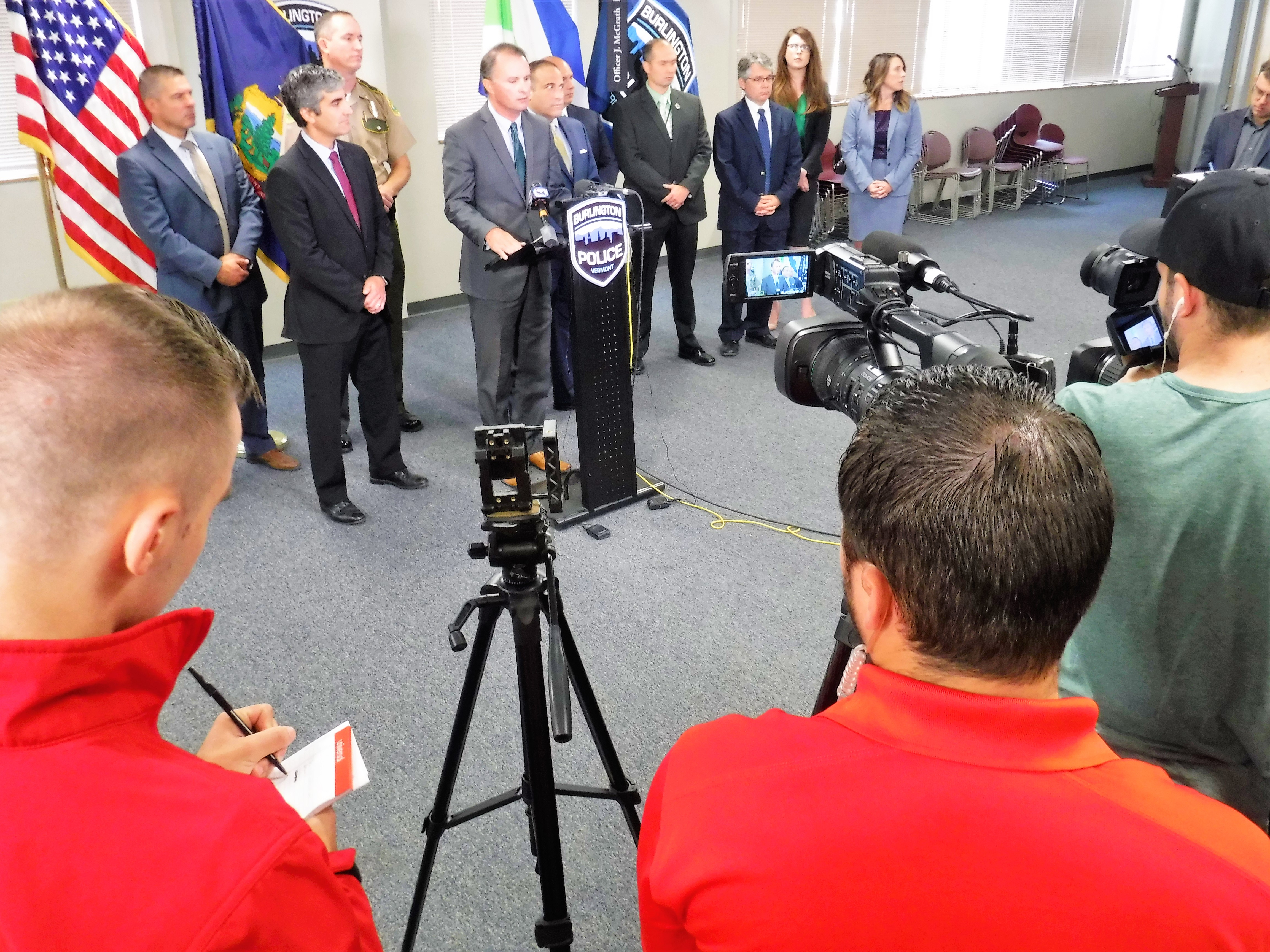
A local and state task force of police and prosecutors announced its probe last month in response to a recent BuzzFeed News story recounting “unrelenting physical and psychological abuse of captive children” at Burlington’s St. Joseph’s Orphanage, which operated from 1854 to 1974.
At the time, authorities promised what Attorney General TJ Donovan called “a public accounting of what occurred not only at the St. Joseph’s Orphanage but, if there are allegations of abuse throughout our state, that we bring justice for those victims as well.”
Colleagues in more than a dozen other states and the District of Columbia are conducting similar reviews, while the federal government just sent a letter to the U.S. Conference of Catholic Bishops asking every diocese in the nation to “not destroy, discard, dispose of, delete, or alter” any clergy misconduct records.
“Presently, there is no need for you, the Conference, or anyone else to produce any documents,” the letter from the U.S. Department of Justice says. “Rather, they should be preserved in their current format and condition.”
In response, Vermont’s Catholic Church has announced its intent to work with law enforcement, release past child abuse victims from nondisclosure agreements, form a lay committee to review clergy misconduct files and, once finished, publicly release the names of offenders.
Those actions, which counter the statewide Roman Catholic Diocese of Burlington’s history of defying court orders and outside review, are drawing praise from Vermont’s 118,000 Catholics.
“I want to thank you for the way you’ve been approaching the sex abuse scandal,” one man publicly commended Bishop Christopher Coyne over the weekend at a meeting of more than 100 local and state Catholics in White River Junction.
But Donovan is facing questions from some abuse survivors about why he’s not calling for a grand jury investigation like one conducted in Pennsylvania, which released a public report this summer identifying hundreds of priests accused of abusing at least 1,000 minors.
In response, the Vermont attorney general, having contacted his counterpart in the Keystone State, learned the law there allows more openness and opportunities than statutes here.
“I called and asked, ‘How can you do this?’” Donovan says. “He explained the laws are different.”
Pennsylvania gives its attorney general more authority to pursue and publicize large investigations through the grand jury system.
“Under Vermont law, a grand jury is a secret proceeding,” Donovan says. “The general rule is you can’t even confirm or deny the existence of one here. And the only way a grand jury becomes public is if an indictment is returned and you have a charge.”
That latter point is especially problematic, as lawyers who’ve reviewed Vermont church misconduct records believe future criminal findings are unlikely because a 2002 probe of the same paperwork found credible claims but deemed them too old to prosecute under statutes of limitations.
So far only Kentucky is seeking a grand jury investigation like that in Pennsylvania. Vermont is conducting a more flexible review similar to probes recently announced in Arkansas, Florida, Illinois, Maryland, Michigan, Missouri, Nebraska, New Jersey, New Mexico, New York, Virginia, Wyoming and the District of Columbia.
“We’re looking for more transparency,” Donovan says, “and we’re trying to chart a different course.”
But Vermont’s effort, proceeding without an established structure, is a work in progress. When the attorney general joined Burlington and State Police and the Chittenden County state’s attorney’s office at a press conference in September to announce their plans, for example, they had yet to formalize a system for the public to contact them.
(The task force now is inviting people to email orphanage@bpdvt.org, call (802) 658-2700 or click here.)
In turn, what will happen with its findings has yet to be determined.
“We have to do the investigation first,” Donovan says. “That’s going to direct us which way this goes.”
Such vagueness can frustrate abuse survivors wanting results, although many hope the Department of Justice’s latest actions could help. Under federal law, any diocese that systematically covered up for child-abusing clergy in the past five years could be found in violation of the Racketeer Influenced and Corrupt Organizations Act, even if the crimes took place beyond statutes of limitations.
Donovan says U.S. officials haven’t contacted him, while the Vermont diocese turned over its personnel files to authorities more than a decade ago.
The local and state task force, for its part, will say only that it plans on reviewing all the information it receives before releasing a final report sometime in the future.
“I don’t know when that will be, but yes,” the attorney general says. “In the meantime, we just don’t comment on ongoing investigations.”

