

This story was updated at 7:17 p.m.
[V]ermont bankers are venturing into the business opportunity presented by new cannabis businesses and a loosening of marijuana laws.
David Silverman, president and CEO of Union Bank, said his bank has chosen to work with a few companies producing or selling industrial hemp or cannabidiol, also known as CBD, a cannabis extract that is used as a remedy for various ailments.
“We have chosen in some cases to bank these folks,” Silverman said Saturday. “We have a very strict due diligence process that we go through to decide whether we want to do that or not. In cases we’ve chosen not to because they couldn’t meet our due diligence criteria.”
Meanwhile, Dan Yates, president of Brattleboro Savings & Loan, said he’s considering providing depository services, mortgages, and small business loans to companies that work with cannabis products, including those involved with medical marijuana.

Silverman noted that banks and other businesses are already working with the CBD industry by default.
“You can buy those products at just about any store in Vermont,” Silverman said. “You go to a convenience store and the first thing on the clerk’s desk is CBD gummies, so to not do business with all these folks who have picked up a new product, we wouldn’t be able to do business with anybody.”
Nationally, more than 360 banks and credit unions work directly with marijuana or CBD-related businesses, according to the Brookings Institution, which published a report in April on banking and cannabis.
More would like to, but hesitate because of federal regulations that they fear could result in fines or even seizure of property that is being held by banks as collateral. Few banks in Vermont do, but they would like to, in order to capture a rapidly growing market, said Chris D’Elia, president of the Vermont Bankers Association.
“That’s a business decision that banks have made,” said D’Elia, who with other bank officials spent time in Washington, D.C. this fall seeking reform of the money-laundering and other laws that prevent banks from doing business with cannabis businesses. “We would like to see that change.”
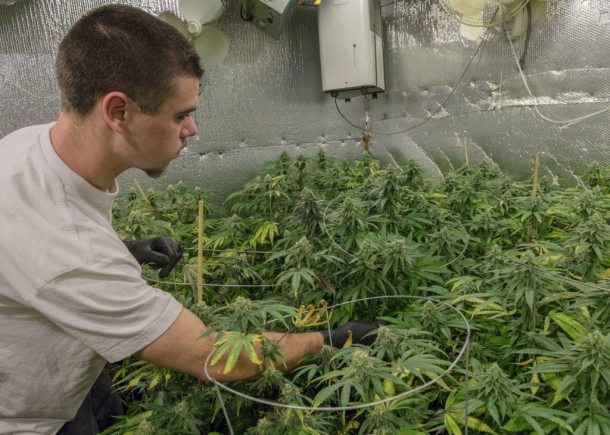
Cannabis is a big business now, and it’s poised to get much bigger. As of July 1, it is legal in Vermont for an adult over 21 to possess one ounce of marijuana and two mature and four immature marijuana plants. Medical marijuana has also been legalized in Vermont.
In all, 31 states, Washington, D.C., and Guam and Puerto Rico now allow for some form of public medical marijuana and cannabis programs, according to the Marijuana Policy Project. And on Wednesday, Vermont’s northern neighbor, Canada, legalized recreational marijuana use.
States that allow marijuana sales still run in conflict with federal law, making banks vulnerable to a number of measures. That’s one reason D’Elia, Silverman and Yates would like to see the laws changed to make it easier for banks to enter the market. They said another reason is that banking is a matter of public safety for merchants who now have to handle large amounts of cash.
“Without access to depository services, it’s purely a cash business and then there’s a risk of armed robbery,” Yates said.
“Nonsensical bank regulation is harming almost everyone: the federal government, state governments, banks and increasingly other businesses that just happen to interact with marijuana firms,” the Brookings report said.
It’s also a matter of fairness. Banks and credit unions are already at odds over disagreements on how the two very different entities are taxed and regulated, with banks saying credit unions enjoy an unfair advantage. D’Elia and Yates said the federal regulatory structure makes it easier for credit unions to provide services to cannabis businesses without fear of retribution, and indeed, the Vermont State Employees Credit Union is providing banking services to all Vermont dispensaries, according to Matt Simon, New England political director with the Marijuana Policy Project.

“The smaller community banks and credit unions are doing it; the larger banks tend not to want to touch it,” Simon said.
“We bankers tend to be more cautious about what we represent,” Silverman said. “We’re not advertising this, and we’re very selective. We have no desire to be inundated by this kind of business.”
He added that the paperwork associated with the cannabis business is another deterrent.
“We have to be very cautious not to overburden our back-of-the-house operations with reporting requirements,” he said.
Thomas Leavitt, president and CEO of Northfield Savings Bank, said Oct. 19 that “we’re thoughtfully continuing to explore the issues relative to the new Vermont statute and we’re continuing to comply with our federal responsibilities.”
For now, with the midterm elections approaching, any change in federal law is unlikely. There are bills pending in Congress that would make it easier, or at least less risky, for banks to work with cannabis businesses. Bankers would also like to see Congress reclassify marijuana; it’s now listed as a Schedule I drug, on par with heroin. But while they wait, Yates, D’Elia and other bankers are talking to Vermont lawmakers and trying to educate as many people as they can about the benefits of entering the new market.
“We’ll also talk to our state Legislature, and encourage them to talk to people in Washington, and I’ll continue to talk to my colleagues,” said Yates, who was headed to an American Bankers Association meeting in Manhattan on Friday. “I’ll continue to encourage them to get in touch with their congressional representatives to push the current House and Senate bill that would provide a safe harbor for us.”
