


[A]s a severe drought continues to plague parts of Franklin, Orleans and Lamoille counties, the state has launched an online mapping tool to better track water shortages.
“I think a common misconception is, it’s raining, so there’s no more drought, and that’s just not the case,” said Erica Bornemann, director of the Department of Public Safety’s emergency management division.
Vermonters are encouraged to report low or completely dry wells on the state’s drought reporter. The state’s Department of Environmental Conservation will use this to collect data to provide information for managers of municipal drinking water supplies about whether they should put residents on conservation notices, said Rodney Pingree, water resources chief for the DEC.
“That’s a good thing to know, rather than waiting for the water to drop too low and then telling them to conserve,” he said. “The horse is out of the barn already.”
Eric Evenson, a Burlington meteorologist with the National Weather Service, said that the northern third of the state remains in moderate to severe drought, while the central and southern parts have for the most part recovered. Based on the precipitation forecast, the drought in the northern Vermont should start to abate but will continue through the end of October, he said.
“We’re definitely moving in the right direction,” Evenson said.
The state convened its drought task force this year to coordinate interagency planning for the drought per Vermont’s drought management plan, said Bornemann, who serves as co-chair for the task force.
“We’re certainly not in a stage where we’re seeing widespread, severe drought,” she said. “The drought area is very localized — about eight percent of the state.”
Pingree said that farmers are often the first to experience negative effects of drought as a lack of rainfall can damage crops before impacting drinking water supplies. Some farmers in the northern part of the state who draw water from springs, shallow wells or ponds are facing dwindling water supplies, he said.

Bornemann said that some farmers in Franklin County have had to haul water, especially on dairy farms. Livestock farmers in some parts of Vermont can receive funding until Oct. 19 through the federal EQIP program to install new pipes and wells. Farmers can submit applications at their local Natural Resources Conservation Service field office.
Around 70 percent of Vermonters rely on private drinking water sources, said Pingree, adding that people who rely on springs for their drinking water have seen their water supplies “drying up the fastest.” Shallow wells generally run dry before deeper, drilled wells since drought makes the water table drop.
Claude Chevalier of Highgate-based Chevalier Drilling said his company has seen above average calls about well drilling. Chevalier has been prioritizing people with existing wells that have run dry — mainly people with shallow wells who want drilled wells — and has a backlog of about a month for new wells.
“It’s kind of a perfect storm this year, the Trump economy has generated a huge building boom, so even if it was just that, we would be very busy,” said Chevalier, “And you combine that with the fact that there’s a drought, it’s just compounding the business.”
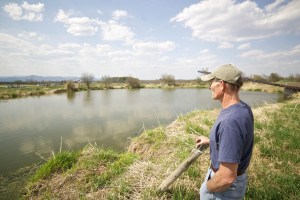
Drinking water from a well with a low water level can be hazardous as it may start to draw in water from contaminated sources, like septic systems. Vermonters who drink from private wells should watch out for a color change or sediments in their water, as that may be a sign of low water level in a well, said Elle O’Casey, spokesperson for the DEC.
Pingree has a straightforward recommendation for people with dwindling water in their wells — “don’t use as much water.”
“Like, instead of doing two wash loads in a day, spread them out a day apart so that the well can recover,” he said. The state is also recommending people repair leaking plumbing fixtures and install water-saving fixtures, like low-flow shower heads.
The drought has also taken its toll on a few public drinking water supplies, said Pingree. East Berkshire, Franklin and Smuggler’s Notch drinking water districts have started hauling water in. Meanwhile, Jeffersonville, Newbury and Waterville have put their customers on conservation notice.
Predicting when drinking water supplies in the northern part of the state will fully recover from the drought is tricky, said Pingree. He noted that rain can fall much heavier on, say, the east side of a mountain than the west, meaning the drought would lift at different rates in nearby areas. The intensity of rainfall can also factor into when a drought will lift.
“If the rain comes down too fast, it runs off and it doesn’t seep into the ground and it doesn’t recharge the aquifers very well,” Pingree said. He added that the first snowfalls are the “best time to recharge the groundwater.”
“Snow when it melts tends to go down into the ground,” said Pingree “It’s not a massive amount like a rainstorm.”
