

[B]ENNINGTON — The Vermont Supreme Court has denied a Bennington man’s appeal of his 2016 conviction for lewd and lascivious conduct with a child.
Jeremy Amidon, 40, who was sentenced to two to four years in prison on the charge, argued that the trial court should have granted his motion for a mistrial because the judge allowed a reference to his prior incarceration on a different charge and improperly allowed the prosecution to impeach the testimony of his sole witness.
Amidon, who previously served a prison term for sexually assaulting a 13-year-old girl in 2002, also contended in his appeal that the prosecution was allowed to ask prejudicial questions during jury selection that tainted the panel.
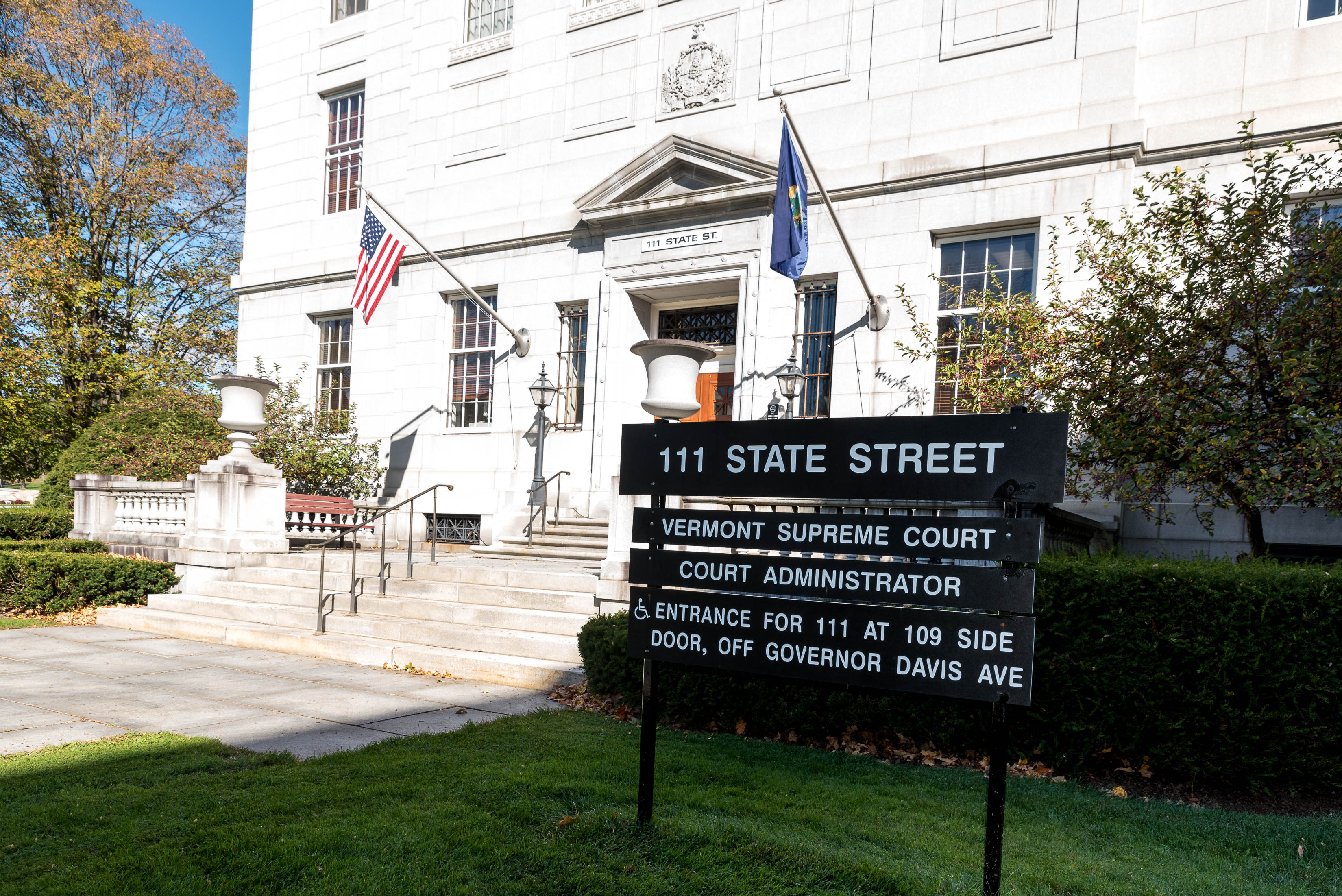
But the Supreme Court, which had heard arguments in the appeal in March, upheld the conviction in a decision posted earlier this month and written by Associate Justice Marilyn Skoglund.
Amidon was charged in October 2013 with improperly touching a young girl sometime between July 2005 and July 2007. The victim came forward to report the incident only after she learned that Amidon was about to be released from prison on his earlier conviction, for which he was sentenced in 2007 to a two- to 10-year term.
The victim told authorities she “felt safe when he was in prison and became afraid when she learned he was being released,” according to the court’s decision.
Amidon was tried in January 2016 on the lewd and lascivious conduct charge but the jury was unable to reach a verdict. On retrial before another jury, he was convicted in September 2016 in Bennington Superior Court Criminal Division and was handed a two- to four-year term by Judge David Howard. The appeal followed.
Arguments rejected
In examining the appeal arguments, Skoglund said the prosecution notified the defense before the 2016 trial “of its intent to introduce evidence of prior bad acts, including that the defendant was physically and emotionally abusive toward [the victim] … .”
The Bennington trial judge ruled in August 2015 “that the probative value of the evidence outweighed any prejudicial effect,” according to the decision, “as the state had a reasonable need to explain why [the victim’s] fear caused her to disclose defendant’s act after several years of silence.”
The trial judge also ruled that “evidence of defendant’s incarceration and release was admissible to explain why [the victim] delayed in reporting and finally did report,” the justice wrote.
The trial court did, however, exclude discussion of the underlying facts of Amidon’s 2007 conviction.
The Supreme Court decision found the trial court “acted within its discretion” in making those determinations, and “moreover, the court limited the prejudicial effect of the evidence.”
Jury selection questioned
During jury selection, the prosecution asked individual potential jurors whether they had had prior jury experience and whether they learned anything from reading the newspaper afterward “that irked you that you didn’t know that,” after they had been instructed not to read about a case or do independent research.
According to the decision, none of the potential jurors responded affirmatively to a question from the prosecution: “So nobody had that experience where you felt like this was not a fair and impartial jury process?”

The trial court overruled a defense objection to the questioning, saying it “didn’t indicate one way or another which — what they could have read, whether it could have been pro-defendant or pro-state. It was neutral questioning,” according to the decision.
The Amidon appeal also contended that a question asked of a defense witness by the prosecution was “irrelevant, inflammatory and concerned a collateral issue,” according to the decision.
The defense witness said she was often in the home where the lewd and lascivious conduct occurred and testified that she never saw any actions involving the defendant and children that caused her concern.
The prosecution then asked whether the witness believed she would have known if anything had happened to the victim; and after the witness responded, “Yeah,” asked whether the witness had known about a victim of molestation in her own home.
The defense objected to the question, which was allowed by the trial judge, according to the decision. The witness responded, “Yes, I did.”
The prosecution then asked, “And were you told by someone about that?”
The trial judge then sustained a defense objection to that question on the grounds it was a collateral issue and restricted any further examination of the topic.
In the Supreme Court decision, the justice wrote that “questioning was intended to suggest that [the witness] was not as observant as she claimed or that she was deliberately covering up for defendant due to her personal relationship with him. A witness’s personal bias and capacity to observe or remember are fair subjects for cross-examination.”
Attorney Allison Fulcher, who represented Amidon in the appeal, could not be reached Monday for comment.
David Tartter, of the Department of State’s Attorneys and Sheriffs, defended the prosecution in the appeal. He said it is his policy not to comment on Supreme Court rulings.
