

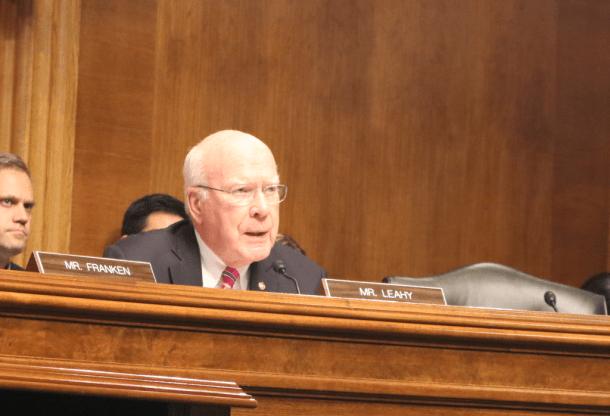
[S]en. Patrick Leahy, D-Vt., has continued to take a leading role in Democratic efforts to obtain records from Supreme Court nominee Brett Kavanaugh’s time in the White House, most recently calling out majority whip Sen. John Cornyn, R-Tex., for abruptly changing his stance on their release.
Leahy sent a letter to White House counsel Don McGahn on Friday asking to know what was discussed during a July 24 meeting that appeared to be a turning point in Cornyn’s position on what records would be sought in the Senate’s vetting of Kavanaugh.
“The longstanding, bipartisan expectation has been that any materials produced while a nominee was a public servant that could shed light on his or her views, thinking, or temperament, that are not privileged, should be subject to public scrutiny and carefully considered by the Senate prior to confirmation,” Leahy wrote.
As an example of this precedent, Democrats have pointed to the confirmation process of Supreme Court Justice Elena Kagan, who served in former President Bill Clinton’s administration as associate White House counsel and deputy director of the domestic policy council.
Leahy, who is a member of the Senate Judiciary Committee, said in his letter to McGahn that it made sense, given this precedent, for Cornyn, the majority whip, to say on July 19 that it “just seems to be common sense” that Kavanaugh’s records during his tenure as White House staff secretary would be produced to the Judiciary Committee.
Cornyn’s position appeared to change, however, after the July 24 meeting between Senate Republicans and McGahn, Leahy says in his letter.
“Immediately after the meeting, Senator Cornyn described requesting any Staff Secretary records as ‘a bridge too far,” he wrote. “Days later, Chairman Chuck Grassley submitted a records request to the National Archives and Records Administration (NARA) and omitted any of Judge Kavanaugh’s records as Staff Secretary.”
Since then, Cornyn has characterized Democratic efforts to obtain the White House records as a “great paper chase,” and a futile one at that.
“It’s unclear to me why this incessant demand for additional paper is being made because clearly they’ve already made up their minds to oppose the nomination,” Cornyn said at a July 31 press conference on Capitol Hill.
“So it leaves me with the inescapable conclusion that this is really all about foot dragging and delay,” he added. “They know that the can’t attack him based on his qualification, based on his character, and now it’s all about paper and delay and obstruction.”
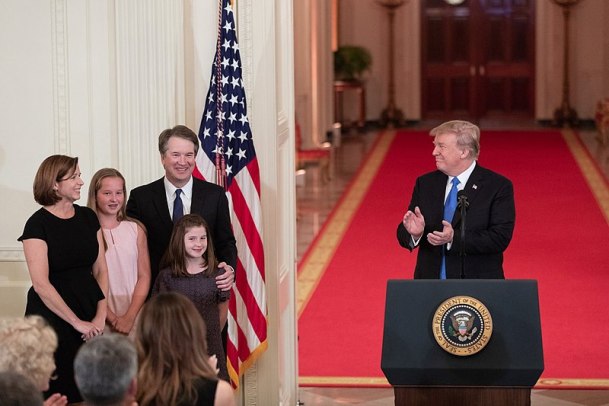
Kavanaugh’s confirmation hearing is set for Sept. 4, and Senate Republicans hope he will be confirmed by the time the next Supreme Court session begins in October.
Senate Minority Leader Chuck Shumer, D-N.Y., told reporters this week that Democrats may sue the National Archives for the records.
Leahy and other Democratic leaders say the documents are crucial to testing Kavanaugh’s credibility, and specifically whether he lied under oath during his last Senate confirmation hearing more than a decade ago.
In a separate letter sent Thursday to Grassley, R-Iowa, Leahy — along with Sens. Dianne Feinstein, D-Calif., and Dick Durbin, D-Ill. — wrote that the documents would shed light on whether Kavanaugh misled senators during the confirmation hearing for his appointment to the D.C. Circuit Court of Appeals.
“As you know, in 2006, Judge Kavanaugh told the Committee under oath that he was ‘not aware of any issues’ regarding ‘the legal justifications or the policies relating to the treatment of detainees,’” the senior Democratic senators wrote to Grassley.
“However, at least two documents that are publicly available on the Bush Library website from Judge Kavanaugh’s time as Staff Secretary suggest that he was involved in issues related to torture and rendition after 9/11.”
The senators say that other documents that have been produced for the committee, but withheld from the public, cast further doubt on Kavanaugh’s honesty under oath.
And given that they have obtained only a small fraction of the documents from the nominee’s time in the White House, the senators say many more concerns could arise through a full review of the records.
“We firmly believe that Judge Kavanaugh’s nomination cannot be considered unless these documents are available, including to the public and the Senate as a whole,” they wrote. “The truth should not be hidden from the Senate or the American people.”
While there has been fierce resistance to President Donald Trump’s second Supreme Court pick since the moment the decision was announced, Democrats have struggled to find a way to stop, or even slow down, the confirmation process.
In order to block Kavanaugh, Democratic senators would not only need to remain united amongst themselves — a tall task with a couple members of the caucus up for re-election in red states — they would also have to convince at least one Republican to join them.
Sen. Susan Collins, R-Maine, and Sen. Lisa Murkowski, R-Alaska, are seen as the most likely swing votes, largely because of their history of defending abortion rights, which many fear will be under threat if Kavanaugh is confirmed.
Collins said Friday that she will remain undecided until she meets with the nominee next week and hears what he has to tell senators during confirmation hearings.
