

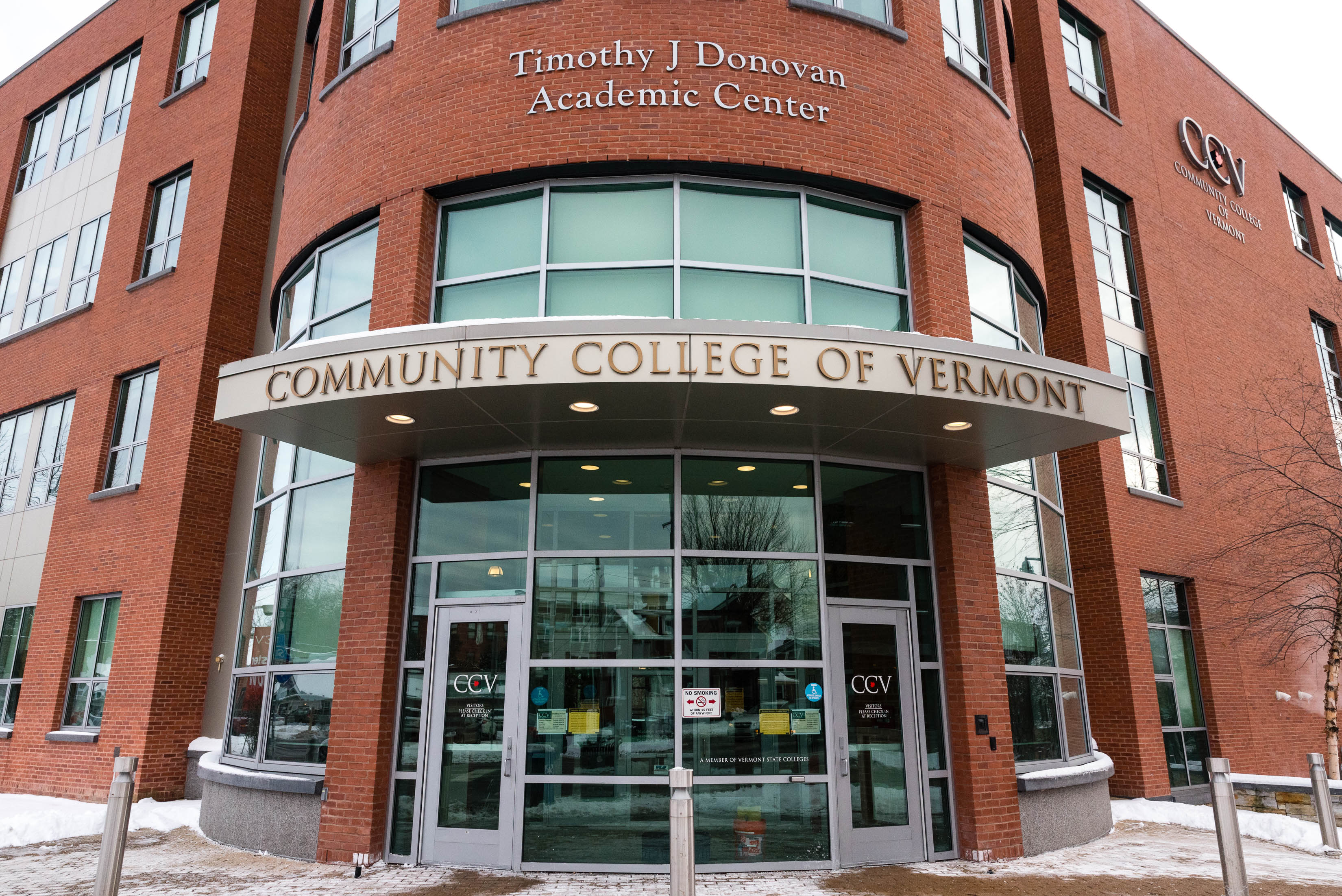
[T]he Community College of Vermont and its new faculty union have signed their first contract following six months of negotiations.
They reached agreement June 11 on deal that faculty representatives called a step toward job security for adjunct instructors and a pay rate comparable to that received by part-time faculty at other schools in the Vermont State Colleges system.
The three-year contract, which begins Sept. 1, provides for a pay increase and ensures that faculty with seniority teach at least one course each semester.
Despite the progress on salary and job security, union negotiator Emily Casey said much work remains to be done. Pay for CCV faculty is roughly 45 percent less than that received by adjunct faculty at other Vermont State Colleges, she said, adding that she hopes to get closer to the union’s goals in future contracts.
Casey said union leaders feel that “we’ve created a first step, or a first level, of job security that is a really good spot to build off of.”
CCV President Joyce Judy said that although the agreement illustrates how much the college cares about its faculty, it really just codifies existing practices.
“I think that I need to underscore how important faculty and staff are,” Judy said, “so I am thrilled to have this behind us.”
The CCV faculty — all of whom are part time — had been seeking their first contract after voting to form a union last October. Instructors work at nine campuses around the state.
After several months of bargaining, the union declared an impasse and picketed outside of the Vermont State Colleges headquarters in Montpelier.
Casey attributed the quick resolution of the dispute to community pressure and the backing by certain legislators, including Lt. Gov. David Zuckerman. She also cited a petition that drew 1,000 signatures asking for the CCV administration’s support.
“The adjunctification of higher ed is a big issue,” Casey said, “and I hope we are an example and begin a very long process in taking back jobs.”
Casey said the union worked with college administrators to address higher education funding issues and her members understand the importance of a sound financial footing for the system.
“It’s no one’s fault but it’s what happens when you run a college like a business,” she said, “and it’s always a financial bottom line.”
Judy, for her part, said running the college like a business has never been CCV’s primary focus.
“Our model is not creating around the economics, just ethics,” she said.
Judy said the new contract will not affect the student-driven model and that access will always be the college’s first priority.

