


[A]ngels in America.” Tony Kushner in Vermont.
The playwright, who earned a 1993 Pulitzer Prize for that allegorical drama about the AIDS epidemic, visited Woodstock for a few days in 2017 to meet with Mimi Baird.
It was one of four get-togethers the duo have scheduled so far in the process of adapting her memoir, “He Wanted the Moon,” as a script. Brad Pitt’s Plan B production company has optioned movie rights to the book, released three years ago by Crown Publishers. “Hollywood came to me before it was even out,” Baird said.
The book incorporates her physician father’s handwritten 1944 manuscript delineating his long struggle with mental illness. Baird has spent a quarter-century seeking material about consequences of his manic-depression, which wasn’t diagnosed until he turned 30.
Nowadays, the term for this malady is bipolar disorder. Available treatments are humane compared to what Dr. Perry Baird experienced, as he suffered incarcerations — some of them brutal — in various asylums.
But attitudes may not have completely changed since then. “That’s one reason this film can be important,” Mimi Baird mused, as she awaits Kushner’s first draft of the screenplay in the next few weeks. “We need to educate the public because the stigma is still alive.”
Along with insight about the evolution of health care for psychological problems, the book reads like a detective story. Baird painstakingly investigated the hidden history of a father who had disappeared from her life when she was only 6, a trauma that her mother Gretta refused to explain. The account acknowledges a descent into the darkness of a disease so frightening to others that they seemed to ignore his very existence.
Eve Claxton, a Brooklyn-based editor who hails from the United Kingdom, helped Baird craft a proposal for “He Wanted the Moon” that attracted the publisher. The two women continued their collaboration by shaping the memoir itself with a framing device that would clarify the 1944 autobiography.
“We had two factors to connect: Perry’s manuscript is such a unique document,” Claxton said. “And Mimi’s poignant journey of unraveling the mystery of his situation.”
Raised in Texas, Perry Baird attended Harvard Medical School and became a prominent Boston dermatologist, despite occasional manic episodes.

“He’d showed signs of mood swings early in life,” Mimi Baird said. “His parents thought my father’s exuberance was OK because of his accomplishments: ‘Well, we have a bright son.’ But things got worse and worse.”
Perry Baird also conducted groundbreaking research into the possibility that a biochemical imbalance might cause his form of psychosis — a theory later proved in a different inquiry, during a more enlightened period of scientific discovery.
“He Wanted the Moon” is subtitled “The Madness and Medical Genius of Dr. Perry Baird and His Daughter’s Quest to Know Him.” It chronicles a determination to learn the truth, even if it hurts. And hurt already was her frequent companion.
With a sister too young to feel much of the anguish, Mimi Baird shouldered it all, having nowhere to turn for solace. “These were the 1950s,” she points out in the book. “You did not whine. You did not complain.”
Gretta Baird offered only facile explanations. “My mother refused to say where he had gone, except to tell me that he was ‘ill’ and ‘away,’” the book’s prologue notes. “She filed for divorce and quickly remarried, closing the chapter of her life that included my father. I was never taken to visit him; his name was rarely mentioned in our house.”
Baird underscores the devastating impact of this denial: “He was shut away, institutionalized, his family advised to try to forget him, an edict my mother did her best to follow. … Matters of sensitivity were kept silent.”
Meanwhile, 40-year-old Perry Baird was tracking his erratic behavior and its tragic repercussions with a pencil on fragile onion-skin paper. He envisioned the manuscript, “Echoes From Dungeon Cell,” might be published during his lifetime so Americans could comprehend how the medical establishment’s lack of compassion harms patients it should be helping.
Mimi Baird was not fully aware of his nightmare until the early 1990s, when a Texas cousin mailed her the “Echoes” text that had been stored in his garage for about 40 years.
“It was a big jumble, with preambles, long lists, notes and many drafts,” Claxton said. “We had to make judicious decisions about what to keep and what to eliminate. And he wasn’t always a reliable narrator.”

In the original manuscript, Perry Baird had detailed the six-month commitment in Westborough State Hospital, a formidable facility near Boston where he landed following a manic bout — with witnesses aplenty — at his country club.
The torment of being physically restrained at the hospital was conveyed by Baird with a vivid precision that’s downright cinematic. He continually spent hours figuring out how to free himself from straightjackets, as the staff’s response to each of his triumphs grew harsher. A prisoner of both the system and the symptoms, even numerous electroshock sessions barely made a dent in his frenzy.
Baird remarkably observed his unstable condition like a true scientist, as if keeping an objective distance from it. He also demonstrated a genuine gift for writing, a style his daughter consciously wanted to reflect in her chapters to maintain consistency.
The task ahead was monumental when Mimi Baird began assembling her father’s voluminous manuscript with its pages out of order and penmanship that drastically changed depending on the level of his mania. But she persisted, sensing an obligation to honor his memory.
Her own life had been busy enough, raising two children and, by the time they were teens, managing an office in the plastic surgery department at Dartmouth-Hitchcock Medical Center for 15 years. She then served on the board of the Calvin Coolidge Memorial Foundation until 2011 and is now a trustee emeritus.
While still employed in New Hampshire during the early 1990s, Baird found out that a retired surgeon she knew, Dr. Radford Tanzer, had admired her father while they were both at Harvard.
“It was the first time in my life anyone had ever spoken to me about him in this way, as if he were an actual person …,” she recounts in the book, adding that it validated the notion “something significant was missing” from her childhood.
“Mimi’s overview has a redemptive quality, shattering the silence,” editor Eve Claxton said.
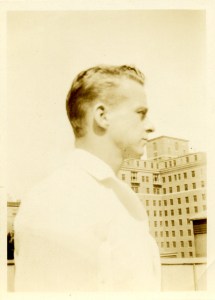
More information kept coming to Baird in bits and pieces, “leading me along to understand the value of what I had. I needed to see the whole picture before that could happen.”
She was dazzled by the communication between her father and Dr. James Howard Means, a prestigious physiologist who had been one of his mentors. At a Harvard library, she unearthed their correspondence, including a 1933 letter of recommendation he’d penned on behalf of Perry Baird: “A man of the finest type of character, upright and sincere in every way, unselfish, brilliant and delightful. … His integrity is beyond question.”
Unfortunately, those attributes failed to save him from receiving punishment instead of a remedy, which was standard in those days for people with manic behavior. In his manuscript, it’s clear Perry Baird remained cognizant of this disparity, justifiably outraged about unkind hospital policies and personnel. His license to practice medicine was taken away. Few friends or relatives visited during his confinement. Periodically gripped by despair, he felt abandoned
When not hospitalized, Perry Baird looked for a scientific solution. “Biochemical Component in Manic Depressive Insanity” was the title of a 1943 article he submitted to The Journal of Nervous and Mental Disorders, which published it the following year. But his affliction intervened again and again, thwarting the potential success of those experiments.

A captive of social norms, Perry Baird disliked the idea of disrupting polite company even while doing just that. Although eager not to offend those who considered him an important colleague, he couldn’t stop the train wreck of his escalating mood. “My dad was so basically proper that some behavior went against his integrity and his morality,” Mimi Baird contended.” He wrote in a refined manner, tastefully revealing horrible things.”
When she joined forces with Tony Kushner, they traced her father’s footsteps by visiting most of the sites that are mentioned in the book.
“In the winter of 2016, we went to Westborough wearing masks because of the mold, asbestos and dust,” she said of the now-defunct hospital where Perry Baird had cunningly escaped from one straightjacket after another 72 years earlier. “Birds were flying in and out.”
Baird was somewhat philosophical in a letter written to a friend once his harrowing 1944 sojourn there had ended: “I have lived through five prolonged suicidal depressions, four acute manic episodes and many hypo-manic phases. … Artistic creativeness finds its best expression after it has been fashioned by the agonies and tortures that life imposes.”
Thanks to Kushner, Mimi Baird recently had great aisle seats at the current Broadway revival of “Angels in America.” His play about people reacting in myriad ways to the scourge of AIDS might have a few parallels with her saga about kaleidoscopic perceptions of bipolar disorder.
