

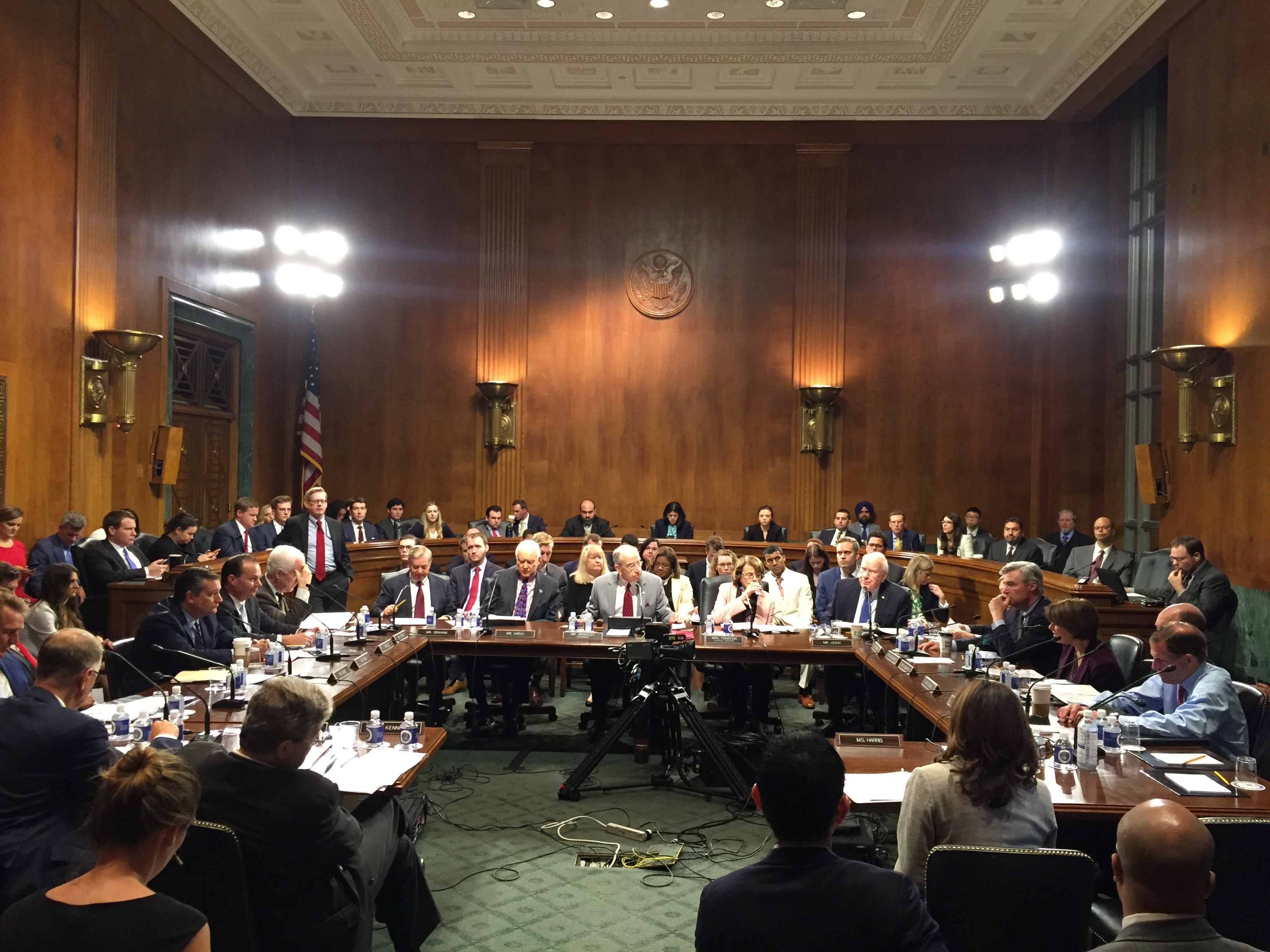
[W]ASHINGTON — A measure that aims to crack down on tactics pharmaceutical companies use to block generic options from getting to market has cleared a hurdle in Congress.
The bill, introduced last year by Sen. Patrick Leahy, D-Vt., and a bipartisan group of cosponsors, was approved by the Senate Judiciary Committee Thursday on a vote of 16-5.
Supporters say the measure would help to drive down drug prices by expediting the availability of generic options.
One practice the bill aims to end is a tactic by drug manufacturers to prevent generics companies from getting access to samples of the medication. Generics companies need those samples in order to get Food and Drug Administration approval as an alternative to the brand name.
The measure also addresses a practice of pharmaceutical companies blocking generics manufacturers from participating in the process for developing safety guidelines.
The Congressional Budget Office projects the legislation would save federal agencies $3.8 billion by driving down drug costs. Supports say savings to consumers would be much greater, too.
Committee Chair Sen. Chuck Grassley, R-Iowa, a sponsor of the bill, argued the measure would improve current legal options for companies in the pharmaceutical sector by “streamlining existing litigation options.”
“This is absolutely not a trial lawyers’ windfall,” Grassley said.
Grassley heralded the bipartisan passage of a bill that is relatively “controversial.”

Some members of the panel voiced concerns about ramifications of the measure. Sen. Orrin Hatch, R-Utah, voted against the bill. He raised concerns that bolstering generics could result in a reduction of incentives for pharmaceutical companies to develop innovative medications.
Leahy celebrated the bipartisan support for the legislation in remarks after the vote.
The costs of prescription medication are a major concern for members of the public, he said, arguing this legislation will help to drive down those costs by increasing competition on the market.
“I can guarantee when I walk through the grocery store I’m going to hear people come up to me and say something about drug prices,” he said.
Leahy was optimistic the measure would advance further, citing the bipartisan cosponsors for the measure.
“Look at the list of people, it goes across the political spectrum, and that’s almost always a guarantee of getting something passed,” he said in an interview after the vote.
A path forward for the bill as a stand-alone measure is not clear at this time.
Senate Majority Leader Mitch McConnell’s office did not respond to a request for information about timing on a possible vote.
According to Leahy, the measure was poised to be included in a spending package earlier this year, but it was jettisoned from the bill at the last moment under pressure from the pharmaceutical industry.
Some groups, including PhRMA, argue that the measure would be a boon for lawyers because the new private right of action would increase incentives for cases to go to court.
Rep. Peter Welch, D-Vt., introduced a parallel version of the bill in the House.
