

[B]URLINGTON — Residents and business owners who live or work on the city’s scenic waterfront embraced the return of passenger train service at a Wednesday night meeting. But their enthusiasm turned to universal dismay when presented with the prospect of railroad cars overnighting in their midst.
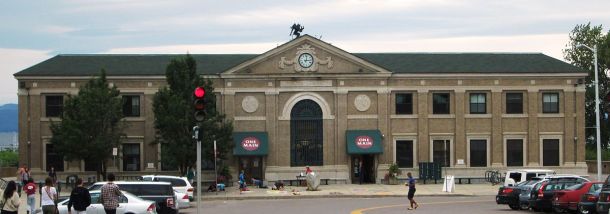
For years, the tan brick building at the end of Main Street with “Union Station” emblazoned above its wrought iron door has been a reminder of a time before the primacy of the automobile, when trains carried residents and tourists along the coast of Lake Champlain to and from Burlington.
Trains will once more be stopping at Union Station when the Ethan Allen Amtrak line extends its current service from New York City to Rutland to Burlington as early as 2021. VTrans has the job of upgrading the track between Rutland and Burlington in preparation for a route that has been untraveled by a passenger train since 1953.
Last year, VTrans formed a steering committee with representatives from Chittenden County Regional Planning Commission and the city of Burlington to seek public input on the contentious issue of where the Amtrak train would be serviced and stored overnight. The committee hired VHB to assess the following five potential sites:
- Northern Urban Reserve, next to the bike path just north of the dog park
- Urban Reserve, next to the bike path east of the dog park
- Union Station, at the end Main Street
- Vermont Rail System rail yard, which currently stores and services trains
- Flynn Avenue, adjacent to the South End City Market
Based on such criteria as cost, residential noise impact and visibility of the train, Eleni Churchill of the Chittenden County Regional Planning Commission and David Saladino of VHB told the crowd Wednesday night that Union Station had emerged as the best place to overnight the train. Critiques of the assessment began flying before the presentation ended, with meeting attendees wanting to know why criteria such as diesel fumes from idling trains and economic impact to waterfront businesses had not been considered.
“For the last 30 years, this community has been investing in the waterfront. We’ve got restaurants, we’ve got docks, we’ve parks, we’ve got a science center,” said Phelan Fretz, executive director of the ECHO Center. “The concept of dropping in a thing that’s a football field and a half long and 14 feet high on the waterfront, you wouldn’t drop that onto Church Street, and it’s just as inappropriate to drop that in the middle of a bustling waterfront.”
Melinda Moulton, CEO of Main Street Landing, has long advocated for the return of Amtrak to Burlington — in fact, her company renovated Union Station in the 1990s in anticipation of a comeback. Main Street Landing sold the ground floor of Union Station to the state last year so the building once more could serve as a train station. But Moulton said that although she is a stakeholder on the waterfront, she found out just days before last November’s initial public meeting that Union Station was being considered for railcar storage.

“The central business district of our beloved and most beautiful Burlington waterfront is not a railyard,” said Moulton at Wednesday’s meeting. “This is not the location to service, store, and idle trains. These operations belong in the railyard two blocks away.”
Moulton and other residents objected this spring when Vermont Railway started idling its dinner car train for hours along the bike path between Main Street and King Street; it prompted them to double down on opposition to Amtrak storing a train in the same area. Moulton was further outraged to learn that VTrans had started drawing plans for a spur to park the train next to the residential Wing Building, through land that Main Street Landing has an easement on.
“To hear that they were planning to tear out the bike path and put a rail spur one foot from the building when we have an easement there, how could that happen,” said Moulton in an interview Thursday.
Residents were also unhappy with the prospect of storing the train along the waterfront north of Union Station, saying that diesel fumes and noise from the train would waft toward homes located just uphill. VHB’s conclusion that storing the train at the Vermont Railyard was impossible because of a prohibitive $50 million price tag — the cost of relocating the whole railyard, since owner Vermont Railroad Systems claims the railyard has reached capacity — was questioned.
“I think right now, the only acceptable option in this community is the railyard,” said Brian Pine, Burlington city councilor for Ward 3. “I don’t know how else to say that, but I think we’ve got to find a way to do that.”
Carl Fowler, member of the Vermont Rail Advisory Council, proffered a more expansive vision of rail service in Vermont. He believes the project is “misconceived by terminating in Burlington,” saying that VTrans should instead upgrade the 7.7 miles of track between Burlington and Essex Junction to handle a low-speed passenger train. Fowler added that the train could overnight in a larger railyard in St. Albans, and could eventually journey once more to Montreal, eliciting cheers from the crowd.
“That’s not a pie in the sky project … it’s probably something that could be done at $1 million a mile,” said Fowler.
Chittenden County Regional Planning Commission’s Transportation Program Manager Eleni Churchill stressed that the comments from the meeting would be considered in the final report prepared for VTrans this summer, which will be made public on the planning commission’s website. VTrans’ Rail Program director, Dan Delabruere, did not return a phone message left on Thursday.

