

[I]t’s official. Lawmakers must report back to Montpelier on Wednesday, just a week and a half after they stayed up late on a Saturday to wrap up their business and deliver sentimental sendoffs until next year.
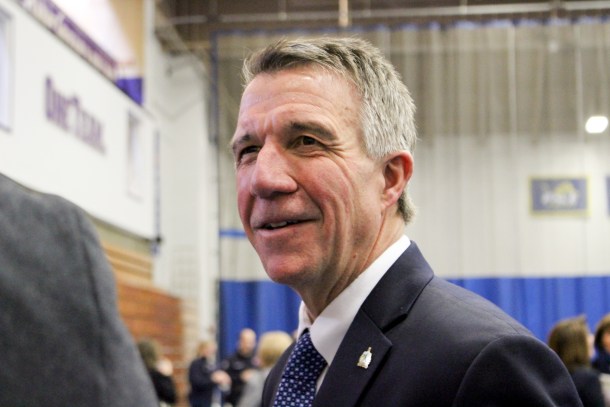
Gov. Phil Scott has been telling lawmakers for months that he will not allow an increase to the state’s property tax rate, and he issued a letter on Friday exerting his authority to call a special session.
Scott’s proclamation says lawmakers must return “for the purposes of providing Vermonters property tax relief through level statewide property tax rates” and “stabilizing the State’s system of education finance.”
There is currently a $33 million gap between Scott’s proposal for school funding and the plan laid out in bills passed by the House and Senate. The governor has said he hopes his administration and the Legislature will be able to reach an agreement on the budget and related tax bill in a three day session next week.
But that is looking unlikely, with both sides digging in on their positions ahead of the session.
During a meeting with House leadership on Thursday, the governor was told that lawmakers will return Wednesday for joint committee hearings to hear out the administration on it’s latest proposal, according to House Speaker Mitzi Johnson, D-South Hero.
After that, most of the Legislature will adjourn until the next Wednesday, May 30, as the committees on education, appropriation and ways and means work on a compromise bill, Johnson said in an interview on Friday.
Johnson noted, however, that the budget has not even been delivered to Scott yet, so he hasn’t officially vetoed it, though it seems almost certain that he will.
“There’s some interim things that need to happen here but we are working to get people back in session as requested and we will set up joint committee hearings so that the governor can come back with a counterproposal,” Johnson said.

The speaker said that a number of other bills could also come up in the special session, including bills that are met with the governor’s veto, and some other bills that did not make it out of the Legislature during the normal session.
“Anything is still in play,” she said. “If we are calling 180 people back we want to make sure Vermonters get their money’s worth out of them,” she said, adding that Scott could make it’s a quick session if he wants.
“It could wrap up very quickly if the governor looked at the very strong tri-partisan bills and decides to sign the bills,” Johnson said.
No-deal scenario
The governor says he’s confident that he can get a deal done with lawmakers soon. In a letter to Senate leader Tim Ashe, D/P-Chittenden, on Thursday, he said legislators had two choices: reach a compromise on a bill he will approve, or take a vote to override his eventual veto of a bill he opposes.
“There is no reason to start July 1 without a budget — but that is in the Legislature’s hands,” Scott wrote.
The House Republican caucus has just enough votes to make sure the governor’s veto stands, and has pledged to line up behind him if needed.
Scott does not have the power to set the length of a special session or determine which proposals are taken up, according to Senate Secretary John Bloomer, but the governor can continuously call the legislature back if he’s not happy with the bills they pass.
If a budget agreement isn’t reached by July, the Scott administration says it would favor extending negotiations into the next fiscal year using emergency funds rather than signing a spending package that increases taxes.
Such emergency funding would need to be approved by the legislature.
“[I]f there is a solution that ensures Vermonters still have a state government operating in order to ensure that they don’t have taxes on them in a year they don’t need taxes raised, then that would be the preferred approach over the alternative,” Rebecca Kelley, a spokesperson for the governor, said in an interview Thursday.
But Kelley stressed that she doesn’t believe any emergency government funding will be necessary to reach a resolution.
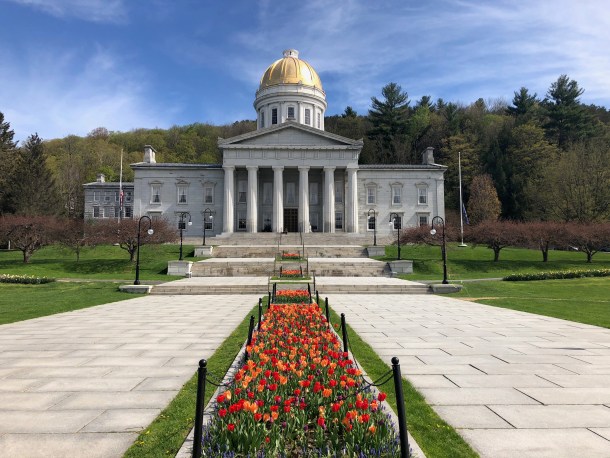
House Minority Leader Don Turner, R-Milton, pitched an emergency funding safeguard on the last day of the legislative session, but it was voted down amid Democratic criticism that Vermont needed to avoid the sort of political gridlock seen in Washington.
During a press conference on Wednesday, Scott denied he was employing DC-style political tactics, such as the threat of a government shutdown.
“I’m not saying we’re going to have a government shutdown,” he said. “I believe we get together, meet over the next week, come into session on Wednesday. I believe that if we get an agreement ironed out, that we could be out of here by Friday.”
But Scott also said he could not guarantee there would not be a government shutdown on July 1. “I can’t assure you of anything at this point,” he said.
The governor has said the special session should focus exclusively on a $58 million gap in the education fund, which he wants to patch with one-time money that will be paid back over time.
His plan includes special education reform and a statewide teacher health care benefit, which have both been drafted by lawmakers, along with a task force to work with districts to accelerate efforts to consolidate schools and decrease staff size.
Scott has said he believes the plan will lead to $300 millions in savings, though the Joint Fiscal Office has called these projections into doubt.
To carry out its plan, the administration wants to scrap the Legislature’s proposed investment of $34 million to pay off teacher pension debt and instead use the money to lower tax rates. But Ashe and Johnson say paying off the debt would lead to $100 million in savings down the road.
While government shutdowns and continuing resolutions to prevent them have become part of the political reality in Washington, they are extremely rare in Vermont. In fact, this was the first years in memory when legislators have left the Statehouse without a budget deal.
The only time in the state’s history lawmakers have needed to make an appropriation to extend budget negotiations into another fiscal year was in 1961, according to Stephen Klein, the Joint Fiscal Office’s chief fiscal officer,
That year, the legislature appropriated $5 million to keep the government up and running in July and passed its budget in August, Klein said.
State Treasurer Beth Pearce has said emergency measures to keep the government funded would hurt Vermont’s standing with creditors.
“We need to resolve differences as soon as possible with respect to our budget process,” Pearce said in a memo read out on the House floor last Saturday. “Regarding our governance and budget process, a lack of a clear and sustainable budget would adversely affect our State with respect to Wall Street.”
Colin Meyn contributed reporting
