

The House advanced a bill Tuesday that would raise the minimum wage from the current $10.50 an hour to $15 an hour by 2024.
In a narrow vote of 77-69, representatives gave preliminary approval to S.40, a proposal Democratic lawmakers have championed as a vehicle to boost income for tens of thousands of Vermonters and lift many low-wage workers out of poverty.
The vote is a victory for Speaker of the House Mitzi Johnson who last year had difficulty rallying support for issues that split the caucus. With the minimum wage vote, Johnson showed she can muster backing for controversial legislation.
Senate leader Tim Ashe pushed ahead with paid family leave legislation on Tuesday in a reciprocal move after the House vote on minimum wage.
While the minimum wage bill looks destined to pass out of the Legislature, Gov. Phil Scott has said he would veto it.
Tuesday’s vote showed that the bill’s supporters do not have the two-thirds majority needed to override a veto. Republicans have just enough votes to uphold the governor’s veto, and a number of Democrats joined them in voting against the minimum wage bill.
The House debated the bill for hours on Tuesday, with discussion focused on the consequences a minimum wage hike would have on Vermont’s economy.
Many opponents repeated the refrain that raising the wage would burden small businesses and lead to job losses. Others argued that passing the proposal would improve the livelihoods of low-income Vermonters at a time when cost of living is already high and only mounting.
The bill would increase wages for 65,000 people by 2024, according Sen. Michael Sirotkin, D-Chittenden, one of the sponsors of the legislation.
Under the current pay rate, a worker with a full-time minimum wage job makes only about $22,000 per year.
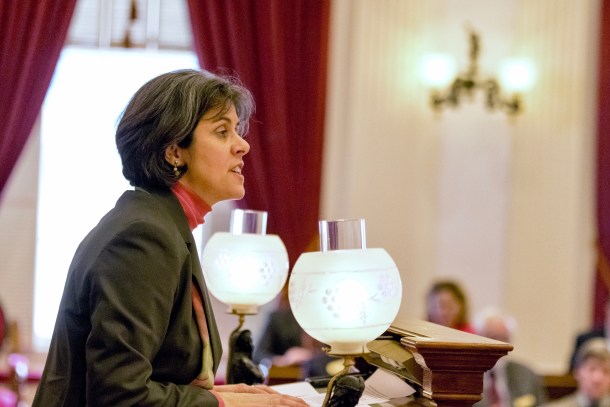
“People ought to be able to go to work, work hard and have the dignity to know that that wage they’re bringing home … is helping them to meet their family’s basic needs,” Rep. Sarah Copeland Hanzas, D-Bradford, said on the House floor.

Supporters of the bill said that giving workers additional buying power would make for a healthy economy, sending more money flowing into local businesses and more tax dollars into state coffers.
“That individual is now a consumer and they will spend their money and a lot of it will be spent locally,” Rep. Paul Poirier, I-Barre City, said on the floor. “You’ll be helping your small stores and so forth.”
But opponents of the bill painted a dire picture of what they believed a $15 minimum wage would mean for Vermont: struggling businesses, fewer jobs and increased prices for goods and services.
“Imagine the impact an increase in the cost of fuel, transportation, utilities, food and clothing, would have on the purchasing power of low-income Vermonters,” Rep. Heidi Scheuermann, R-Stowe, told the House.
“Imagine the impact these increases will have on our small retail establishments already struggling to stay competitive with online retailers,” she said.
The House’s preliminary approval of the minimum wage proposal came after the House Appropriations Committee voted the bill out of committee on Friday without its recommendation.
The committee found it difficult to come to consensus on the proposal in part because economists have drawn different conclusions about the outcomes of raising the wage, according to Rep. Kitty Toll, D-Danville, who chairs the committee.
While some say it puts more money into the economy and people’s pockets, others say it leads businesses to transition to hiring fewer employees and increases the cost of goods.
Rep. Janet Ancel, D-Calais, who chairs the House Ways and Means Committee, said changes in federal tax policy have created favorable conditions for a minimum wage increase.

Ancel said federal tax cuts will save Vermont businesses between $250 million and $300 million this year. The cuts will continue for years and in some cases indefinitely, she said.
“We heard that an increase in the minimum wage will hurt Vermont businesses. That’s a concern that we need to take seriously,” Ancel said.
“But if there was ever a time to adopt a higher minimum wage, it seems to me that the year when our Vermont businesses have been given a tax cut of almost $300 million, all the courtesy of the federal government, is just exactly that time,” she said.
S.40 is expected to pass in a final vote in the House on Wednesday. The bill will then return to the Senate, which passed the proposal in February and needs to approve House changes before it goes to the governor.
