


[P]OULTNEY — Mary Pernal retired to life on a farm down a dirt road in southern Vermont to “get away from the craziness of the world,” she said Friday evening as a well-fed heifer chomped grass across the road.
Now news reporters were knocking on her door.
Her community has found itself at the center of a case that has shaken Vermont and turned a local teen with unkempt hair into the face of what a school shooter might look like in this state, and a symbol of the threat of mass violence in one of the safest states in the country.
After a Supreme Court decision forced prosecutors to drop charges of attempted murder against Jack Sawyer, 18, he was returned to the custody of his father on Friday morning. He checked into a mental health facility on Friday evening, according to the Fair Haven police chief.
While Sawyer was admitted within hours of his release from prison, it seemed everyone from the local residents to the police chief was worried on Friday about his whereabouts, and what was next for the young man.
“I think this is an incredibly reckless decision,” Pernal said of the release of Sawyer, whose father lives just down the road. “Can you imagine if your child was in Jack’s journal?” she added, referring to a notebook kept by Sawyer that allegedly contained a kill list of students and staff.
“I don’t think families should be subjected to this sort of trauma,” she said. “We as a society have to be compassionate, but we have to be wise as well.”
Pernal said that Sawyer had been a normal kid who had shown no signs of violence until he took an unusual interest in school shootings in high school. “You can’t see it in terms of, ‘Oh, he’s evil,’” she said. “This is a kid who is mentally ill.”
The Supreme Court decided that Sawyer’s actions — including the alleged purchase of a shotgun and buckshot to carry out an attack on Fair Haven Union High School, the plans for which were detailed in a journal — did not amount to an “attempt” under Vermont case law.
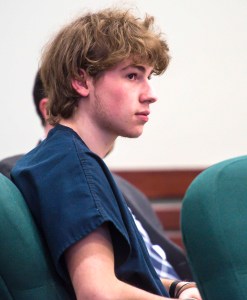
Sawyer still faces two misdemeanor charges that could send him to prison for three years, but was released on $10,000 bail after prosecutors dropped the more serious charges.
How long Sawyer will remain in treatment, and what happens after that, remains unclear. His admission to a facility in Brattleboro was voluntary, according to a report in the Rutland Herald. Kelly Green, who has been representing Sawyer, said in an email on Saturday that she could not comment on his treatment.
“On behalf of Jack, we are asking the community to be supportive of his lovely family and to give him privacy to recover and return to health,” Green said in an email.
Erika Gutel has seen a community grapple with far worse. She lived near Littleton, Colorado, when two teenagers went on a shooting spree in Columbine High School two decades ago and killed 13 people.
Last year, she moved across the country with her husband, Mark, and three children after purchasing a farm in Fair Haven. They opened the Kinder Way Cafe in the middle of town, selling coffee and pastries in the front and local produce in a small grocery store in the back.
Life in the “sleepy little town” had changed in recent months, she said. Reporters from CBS’ “60 Minutes” and the New York Times had descended on the cafe, one of the few gathering spots in the town, to get a local read on Sawyer’s story.
“Fair Haven will be known for Jack Sawyer,” Gutel said in an interview at the cafe on Friday. She said she was not as scared as some parents, especially those with students at the high school, but had plenty of concerns about the future.
“If he’s going to stick around, is he going to get his guns back? Is he going to be able to move back through Fair Haven schools?” she said. “You never know if the kids are going to be safe or not.”

Gov. Phil Scott released a statement Friday morning saying that authorities had obtained an Extreme Risk Protection Order against Sawyer, a legal tool allowing police to prevent high-risk individuals from having firearms. His father, David Sawyer, was also required to get all guns out of the house as part of his bail conditions.
“As I’ve said, I am extremely concerned and frustrated that our current laws have allowed for the release of an individual who — as the Court record shows — intended, and may still intend, to carry out a horrific crime,” the governor wrote.
Scott said state police were in touch with Fair Haven Union High School officials, coordinating with Fair Haven police, engaging with the Sawyer family and posting police cruisers at area schools, all in an effort to give the community a sense of security.
“I promise, we are doing everything we can to keep the school and community safe,” he said.
Yet the abilities of law enforcement officers to control the situation is limited, said Fair Haven Police Chief Bill Humphries. He and the Poultney constable, Dale Kerber, spend as much time in the town as possible, and state police swing through when they can.
Humphries said he was sympathetic to Sawyer having mental health problems, but believed that he posed a threat to the community as long as he was not locked up.
“I wish him the best, but I’m also trying to deal with a community that’s rattled,” he said, adding that the lack of closure in the case made it different from actual school shootings that end up with suspects put away for decades, or dead.
“They know the bad guy is gone. Here, this guy is released,” Humphries said. “Every day the new norm in this community is we know there’s a threat out there that has told us he wants to kill us.”
Humphries said he was still trying to get federal authorities to take action in the case, so that Sawyer could be charged with more than the two misdemeanors he currently faces. “There must be something. We need help,” he said.

Until then, Humphries said police would do their best to enforce conditions of release that prevent Sawyer from entering the town of Fair Haven or any school ground. “Right now that’s the only tool we have,” he said.
Michelle Powers doesn’t think Sawyer should have been in prison, but knows she’s in the minority around here. She had two sons who grew up with Sawyer and his older brother, one of whom is now a correctional officer at the prison where he was detained until Friday.
“I feel that release is what it should have been,” Powers said in an interview at the deli where she works.
She said she understood that people were scared, but wished there was more empathy. “They want to lynch him, but he didn’t commit anything,” she said. “I see fear, but I also see a lack of compassion. If that was your child, wouldn’t you want him to get the help that he needs?”
Parents seemed inclined to blame David Sawyer for somehow allowing his son to descend into violent thoughts, without realizing that it could be their own children, Powers said. Rather than passing new gun laws or making it easier to arrest kids like Sawyer, she said, a more effective response would be self-reflection.
“I hope that more parents will be more concerned and spend more time with their kids,” she said.
Whitney Van Buren also has a personal connection to Sawyer — she went to daycare with his older brother. She said there seemed to be enough evidence to prove that Sawyer was deserving of some sort of serious consequences, beyond public shaming.
“His life is going to be totally different from here on out, so that will be a consequence,” she said. “But that’s not going to give people peace of mind around here.”
Van Buren said the reconsideration of the state’s gun laws in the wake of Sawyer’s arrest was probably a good thing, though she thought the focus should be on keeping guns out of the hands of people with mental illness or a history of violence.
She said it was also good that Vermonters had been made aware of the danger of mental illness and that lawmakers were fixing laws that prevented people from being held accountable for their behavior.
“But it’s hard to think of any of this as a success,” she said. As for Sawyer, she said he had an opportunity to get his life back together, if he was willing to work at it.
“I think he has a chance to rehabilitate himself,” Van Buren said, “but not in Fair Haven.”

