

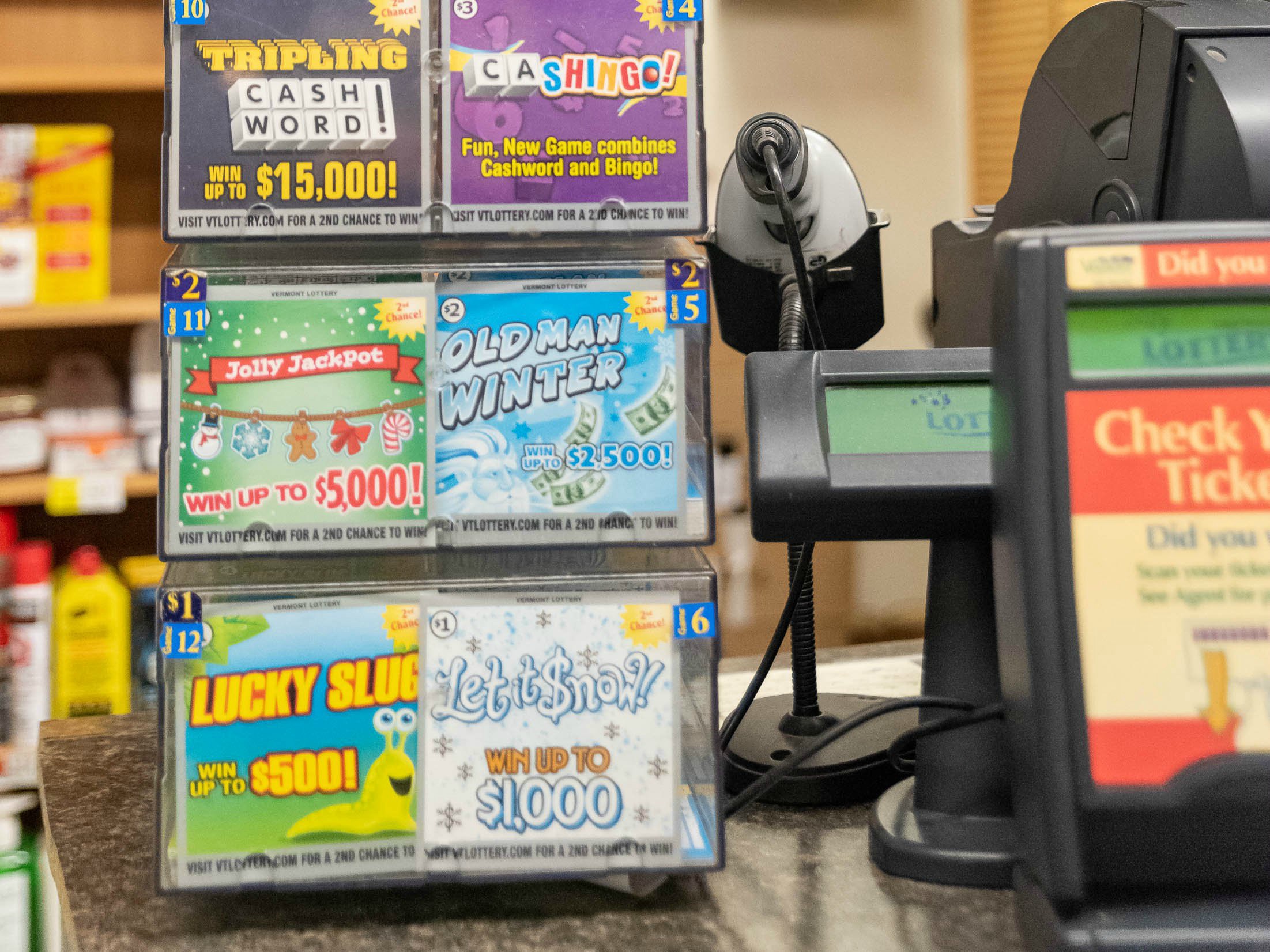
“Every day’s a pay day,” proclaims the message to players of some of the Vermont Lottery’s most popular games.
That dream appears more likely to come true if you own or work at one of the state’s 650 lottery ticket outlets.
A VTDigger investigation has found that some store owners and clerks are claiming winning tickets with remarkable frequency, and that total payoffs for some individuals have reached into the hundreds of thousands of dollars.
Consider:
- Julie Messier of Williamstown claimed $78,500 from 13 tickets of $500 or more over the course of 19 months when she worked at Rinkers Interstate Services.
- Penny Durant of Hardwick made at least 111 claims worth $500 or more from 2011 to 2017 and won more than $300,000 during a period when she or family members worked at area stores.
- Elisha Steele won $224,000 from scratch tickets of $500 or more between 2011 and 2014 in Windham County, where she had been employed at several stores.
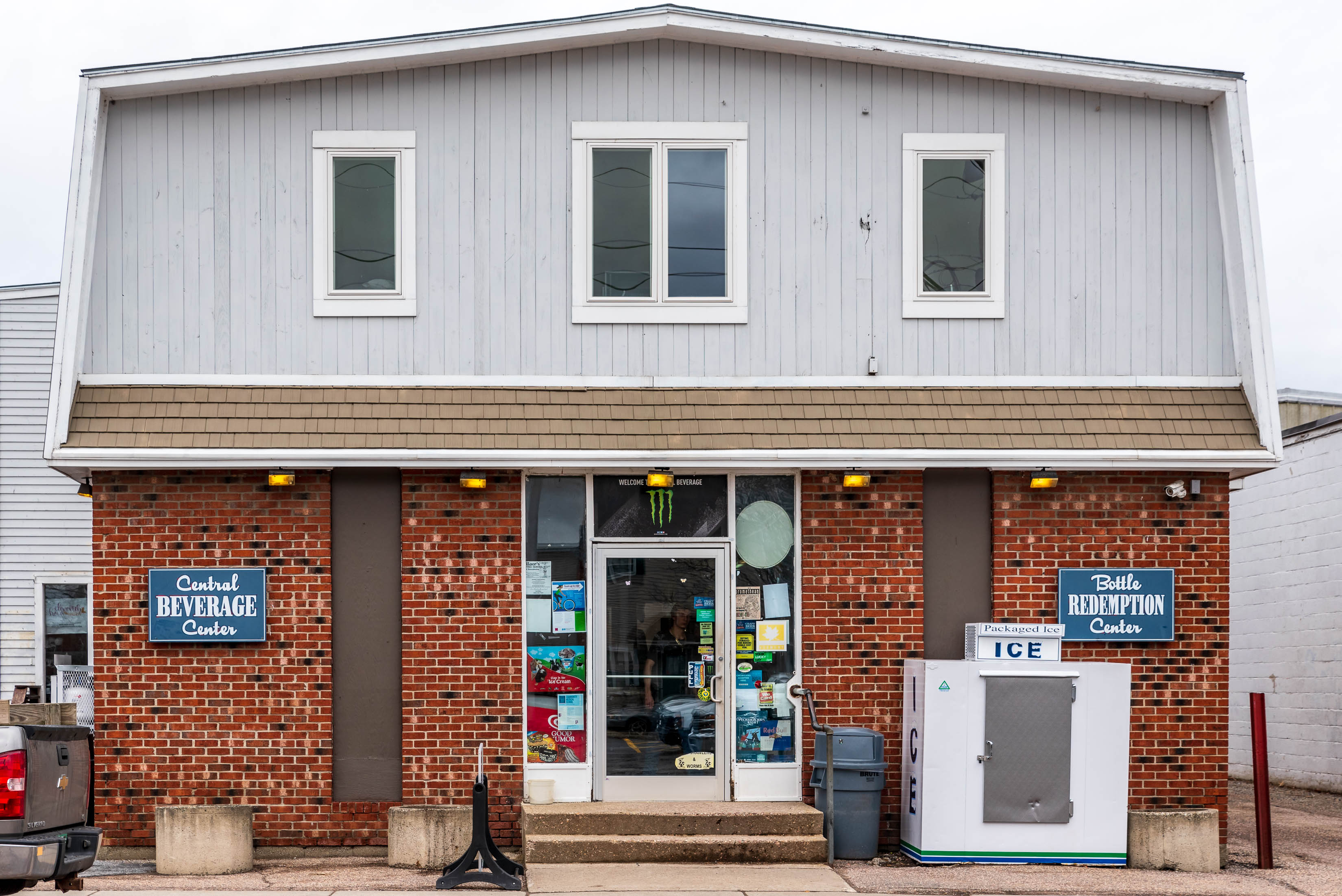
- Mark Kittell, owner of Central Beverage in Essex Junction, won nearly a quarter of the store’s top prizes of $600 or more between 2011 and 2016, including $56,000 between 2014 and 2016.
The year-long review found at least 117 retailers, or those close to them, had won a major lottery prize — defined as $600 or more, the lowest level at which the state keeps track for tax purposes — between 2011 and 2016. Collectively, they won nearly $1.8 million.
In addition, employees at 29 convenience stores claimed more than $1.4 million in prizes from stores they worked at, or formerly worked at, or from neighboring outlets. At least five of the 25 most prolific winners were current or former convenience store employees or owners.
Although the Vermont Lottery Commission has declined multiple requests to release where prizewinners purchased their tickets, VTDigger was able to determine many of their identities by cross-checking the names of big-ticket winners with the names listed in store-ownership records maintained by the Secretary of State’s Office. VTDigger also examined birth, marriage and divorce records to identify relatives of the store owner.
Upon identifying a correlation, VTDigger would then contact the store and inquire as to which person was claiming the most lottery winnings. Sometimes that person was the owner; sometimes it was a clerk; and oftentimes the person speaking to the reporter would decline to say.
Although the process revealed a substantial number of winners in that category, the list cannot be considered complete.

When presented with some of the findings during a 90-minute interview at the Vermont Lottery Commission headquarters in Barre, Executive Director Danny Rachek raised no eyebrows and expressed no concern.
“If you estimate how much we gave out in value in that time period, I don’t think we’re talking about a high percentage,” said Rachek, who came on board last November after the position had been vacant since 2016, when Greg Smith resigned. Smith, who is now acting director of the Illinois Lottery, declined a request for an interview.
The commission’s marketing director, Jeff Cavender, also dismissed the findings connecting clerks and owners to major prizes.
“What does it matter?” he asked during the headquarters interview. “I don’t think that’s an issue at all.”
The chairperson of the Vermont Lottery Commission agrees.
“That doesn’t strike me as odd,” Sabina Haskell said in a phone interview Wednesday.
Lottery sales have averaged $105 million annually over the past decade, Haskell said. Of that amount, roughly $80 million has been awarded in prizes.
Officials say that players who win a lot tend to play a lot and that repeat winning is not evidence of wrongful activity. They suggest that many of the frequent winners are merely investing their winnings in more claims.
The more you play, the more you win, explained Cavender, who also took part in the headquarters interview with Rachek.
However, statistics experts who study lottery operations around the country say that although heavy bettors can spend a lot each day buying tickets, frequent play alone is not enough to explain their frequent winnings.
University of Toronto statistics professor Jeff Rosenthal, who has written numerous papers about state-run games of chance, said that although he could not analyze Vermont’s data in detail because of the limited scope of the reports made available, the odds overwhelmingly favor the lottery.
“It’s not very likely you’ll get a big prize,” Rosenthal said. “Winning $100 more than once is very unlikely.”
Some of Vermont’s most successful players have claimed at least $1,000 on numerous occasions, VTDigger found.

‘I’m lucky …. I have been forever’
Julie Messier, who cashed in at least four prizes of that size or bigger in just over a year at the store she worked at, says she’s “just lucky.”
A former employee at Rinkers Interstate Service in Barre, Messier was the store’s winningest lottery player before Rinkers sold. Records show she won $73,500 from that store in prizes $600 or more, which was nearly all of the store’s top prize money during that time period.
All of her wins came from scratch tickets. And twice she won the largest prizes you can win in two special games that had been offered by the state.
In February 2012, Messier won a $50,000 Winter Wonderbucks ticket, the largest possible in the game. The odds on winning with her $10 ticket: 1 in 33,333.
Less than six months later, she won the top prize of $20,000 in a Money for Words contest. That was from a $5 ticket where the consolidated odds of winning were again 1 in 33,333.
Between May 2011 and November 2012, Messier claimed 90 percent of Rinkers’ prize money of $600 or more from four tickets, records show.
When asked about Messier’s two big wins during the six-month period, Haskell said: “I don’t have a comment about that. I don’t know what to say.”
However, the Lottery Commission chairperson suggested that winnings be looked at as a percentage of the payout from the Vermont lottery as a whole. In Messier’s case, Haskell said the figure would be 0.01 percent.
“I think the winning streak is so small,” she said, “I don’t know how I can connect those dots.”
Rosenthal estimated Messier would need to spend $118 per day on lottery tickets to have a 1 percent chance of winning that much in 18 months.
Messier worked at the store for about 13 years, mostly part time on weekends and holidays, before she was let go in 2013. Suzanne Legault, a former Rinkers manager, said the reason was for not working when her time chart indicated she was. Messier said she was given no explanation.
Legault said she was surprised to learn from a reporter that Messier played the lottery.
“Back then, employees weren’t supposed to be buying tickets,” said Legault, who started working at Rinkers on Jan. 1, 2013. Records show that Messier made her last large claim at that store about a month earlier.
Messier said that before Legault took over, “when we weren’t working, we were allowed to buy (tickets).” She said that whatever she won, she would put the winnings back into the lottery.
Sometimes family members and friends “get mad because I’m lucky,” she said. “I have been forever.”
‘Lightning does strike somewhere’
VTDigger asked University of California-Berkeley statistics professor Phillip Stark if it was possible to determine just how lucky Julie Messier was.

Stark, co-author of a 2015 article published in Mathematics Magazine called “Some People Have All the Luck,” and his colleagues created a program to analyze players when provided the odds of winning a particular game, the frequency of wins and the cost of a ticket.
He examined Vermont data for scratch ticket players who won $500 or more.
Because Stark didn’t know how much gamblers spent on tickets in Vermont, he took a conservative approach in his analysis for VTDigger. He assumed everyone in the state played the lottery and compared the population number — 623,657 — with the lottery’s total revenue between 2011 and 2016.
Stark found that Messier and everyone else in Vermont would have to spend $363,000 to have even a 1-in-a-million chance of winning as often as Messier did. She had won at least 30 instant tickets of $500 or more during that time period.
Stark, who looks at frequency in his interpretations, said it’s not surprising for a gambler to win the biggest prize in a game one time.
But the winners uncovered by VTDigger weren’t just lucky once, they were lucky multiple times — for example, Messier’s earning the largest prizes from two different scratch tickets in the same year, one for $50,000 and the other for $20,000.
“Lightning does strike somewhere,” Stark said.
But more than one lightning strike in the same place?
“It’s just too lucky,” he said. “It is surprising if anybody wins frequently.”
Messier sees it differently.
“My odds walking in and buying a lottery ticket are no different than your odds,” she said, adding she started playing the lottery decades ago and has always bought tickets at multiple locations, including in other states.
Messier said she’s tried to buy lottery tickets for others to spread her luck but it hasn’t worked.
“I wish to hell I could pass my luck onto other people,” she told VTDigger in an interview, “but I can’t. I’ve tried. People have had me buy them tickets and everything.”
Messier said the reason she claimed a lot of tickets was because she played a lot and happened to be lucky.
“As a store clerk, you see other people playing and winning and it always draws you to want to play,” she said.
“There’s no crime in winning or playing the lottery.”
And she’s right.

‘It feels a little rotten’
It is not illegal in Vermont for store owners or their employees to purchase and cash winning lottery tickets, although some owners put restrictions on clerks buying tickets during their shifts.
What some experts do wonder about, is how these retailers and staff manage to win so much. They say that those claiming so many big tickets are either beating extraordinarily long odds, spending an absurd amount of money — or something else may be going on.
Observers in several other states have also noticed the unusual rate at which store owners and workers claim larger winning tickets and have urged lawmakers to consider enacting limits on such sales and prizes. Some critics argue that states ought to prohibit workers from purchasing tickets in the stores where they are employed, if for no other reason than to avoid the appearance of impropriety.
However, most jurisdictions are reluctant to regulate the play of proprietors and their staff because their participation helps to drive sales. The Vermont Lottery, which pays 5.75 or 6 percent commission to convenience store owners for each winner, relies on those outlets to sell their tickets and the state is not inclined to harm that relationship.
And that’s a very important relationship not only for the lottery, but also for the state’s coffers.
The Vermont Lottery recently marked its 40th anniversary. All of its profits go to the Vermont Education Fund, which last year amounted to $25.5 million. That’s a relatively small percentage of the $1.5 billion education budget, but House Committee on Ways and Means Chairperson Janet Ancel said it’s still very important.
“If we didn’t have the lottery money, we’d need to replace it with something,” the Calais Democrat said.
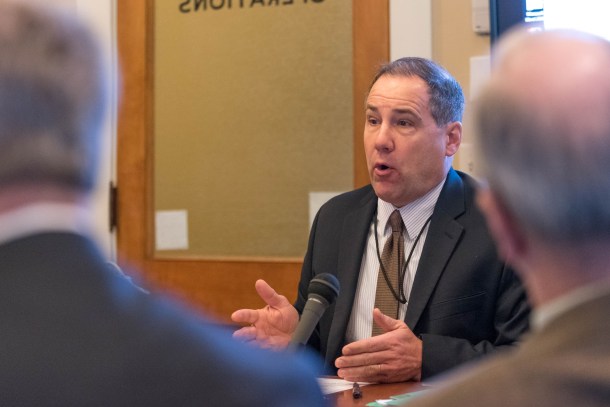
Rachek, the lottery’s executive director, said in the interview with VTDigger that the Vermont Lottery’s primary goal is to keep profits high.
That’s no small challenge. Last year’s audit report by Davis & Hodgdon Associates suggested the commission seek ways to boost sales after pointing out that gross revenues had fallen by almost $1.9 million from the previous year due to a decline in Powerball sales, most notably.
Outlets that do not sell enough tickets can have their lottery licenses suspended. Games were pulled from both the Alburgh Village Store and Morgan’s East Barre store in 2013.
One state that does prohibit store owners and members of their household from buying tickets at their own stores is Indiana, where the lottery is now privately run. Dennis Rosebrough, public relations director of the Hoosier Lottery, said that restriction had been in place since the state’s lottery began in 1989. He said, however, that he was not aware of the reasons behind it.
Vermont lottery officials say they see no reason for having such a law in their state, even when presented with unusual winning patterns for some owners and workers.
Until leaving his post last fall, security director Michael Ferrant was the only person assigned to safeguard the integrity of the state’s 650 or so lottery outlets.
When asked in a separate interview for a response to VTDigger’s findings that some store owners were claiming nearly all the lottery wins from their stores, Ferrant said he was aware of that.
“It feels a little rotten,” he said, but quickly added there was nothing he could do about it.
“It’s not illegal,” said Ferrant, who now works in the Legislative Council’s Office in Montpelier. He was succeeded in late January by Brian McLaughlin, who had been with the state Department of Corrections for about 15 years.
Ferrant pointed out that claim forms for large payouts ask winners to state whether they are store owners or employees. Only 2-3 percent self-report such a connection, he said.
Rachek, the lottery’s executive director, declined to respond to VTDigger’s follow-up questions about unusual winning patterns or individual circumstances. In an email in which he said he would not be answering a telephone message, Rachek said that while the commission will “continue to respond to your requests for documents” it “will not respond to your interrogatories.”
Lottery officials argue that just as retail employees have a right to purchase drinks, snacks and other items at the store where they work, they also have a right to buy lottery tickets and win.
And nobody won more than Penny Durant.
‘That’s a lucky store’
Penny Durant of Hardwick is the state’s most frequent winner. She claimed prizes of $500 or more more than 90 times and won at least $212,000 between 2011 and 2016.

In 2017, she cashed another 19 winners and claimed $94,680 over a six-month period.
Most of her wins have been Pick 4 tickets and many have come from the Hardwick Kwik Stop & Deli.
According to the Vermont Lottery, the odds of winning $208 in the Pick 4 game are 1 in 417, to win $416 in the Pick 4 game they are 1 in 833; to win $834 they are 1 in 1,667; for $1,250 they are 1 in 2,500; and for winning $5,000, the odds are 1 in 10,000 based on a $1 bet.
Haskell, the Lottery Commission chairperson, said her review of records showed that Durant had won $332,000 since 2009, with $85,000 coming from instant tickets. But when looked at in the context of the lottery’s payout of more than $600 million during that period, she said, Durant’s “winnings only come out to 0.055 percent of that total.”
Store owner Francis Lafountain said he didn’t know Durant, nor did employees who answered the phone at the store.
Durant also cashed in 2.6 percent of the lottery’s total Pick 4 revenue between fiscal years 2011 and 2016. The state tracks certain winners that are paid by check and all $600 winners, which require a claim form and identification.
She also cashed in a quarter of all instant and online wins in the entire town of Hardwick at one point. Durant formerly worked as a clerk at D&L Beverage, where she claimed just over $13,000.
Richard Anair owned D&L for 20 years until he sold it in 2014. He also had a store in East Hardwick that he sold recently. He said Durant worked in the bottle room for him for a couple of years.
The store is now owned by Gilles Moreau — Anair’s brother-in-law — who took it over and made it what is now M&M Beverage. Anair had employed Durant’s twin sister, Shelley Baker, for eight or nine years.
“(Baker) was a great girl, one of my best employees,” Anair said. Moreau continued to employ her but Durant left just before the last change in ownership.
Anair said he didn’t know that Durant played the lottery. Store owners are notified when they have a large claim winner but don’t know who made the claim.
Moreau said he never suspected Durant of any wrongdoing.
“She plays a lot — a lot,” he said.
Moreau said he saw Durant in his store every day and sometimes she watered his flowers for him in the afternoon.
“Some people who play here are lucky,” he said. “They’re just lucky. They win all the time. You never know how much they lose. You only hear about how much they win.”
This past year alone, Durant has claimed $95,000 from online games. And for her, Dec. 13, 2017, was especially satisfying. She claimed $26,040 three times that day from separate Pick 4 tickets.
Just a week before, she claimed four wins in the amount of $1,040 each — not nearly as remarkable, perhaps, but records show that since 2011 she has won $1,040 from the Pick 4 game about 60 times.

Ferrant, the former security director for the Vermont Lottery, said bunched-up wins are not all that unusual. Sometimes winning players stash away tickets and cash them all in at once. Sometimes players split winning tickets and cash them with other people.
“People just make a stack, maybe put them in a sock drawer,” he said. “Sometimes it is dedicated players who enjoy it and find themselves with two or three winning tickets at once.”
When contacted by phone, Durant said that although she’s won a lot, “I put a lot of money into it, too,” estimating she buys about 10 lottery tickets a week. And when she wins, she tends to cash in her claims right away.
“It’s just something to do,” she said. “I just buy them hoping to win something.”
She keeps playing “hopefully to win the big money” — which she said she has yet to do.
Durant said she keeps trying, mostly at Hardwick Kwik Stop.
“That’s a lucky store,” she said.
‘If you buy more … you win more’
Hardwick Kwik Stop was by no means the only lucky store that VTDigger was able to identify.
Through combining the Lottery Commission’s list of winners of $600 or more with the database of retailers created from the Secretary of State’s Office, many others emerged.
For example:
- George Azur II and his family claimed more than $40,000 from their store in Newport — Little G’s and Azur’s Mini Mart — which accounted for 92 percent of that store’s top lottery prizes between 2011 and 2016.
- The Baker family — owners of Buzzy’s Beverage & Redemption Center in Newport and not related to Durant — won $51,000 from scratch tickets and claimed more than 80 percent of the top prizes between 2011 and 2016 from their store. Their wins came from two tickets, one in 2015 and the other in 2016.
- Richard Dente and his family, the owners of Dente’s Market in Barre, won $70,000 from their store between 2011 and 2016 — more than 98 percent of the store’s prize money.
Those are pretty hefty earnings, though clearly not as impressive as Penny Durant’s.
The chances of her being that lucky?
Jeff Rosenthal, the University of Toronto statistics professor, suggested that Durant would have had to spend $2,500 a month on tickets to have even a 1 percent chance of winning as much as she did in those six months.

Vermont Lottery officials say that winning that often is in no way proof of wrongdoing and suggest that most frequent winners are merely investing their winnings in more claims.
When asked to explain how such a winning streak might happen, the Vermont Lottery’s marketing chief drew a comparison with a retailer who might hoard a popular Vermont beer that’s only available in small quantities at select locations.
“Is it fair that when a Heady Topper truck shows up that they get all the Heady Topper first?” asked Jeff Cavender. “If you buy more, odds are that you win more.”
Cavender said there was “no way” retailers have an advantage over regular customers because the games are completely random.
Is something else going on?
But experts say that frequent play is a stretch in explaining frequent wins and conclude that most likely something else is going on.
A nationwide project by PennLive, in collaboration with the Columbia Graduate School of Journalism and four newspapers, found that hundreds of lottery players around the country were winning with such frequency that in some cases it very likely was the result of improper activity.
In some jurisdictions, cashiers were ringing up sales for popular items like beer, cigarettes and gasoline as lottery purchases and then grabbing a corresponding amount of tickets they could play.
In addition, some players were found to be cashing claims for others to help them avoid paying child-support judgments or other government debts that would wipe out their winnings.
Sometimes called discounting, the process generally involves the holder of a winning ticket selling it to a buyer at less than its value, which allows the buyer to make a small profit.
For example, a customer who wins $1,000 but owes $1,500 in child support and doesn’t want authorities to grab it, sells the ticket for $500 to a discounter who then cashes it in, making a quick $500 profit after collecting the proceeds. The buyer is still a winner even with the eventual tax bite.
Vermont withholds prizes if someone owes back child support or criminal restitution. However, the state has no law prohibiting a person from cashing a ticket for someone else.
Some states, such as Michigan, check anyone winning more than $600 with the Internal Revenue Service. Vermont does not do this.
At its January meeting, the Vermont Lottery Commission discussed setting up a system that would allow the state Tax Department to offset delinquent taxes against a player’s winnings.
In other cases that were uncovered by PennLive, clerks were found to be stealing by falsely telling players who had handed over claims to be scanned that they hadn’t won — or had won only a small amount — and then claiming the prizes themselves.
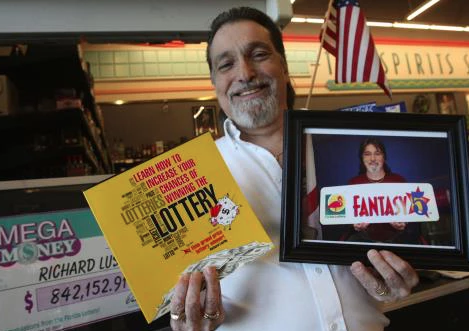
Richard Lustig of Orlando, Florida, author of “Learn How to Increase Your Chances of Winning the Lottery” and a close observer of games around the country, said in an interview with VTDigger that his No. 1 tip is to check if you’re a winner without having to rely on a clerk.
“Some clerks are totally cheating the buyers,” he said.
The Florida Lottery installed ringers and buzzers on lottery machines after a sting operation found clerks stealing tickets from customers. That only solved part of the problem, however, because the machines don’t say how much the player won.
Some states — including Vermont — are beginning to install more self-checking terminals in the stores and adding new software, in some cases to combat the problem.
The Vermont Lottery occasionally spot checks retail outlets by handing over a scratch-off winner to see whether the clerk identifies it as a winner after being asked to run it by the scanner.
Cavender said the lottery conducts compliance tests at up to 50 outlets each year.
Ferrant, the commission’s former security chief, said he detected “almost zero wrongdoing.” He said he investigated 15 to 20 cases of suspicious wins each year but most of the time he found no evidence of wrongdoing.
“What we’ve tested, they’re honest,” Ferrant said.
VTDigger, in its analysis of Lottery Commission records, could not determine with certainty specific instances of wrongdoing in Vermont, except where an individual had been prosecuted for theft.
‘It’s gotten worse over the years’
Lottery Commission officials past and present say that theft is not an issue and prefer to leave pursuit of such complaints to law enforcement.
Rachek said the lottery “issues widgets.”
“The police investigate the theft of widgets,” Rachek said. “That’s just the way it works.”
Rachek, who before assuming his current role was the FBI’s top official in Vermont with a background leading embezzlement investigations, said he saw no reason to expand the commission’s security operation beyond its single agent.
“His job is to help the integrity of the game but it’s not to catch criminals,” Rachek said. “If the lottery was a vehicle of some kind of crime, I would be very interested in supporting an investigative agency.”
However, convenience store owners — even some who play the lottery themselves — consider employee theft to be a growing problem.
“It’s gotten worse over the years,” said former Rep. Rob Hubert, R-Milton, who owns Middle Road Market in that town. “It appears that a lot of people are looking for a quick way to solve their problems.”

Hubert said he caught someone stealing several years back but declined to provide any further details. He said he has nine cameras running in his store at all times and requires all workers to “balance out their sheets” for lottery claims during every shift.
“If a ticket is missing, guess who’s paying? We do. It’s a serious issue now,” Hubert said, pointing out that he’s responsible for roughly $20,000 worth of tickets. Also paying is the average player who puts down a few bucks in the hopes of a fair shot at winning.
Hubert said said today’s employees can be pretty imaginative.
“Every time you come up with a system, they come up with a way to beat it,” he said.
Hubert is part of a group that buys tickets but says he’s only won about $50. “(Lottery customers) think that we know which tickets have the big winners in them,” he said. “Trust me — it’s not possible.”
‘It’s all about … luck’
Peter Marshall of West Berlin also has done well with the Vermont Lottery.
He cashed in more than $185,000 in scratch winners between 2011 and 2016, with four of the winning tickets above $600 being claimed at a store in Waterbury.
Marshall managed a redemption center in Waterbury where he had worked for 20 years. The center was once part of a convenience store called Depot Beverage, LLC.
Depot was owned by Marshall’s brother, Mike, and Mike’s wife, Shirley, who sold it at the end of 2015 to Maplewood Ltd., which operates several convenience stores in the area.
A little over a month after the sale, Peter Marshall claimed his biggest win — $175,000 from an Ultimate Riches scratch ticket from a store in Northfield. The odds of winning the top prize in that game is 1 in 70,000.
Marshall said in a telephone interview that he spends $10-$20 a week on lottery tickets.
When asked where he goes to purchasers tickets, he said: “It doesn’t matter. It’s all about a game of chance and luck.”
‘The odds are really bad’

Little G’s Deli/Azur’s Mini Mart in Newport was one of the top stores in the region for lottery ticket sales at one point. It also sells subs, liquor and gas.
Eight winning tickets above $1,000 had been claimed at the store between 2011 and 2016 — six of them by the owner and members of his family.
Between 2011 and 2016, owner George Azur II and his wife, Shelly, and mother, Ann, claimed at least $43,000. That was 92 percent of the total prize money of $600 or more from Little G’s, according to a review of state records.
Like many convenience store owners, Azur said selling lottery tickets helps improve sales at places like his. “Someone buys a scratch ticket and they’ll pick up some groceries,” he said in an interview.
Azur, who said he’s sold lottery tickets at his store for the past 20 years with an estimated five-year break in between, says he plays the lottery once in a while at his store and at others. “The odds are really bad, though,” and warned, “You can’t get addicted to them.”
“You get lucky if you spend $100 that day on trying to win something,” Azur said. “I don’t think it’s worth it.”
One of the challenges he and other store owners face, he said, is employee theft, with lottery tickets far and away the most common target.
“I have a bunch of friends who are store owners. The one thing that gets people is the lottery,” he said. “They’re smart at it. You have to check your cameras all the time.”
Azur cited an example. “Say you pumped $10 worth of gas. The cashier puts it on lottery instead of gas. The lottery comes out even but gas is a little higher because the cashier says, ‘Oh, someone over-pumped and it ran on the ground.’”
He said he has seen employees steal tickets by attributing a sale to beer and cigarettes.
“You’re not going to miss a pack of cigarettes and a 12-pack of beer until it starts adding up and adding up and adding up.”
‘I didn’t know she played’

Elisha Steele won some big jackpots from the Vermont Lottery beginning at an early age. She has cashed in at least $220,000 worth of scratch tickets since 2011.
Between 2012 and 2013, the 29-year-old Vernon woman claimed four winning scratch tickets above $500, totalling $13,500 from the former Schoolhouse Grocery, a convenience store in town where she worked until it closed in 2013.
The operator at that time, Leeanne Southwick, said Steele worked there for about seven years. Southwick said she knew Steele played the lottery but had a rule that clerks could not buy tickets while they were on duty.
Steele’s biggest win — a $200,000 20x scratch ticket — came from nearby Gouger’s Market & Deli in Brattleboro, a store that did not employ her at the time. The odds of winning that much: 1 in 90,000.
When presented with information on Steele’s accomplishment last Wednesday, the Lottery Commission chairperson again emphasized the need to consider it in the context of the lottery’s overall payout. “Over seven years, that’s a 0.04 percent chance of winning,” Sabina Haskell said.
After Schoolhouse closed, Steele and Southwick started working at Brattleboro Neighbor’s, a convenience store run by Anita Grant.
“I didn’t know (Steele) played the lottery until she won,” Grant said, adding that Steele continued to work at the store even after hitting the jackpot for $200,000 but left soon after.
The Vermont Lottery suspended Brattleboro Neighbor’s from selling tickets on Nov. 30, 2017, for financial reasons, according to a commission response to a VTDigger Freedom of Information Act request.
John Falvey, who owned the Schoolhouse Grocery building before the store closed, said his wife operated it before Southwick did. He said he was “shocked” to learn of Steele’s wins.
The Vermont Lottery Commission tracks claims, but retailers said it does not disclose to them or the public where a winner has purchased a ticket.
Falvey said he fired two clerks about 10 years ago for using beer sales to cover up for lottery tickets.
“I tell people who own stores to watch out for that,” he said. “That’s easily done.”
He said the store had averaged $60,000 in lottery sales before the year in which he discovered the theft — when sales topped $100,000.
“They stole that much,” Falvey said, adding those with the tickets would go to another store location to claim their winnings.
Falvey, who said he caught them on camera, declined to share the videotape or the identity of the employees. He said he told them never to come back but never reported the theft to police.
“The lawyer said it would be fruitless to do that,” Falvey said, “ because you’re never going to get anything.”
The Vermont Lottery tells business owners whenever they get a big winner but does not disclose who it is, retailers said, making it impossible to know if one of their clerks might be the big winner.
“They’re very nice people but they’re of no help when it comes to employee theft,” said John Clark, the owner of Alpine Mart in Stowe. “They think that they have a really great product and we should be thrilled to sell it here and it’s up to us to police it.”
Clark says he counts his tickets every day and discovers employees stealing tickets every few months.
“Whenever we hire somebody new, the lottery seems to be the thing that’s consistently a problem,” he said.
‘She was a clever girl’

Carol Fradette was caught on videotape playing the lottery while working behind the counter at M&M Beverage in 2015. She claimed more than $13,000 in Fast Play winnings, according to police records from the Lottery Commission. Fast Play is an online game, generated by a lottery machine at the point of sale.
Fradette’s strategy involved inflating the numbers on bottle-redemption slips. She changed the number 1 to a 7 on dozens of slips, and added extra digits to others, such as on Nov. 14, 2014, when she changed the number 63 to 630, according to police. She would then pocket the overage to cover the lottery tickets.
Fradette pleaded guilty to one embezzlement charge and five petit larceny charges in 2016. She was ordered to serve 60 days in jail, placed on probation and told to take part in a restitution program and complete 200 hours of community service.
Her case was one of only three involving the theft of lottery tickets that VTDigger was able to identify. The others:
- Rosemarie Souza of Bristol admitted she stole scratch tickets from New Haven Mobil in 2012 after she was caught on video putting tickets in her pocket. Police said $150 worth of tickets were missing from the store during a two-week period. Souza was sentenced to serve 2-18 months in 2012 and ordered to pay $141.
- Ami Lamell of Barre was charged with stealing books of lottery tickets from Crossroads Beverage of Waterbury, where she worked for five years. Lamell would activate tickets through the store’s security system but never put them into the store’s ticket dispenser. Police said she took the winners to another outlet to cash them. Lamell was sentenced to 30 days in jail in 2013.
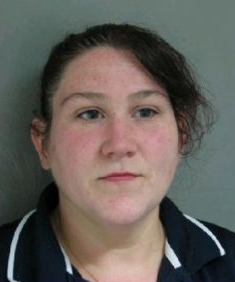
In the case of Fradette, several times after her conviction she was ordered to appear in court for violating her probation. An arrest warrant was issued for her on July 28, 2017, for failure to appear in court and $1,000 bail was set.
VTDigger recently attempted to contact Fradette at a number provided for her, but the person who answered declined to identify herself or comment about the case.
Gilles Moreau took ownership of M&M beverage in March 2015 and around that time paid $15,000 for a new lottery scanning system for tracking sales. But he soon found out the new machine was not foolproof.
“She (Fradette) cleverly found a way around it,” Moreau said. “The bigger the mousetrap, the smarter the employee. She was a clever girl.”
Said Moreau: “She stole $75,000 from me.”
He said insurance covered $30,000 but he won’t see any of the rest.
“I’m out forty-five,” he said.
‘I never suspected her’
Fradette worked at the store under a previous owner when it was called BK Beverage. Ferrant, the former security director, said that owner had shut down because of financial difficulties.

Moreau, too, had a tough time making a go of it at M&M Beverage and said he sold some land to keep the store afloat.
“At the time, it was (Fradette) that was filtering money out of it,” he said.
Both the previous owner and Moreau were among the top five agents for Fast Play claims between January and December 2014.
After he discovered the fraud, “my online sales plummeted,” he said.
Moreau said it took him three weeks after he realized he had a problem to get the police involved and catch Fradette on camera.
“The whole time prior to that I never suspected her. I suspected everybody else but her. She worked right beside me while she was doing it,” he said. “That’s how clever she was.”
Moreau said he trusted Fradette.
“I loved her,” he said. “She was a good kid. I gave her heat money. I lent her money. I advanced her money. I never suspected her.”
Moreau has operated eight convenience stores throughout Vermont. He recently downsized and now just owns his store in Hardwick.
He said he’s seen “hundreds of scams” from his employees.
“They figure out a system that works so the boss doesn’t lose money,” he said. “Sometimes I catch them right away. … I’ve lost some really good people because they just cannot keep their hands off them.”
“You have to count them (the tickets) every day,” he said. “If you don’t, things get away from you.”
‘It’s a hazard of the industry’
Like many other owners, Mark Kittell of Central Beverage in Essex Junction says he has lost money from employee theft of lottery tickets.
“In this business, the people who are working in the business, they’re generally low-income people and it’s a big temptation to them,” he said.
A 2006 Consumer Federation of America study said nearly 40 percent of those with annual incomes below $25,000 think that winning the lottery represents the most practical way for them to amass personal wealth.
Despite powerful statistical evidence that the chance of winning most games is exceedingly small, people continue to play. For nearly everyone, it can be exciting to check for winning numbers. And it seems like a small amount of money to invest for a chance to strike it rich and turn one’s life around.
Kittell acknowledges the attraction of playing the lottery is also tempting to him, saying he occasionally takes a shot “just for something to do.”
He said he wouldn’t play except for the fact that “they’re in front of me all the time.”
Between 2011 and 2016, Kittell claimed nearly a quarter of his store’s top prizes, including $56,000 between 2014 and 2016, according to state records. He won an additional $5,000 from an instant ticket that came from Five Corners Variety, a nearby store he used to co-own.
Kittell said in an interview he spent about $20 a week but quit playing about a year ago.
“It’s not a good way to gamble because the odds are so poor,” he said. However, records show he managed to beat the odds by winning another $10,500 from two tickets in 2018.
Kittell also earned another $27,000 in commissions for selling tickets in 2016, he said.
Between his commissions and the traffic the lottery brings to his store, Kittell says: “Yeah, I make a little bit of money on it. It’s a big draw for a little store.”
But he also loses some — through theft.
“That’s the deal you make with the lottery,” he said. “In the long run, you don’t make any money on it.”
Kittell said that he had recently fired an employee who had worked for him for three months. Even after giving her a warning for her handling of tickets, she kept it up and he had to let her go. He declined to provide any further information.
“Many times you don’t realize you have a problem until two to three months down the road and you’re trying to match your purchases with your sales,” Kittell said. “It’s a real source of shrinkage in a business like this.”
“I’ve had to fire people because they can’t stay away from them,” he said. “It’s a hazard of the industry.”
Kittell said he has a policy that anyone can play as long as they’re not on the clock.
He said he follows that policy himself, but admits that if no one’s in the store and he’s behind the counter, he’ll go and scratch a ticket.
