


Editor’s note: Mark Bushnell is a Vermont journalist and historian. He is the author of “Hidden History of Vermont” and “It Happened in Vermont.”
[I]f the weather had been a little better or a little worse just off the southern coast of France one day during the early 1800s, the industrialization of early Vermont would have gone differently. As it was, conditions were bad enough to sink the ship carrying a teenager named Isaac Tyson Jr., but not so bad as to kill him.
Tyson used his unplanned time in France to good advantage. He had been traveling aboard a vessel carrying a grain shipment from his father’s mercantile business to Europe. After the near-death experience, Tyson asked his father if he could stay in France and study chemistry, since he was there anyway. His father agreed.
During Tyson’s stay, he visited an iron mill and came away fascinated by the process of smelting, in which iron is produced by heating iron ore in a furnace fueled by charcoal or coke.
Upon returning to the United States, Tyson used the technologies he had witnessed in France, as well as some he invented, to become one of the leading metallurgists of his day.
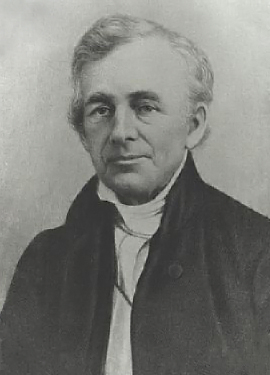
Though he was from Baltimore and eventually owned mines in Maryland and Pennsylvania, Tyson saw fortune in the hills of Vermont. Soon, Tyson became what 19th century historian Zadock Thompson described as the person who “had probably done more than any other individual to develop the internal resources of the state.”
The popular image of Vermont’s early days doesn’t leave much room for thoughts of heavy industry. But it was here just as surely as were the sheep and cows. Vermonters were pulling more than granite and marble from the ground; they were also extracting ore. That’s what drew Tyson.
During his first foray into speculating in Vermont, he searched for copper in Strafford. It wasn’t an original idea; copper had been mined there starting in 1793. In the early 1830s, Tyson pledged $6,000 toward the $25,000 he and his partners needed to build a furnace for processing the copper. Tyson had apparently been invited into the deal by other investors. According to mining historian Collamer Abbott, getting Tyson involved was a major coup, since he was one of the period’s leading industrial chemists, having developed everything from paint pigments to medicines. His mid-Atlantic mine holdings would eventually make him one of the world’s largest suppliers of chrome.
Abbott described Tyson as a kind employer, either due to his temperament or his Quaker upbringing. Rather than fire an employee for some misdeed, Tyson was more likely to counsel him.
Tyson and the mine owners decided to separate and smelt the copper themselves. It seemed more profitable than by shipping the raw materials south to Tyson’s furnace in Baltimore.
Tyson set to work building a smelter, experimenting as he went. His furnace was the first in the nation to use anthracite coal or hot blast (heated air) to process copper. The design was innovative, but it could not save the venture. In 1834, Tyson returned briefly to Baltimore with his family, “under the impression our scheme was a failure.” The project may have suffered from transportation issues: the best way to transport goods to distant markets was via the Champlain Canal on the west side of the state.
It wasn’t his only failure in Vermont. Tyson and partners had purchased land in Vershire and set workers to tunneling for copper. After they had cut a shaft 94 feet long, Tyson advised his partners to abandon the site. Later owners found that Tyson’s tunnel had stopped four feet short of the rich copper deposits he had sought. The site became part of the Ely copper mines, which produced 60 percent of the United State’s copper in the late 19th century.
If Tyson is any indication, prospectors are a resilient lot. Almost immediately after quitting Strafford, Tyson set to work in Plymouth, where he had discovered iron ore while riding through the area. In 1837, he designed and built a pair of blast furnaces. The operation attracted a diverse workforce. Along with the many recent Irish immigrants who streamed to the site were French-Canadian lumberjacks, German charcoal makers and African-American workers.
The community that sprang up around the factory took on the apt but decidedly un-picturesque name of Tyson Furnace. It grew in what had until then been wilderness beside Echo Lake. Contemporary descriptions suggest the place had something of the feel of a Western mining town.
The workforce, which peaked at about 175, could frequent the local store, post office, and reading room. Their children could attend the Tyson Furnace school. Tyson bought 2,500 acres of nearby timberland to provide wood that was converted to charcoal to fire the furnaces.
Tyson gets the credit for founding the furnace works in Plymouth, but it was the hundreds of workers who over the years did the grueling physical labor that made the place a going concern. The men, most of them single, were expected to be constantly on call for when the company would fire up the furnace. Higher-level employees signed contracts that specified their pay and that they were always to be available during smelting season. During the off-season, the winter, the company employed them to prepare for more smelting in the spring.
The smelting itself was a local spectacle, according to Victor Rolando’s book “200 Years of Soot and Sweat,” which examines Vermont’s early lime, charcoal and steel industries. When it was time to pour the molten iron, a worker would blow a horn and curious local residents would gather. As the furnaces burned, flames would shoot 20 feet above the stacks. If the pouring was being done at night, the glow of the hot metal would light the area around the factory. Even residents who didn’t rush to see the action would hear it. Some claimed that when the furnace was in blast and the conditions were just right, they could hear it from three miles away.
The molten iron was poured into the “pig bed.” The metal would stream along a common runner and then branch off into molds. The molds were said to resemble suckling pigs, hence the term “pig iron.” (The runner was known as the “sow.”) Tyson sold some of the pig iron to manufacturers around the region. The company kept the remainder, along with the sow, to manufacture iron goods, particularly wood stoves.
The furnace was a major producer of iron, turning out 600 to 1,000 tons of iron annually. But competition from other states, and perhaps more significantly Isaac Tyson’s health, got in the way. Tyson moved back to Baltimore in 1855 to convalesce. He would die in 1861.
The furnace lay dormant for nearly a decade after Tyson’s departure. Then in 1864 the plant rumbled back to life to meet the demand for iron created by the Civil War. Iron from Isaac Tyson’s smelters helped shield the U.S. Navy’s famed ironclad Monitor class of gunboats.
The furnace’s resurrection proved short lived. In 1872, the furnace had its last blast and over the decades nature reclaimed what had been one of Vermont’s major industrial sites.
