


Editor’s note: Mark Bushnell is a Vermont journalist and historian. He is the author of “Hidden History of Vermont” and “It Happened in Vermont.”
[G]rey Lock was a creator of nightmares. His violent forays along what was then the frontier of New England brought fear to the hearts of white settlers. Every rustling in the trees, every sound of an animal in the woods, must have seemed a sign that an attack was imminent.
The form Grey Lock took in people’s dreams was mostly a creation of their imaginations – few settlers had seen him. We only know from the name settlers called him that he had a streak of prematurely gray hair.
His Abenaki name, Wawanolewat, tells us more about his tactics. It means “he who fools the others.” Grey Lock may have seemed an avenging demon to settlers, but he had reasons for his actions.
By the early 1700s, the people of the British colonies were outgrowing the land they had settled along the coast of New England. Now they were pushing inland. The movement of settlers into western Massachusetts and Maine inevitably caused conflicts with the Native Americans already living there. By the early 1720s, the Abenaki had had enough. They issued an ultimatum to the governor of Massachusetts, demanding that he block more British settlers from moving west and occupying new territory. As a compromise, they said that existing settlers could remain. The colonial government responded by declaring war on the Abenaki.
It was during this period of struggle that Grey Lock became a name colonists feared. They had known of him since 1712, when he had led a raid on British settlers in Northampton, Massachusetts, during what was known as Queen Anne’s War. That war was part of the struggle between Britain and France for control of North America. This new war, however, would not be between European powers, but between British colonists and Native Americans.
When the British rejected the Abenaki’s call for an end to new settlements, Grey Lock wanted them to understand that their decision came at a price. He began launching lethal raids south out of what would become Vermont.
Little is known today about Grey Lock. He was apparently a Woronoke Indian from Massachusetts. Historians believe he was born around 1674. Whenever the date, Grey Lock was born into a world of conflict. Soon after his birth came King Philip’s War (1675-76), a Native American uprising sparked by colonists’ encroaching on Indian lands. As a result, Grey Lock and other members of his tribe relocated to New York.
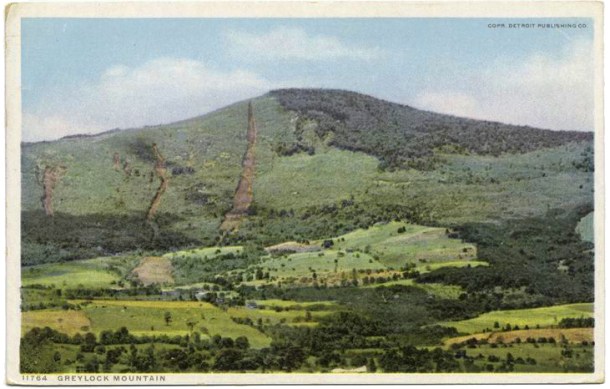
By the early 1720s, he was living near Missisquoi, an Abenaki settlement in what is today Swanton, in northwestern Vermont. He and other warriors lived around a fortified compound adjacent to Missisquoi. British colonists fancifully referred to it as “Grey Lock’s Castle,” perhaps envisioning the type of fortifications they knew from Europe. It was a simpler wooden affair, but the colonists wouldn’t have known. Despite their assignments to seek out and destroy the castle, they never even managed to locate it.
During the summer of 1723, Massachusetts Gov. William Dummer tried to pacify Grey Lock and other Indian leaders living along Lake Champlain by offering them gifts. Dummer wanted them to stay out of any fighting between colonists and Abenaki living farther to the east. Dummer’s emissaries never found Grey Lock, who had plans of his own.
In August, Grey Lock moved south with four men and attacked the English settlement at Northfield, Massachusetts, killing two residents. Then they set upon Rutland, Massachusetts, where they killed three more men and took two hostage. With the captives in tow, Grey Lock and his men returned to their base by the mouth of the Missisquoi River.
Grey Lock was soon headed south again. This time about 50 warriors accompanied him. Some of the men were members of the Caughnawaga tribe. Grey Lock had cemented his relationship with the Caughnawaga by giving them one of his captives. The warriors again hit Northfield, this time killing one, wounding two and taking one hostage.
The people of Northfield demanded protection and petitioned Dummer for soldiers to launch an expedition to attack Grey Lock and his men. Dummer refused to send troops north.
Grey Lock’s raids had an unintended consequence. They spurred colonists to build their first structure in what is today Vermont. During the summer of 1724, Dummer had an 8-foot-tall stockade fort built just north of Northfield, in current-day Vernon. The fort was intended to block raiding parties venturing south along the Connecticut River Valley.
It did little good. Grey Lock and his men managed to skirt the fort the next summer and once again attack Northfield, where they killed one and took two captive. A party of settlers from the area pursued Grey Lock but couldn’t catch him. Grey Lock and his warriors continued to harass the residents of western Massachusetts throughout the rest of the summer.
The seemingly constant assaults brought a response from colonists. Nearly 60 volunteers set off from Northfield in July 1725 with the goal of locating and destroying Grey Lock’s “castle.” The men traveled past Fort Dummer, up the Connecticut to the Wells River. From there, they proceeded to the Winooski River. Their accounts are too vague to determine their exact route. “We marched from here W.N.W. (west-north-west) to the top of a vast high mountain, which we called mount Discovery, where we had a fair prospect of ye Lake,” wrote one of the men. The men didn’t know the names of most of the landmarks they saw – they were the first Englishmen to travel through this territory – though they certainly would have known they were looking at Lake Champlain. The “vast high mountain” might have been Camel’s Hump.
They reached the lake and traveled north along it until the vicinity of Colchester. With the lake stretching many more miles to the north and with supplies running low, the men reversed course and headed back to Massachusetts.
At about this time, Native American support for the war began to falter. Penobscot Indians, in the area of Maine, signed a peace treaty with colonial authorities in Boston in December 1725.
But not Grey Lock.
Colonial officials again tried to placate him with gifts, but their emissaries were never able to find him. New York authorities even sent his brother, who also failed to bring Grey Lock to the peace table.
A larger peace deal, accepted by both the Penobscot and Canadian Abenaki, was struck in Portland, Maine, in 1727. The agreement ended what has since become known as Grey Lock’s War. Though the famed warrior would never again lead raiding parties south, he would not declare hostilities ended. It might have been his war, but it was not his peace.

.jpg)