

[V]ermont’s deputy attorney general was left “behind like ‘roadkill’” as his stepbrother, a Newport lawyer, fought professional conduct charges of sexual harassment and sex discrimination, a prosecutor for the state panel that regulates lawyers says.
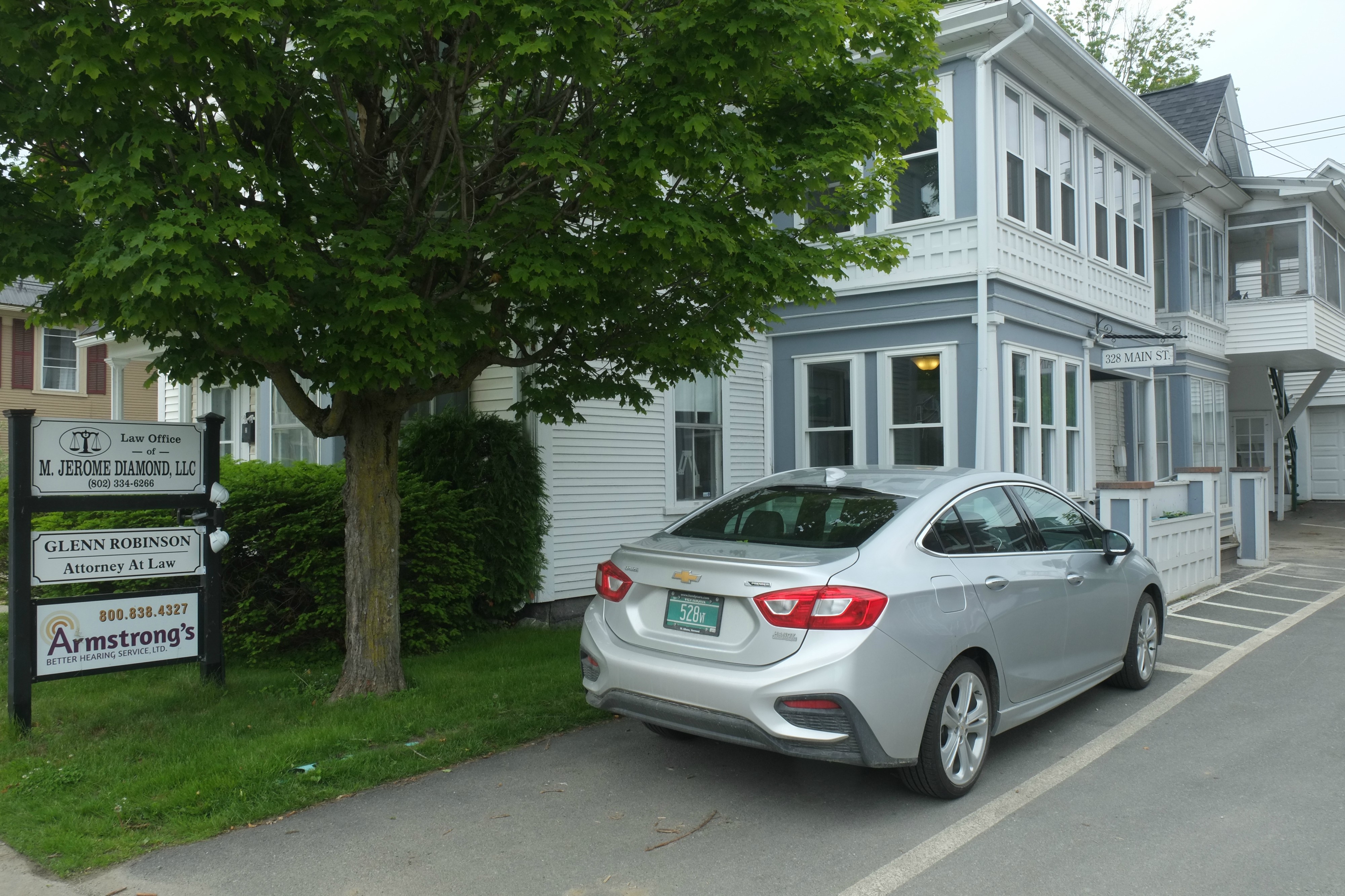
Newport lawyer Glenn Robinson, stepson of former Vermont Attorney General Jerome Diamond, could be disbarred — kicked out of the legal profession — when a hearing panel of the Professional Responsibility Board rules in his case April 2.
Robinson, 55, is also the stepbrother of Joshua Diamond, the state’s No. 2 lawyer as deputy attorney general in the office of Vermont Attorney General TJ Donovan.
In papers filed with a Professional Responsibility Board hearing panel last week, disbarment was the penalty special bar prosecutor Robert Simpson, a retired Chittenden County state’s attorney, recommended for Robinson. A disbarred lawyer can apply for readmission to the bar after five years, but must prove his or her rehabilitation and fitness.
Robinson’s lawyer, P. Scott McGee of White River Junction, argued in papers filed with the board that his client has been working with his father for the past five years to improve his behavior and practices, and deserves a significantly less harsh sanction or perhaps none at all.
In addition, disbarment would remove a lawyer from a part of the state — Orleans County — where lawyers are already in short supply, McGee said. Robinson frequently takes on indigent clients and “fills a vital role in ensuring that access to justice is available to those who need it but can’t afford it,” McGee said.

The case centers on the alleged treatment by Robinson of three women. All were vulnerable: One was going through a divorce, living alone in a mobile home and finding it difficult to make ends meet; one was just out of prison and found it hard to land a job until Robinson hired her to work in his law office; and the third, who also worked in Robinson’s office, was described by him as having mental health problems.
At various times, Simpson said in his filing, Robinson groped the women, masturbated in front of them or, in one case, threw paper clips at her breasts and cleavage. McGee replied that the activities were consensual or simply didn’t happen.
The women are identified in this story by their initials because VTDigger does not identify victims or alleged victims of sexual misconduct without their consent.
“C.M.”
Voluminous filings in the case before a hearing panel of the Vermont Professional Responsibility Board say Robinson conducted a sexual affair with C.M. while representing her in a divorce, creating a conflict of interest that violated the state’s legal ethics rules. He also hired her to work in a tanning salon he owned.
McGee, Robinson’s lawyer, said in an interview that it was permissible at the time under state legal ethics rules for a lawyer to have a sexual relationship with a client, though he said the rules recently were changed to forbid it.
Simpson argued that the impermissible conflict of interest arose because Robinson allowed his relationship with C.M. to harm his representation of her.
Robinson “recklessly permitted his desire to preserve that relationship to prevent him from providing her with a dispassionate assessment of her case,” one of Simpson’s filings said. C.M. ended up very dissatisfied with the outcome of her case. “I just got nothing. I lost everything I worked 17 years for,” Simpson quoted C.M. as saying.
“A.P.”
A.P., the woman who had just served time in prison, said she took a job in Robinson’s office because she needed the money. “It was a way to make money at a really bad time,” she is quoted as saying. She described Robinson groping her and forcing her to masturbate him in his office, and saying she “owed” him for providing her unpaid legal assistance.
“P.B.”
The claim that Robinson “left his brother behind like roadkill,” language from Simpson that McGee called “inappropriate and over the top,” stemmed from the P.B. case. Robinson allegedly asked P.B. to sign an agreement saying both she and Robinson wanted to have a sexual relationship, and that she would not sue him in the future if it ended badly.
Such agreements have become commonplace in recent years, lawyers familiar with the Robinson case said, and neither seeking nor drafting one violated Vermont legal ethics rules, which are based on those of the American Bar Association.
The legal research service LexisNexis describes such agreements this way: “A ‘love contract’ or in lawyer terms – a Consensual Relationship Agreement — is an effort to mitigate the risk of sexual harassment claims from an office romance gone awry by documenting that the relationship is consensual.”
Nevertheless, Simpson wrote in his request for Robinson’s disbarment, this was one of several instances in the course of the Professional Responsibility Board investigation in which Robinson sought to avoid taking responsibility for his actions.
Robinson “told the (hearing) Panel that he never wanted a provision in the document that required (P.B.) to waive her right to sue him for sexual harassment. He said he was surprised and ‘disappointed’ that his brother had included it.” Robinson was referring to his stepbrother, Joshua Diamond.
Simpson pointed to other evidence in the case, including comments Robinson allegedly made to a Vermont State Police detective, indicating that Robinson knew of the agreement’s provisions and was eager for protection from a future lawsuit by P.B.
Robinson did not respond to messages seeking comment. His father, former Vermont Attorney General Jerome Diamond, declined comment.
As for Joshua Diamond, the current deputy Vermont attorney general who drafted the “love contract” agreement 4½ years before taking his state job, he has denied violating any legal ethics rules, but regrets his role in the case.
“I sincerely regret any involvement I have had in this matter. And I’m extremely disappointed at my stepbrother’s failure to take responsibility for his actions,” he said.
He described his involvement as follows: “During a brief phone conversation in the late spring of 2012 with Glenn and (P.B.), they had indicated a desire to date one another. And at Glenn’s request, including his request that there be a release of claims, I drafted a document related to their (desire to date).” Diamond said he “told (P.B) during the call that she should review the document with her own lawyer. And after providing Glenn with the document, I had no further involvement in the matter.”
“My regret is not that I did anything wrong, but that my work product was used in a way that someone feels like they got injured,” Joshua Diamond added.
McGee said he believed he had been able to show that there was not clear and convincing evidence that the allegations were true. He said credible witnesses testified, for instance, that the incidents of throwing paper clips were “fiction — simply didn’t happen.”
“That’s important, because it reflects on the credibility of the complaining witness, not only on that issue, but on all issues,” McGee said.
