


Experts who study tactical teams say that after reviewing available evidence, they are unconvinced that the deadly use of force was justified in two recent fatal police shootings in Vermont.
“There are certainly questions that need to be asked,” Thomas Aveni, executive director of the Police Policy Studies Council, said of a shooting last month in which nine officers opened fire on 32-year-old Nathan Giffin, who was holding what turned out to be a BB-gun.
Aveni has worked as a police officer in three states: New Hampshire, New Jersey and Utah. He has studied the use of deadly force by law enforcement since 1995. The Police Policy Studies Council is a New Hampshire-based research consultation organization.
“Somebody should be asking questions about who fired first,” Aveni said of the Montpelier shooting. “I would certainly want to know because the initial shots fired were the most critical ones for the justification.”
Aveni, who reviewed a WCAX-TV video of the shooting posted online, said his biggest concern in that case was over how long the gunfire lasted.
Seconds before shots rang out, Giffin’s BB gun — an Umarex 40XP, styled after a Glock pistol — appears to be pointed downward. Then as he moves forward the gun seems to move forward as well, Aveni said, which officers may have viewed as a threat.
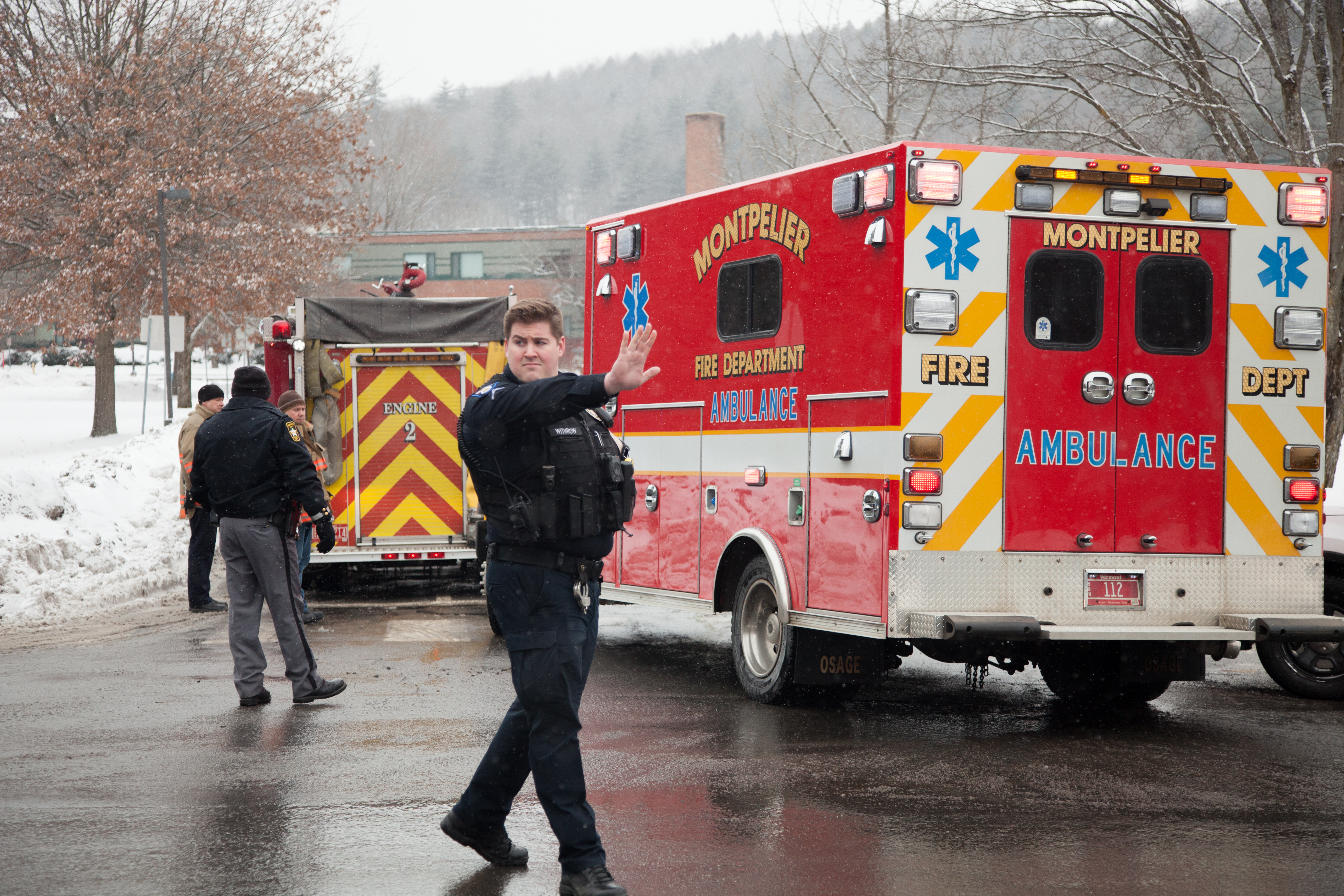
Aveni noted that multiple shots can be heard being fired over a period of about 10 seconds, though it’s not clear from the video exactly how many shots were fired. However, since nine officers fired, it had to be at least nine shots.
“I’m really concerned about what the other guys were shooting at and why they were shooting that long after the initial shots dropped this guy,” Aveni said.
“This guy looked like he dropped in the first shot or two,” he said. “If you’re still shooting at a man whose down in the snow after being hit by rifle fire they’d better be saying something akin to, ‘Well, I saw his gun hand moving, but his gun hand still had the gun and his hand still appeared to be moving.’”
Aveni added that from the video he couldn’t see if Giffin continued to move while down on the ground because a parked vehicle obscures that view.
“When I see gunfire elongated to that extent, we’ve got multiple independent decisions to engage a suspect and I’d want to know why,” Aveni said. “There should be justification in some of the other statements about why they continued to fire.”
He added, “These are questions that the public had a right to know.”
A separate officer-involved shooting involving the tactical team took place in Poultney in September.
In that case, police said five members of the team opened fire and killed 32-year-old Michael Battles after he pointed a weapon — later determined to be a BB-gun — at officers from a second-story window in his home during a standoff.
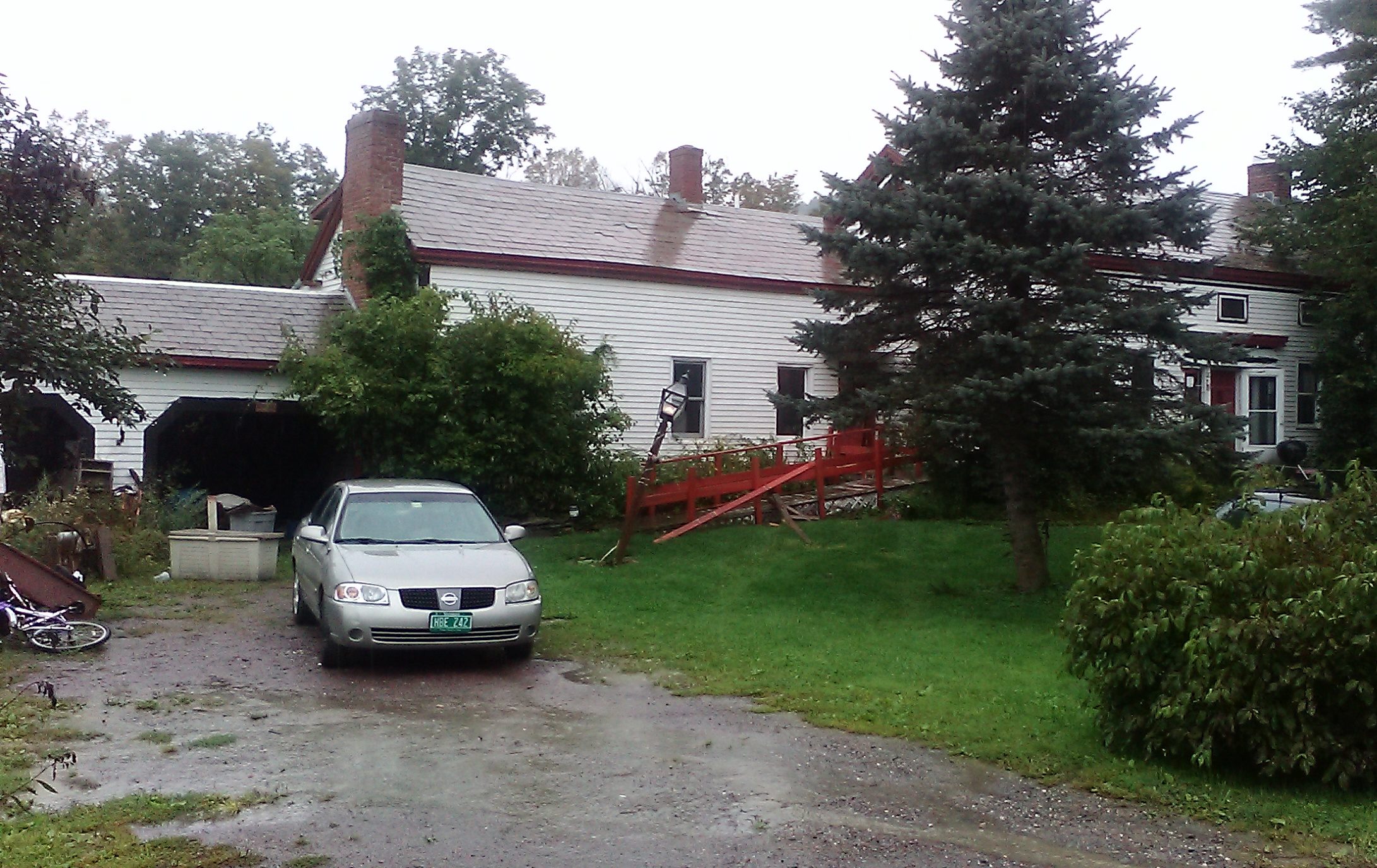
David Thomas, a senior research fellow for the Washington, D.C.-based Police Foundation, said he wondered why the officers were in a position in which the suspect could point a weapon down at them to begin with, given that he was the only person in the home.
“If they had cover and they had concealment, the question is why did you have to shoot,” said Thomas, who is certified to testify in court as a use of force expert.
“For that one, there’s lots of questions,” he added.
He said that with Battles being the only person in the residence at the time, “You can sit there and wait all night.”
‘Great cause for concern’
Following the Montpelier shooting involving the tactical team in mid-January, the head of the unit and one of its members have been reassigned, according to State Police Col. Matthew Birmingham.
State Police Lt. Hugh O’Donnell, who led the tactical services unit, and Christopher Brown, a trooper on the team, are both now off the team, according to Birmingham, the director of the Vermont State Police.
In addition to those two fatal shootings involving the tactical team, a third deadly officer-involved shooting took place on Feb. 11 when Brown and Richmond Police Cpl. Richard Greenough opened fire, killing Benjamin Gregware, 43, of Sheldon.
Police said Gregware, who had made suicidal comments, had just pulled over on Interstate 89 in Bolton, got of his vehicle, and held a gun to his head and refused orders to put it down as traffic passed on the interstate. An investigation into that shooting remains ongoing.
Brown was involved in all three of the fatal shootings over the past six months. His role in the first two, in Poultney and Montpelier, was as a member of the police tactical team.

Brown, who joined the state police in 2012, also was involved in a non-fatal shooting in Fayston in 2015. He has since been placed on paid administrative leave pending the outcome of the investigation into the latest shooting.
Birmingham said state police are contracting with an outside consultant to review its policies and procedures in such cases.
“Certainly, there is great cause for concern when you have multiple officer-involved shootings in a short period of time,” Birmingham said at a press conference after the fatal shooting on Interstate 89 in Bolton earlier this month.
“One fatal shooting is too many in my opinion. These are very challenging, complicated and tragic events,” Birmingham said. “As the director, I don’t want any fatal shootings to happen, but that’s not realistic.”
Police have been tightlipped about the investigation into the Montpelier shooting since it took place Jan.16. They have said they can’t comment on specific questions related to probe while the investigation remains ongoing.
Some of that questions that remain unanswered are:
-How far away the officers who opened fire were from Giffin, and where were they located;
-How many total shots were fired;
-Why nine officers opened fire;
-What prompted each of the officers to shoot;
-Whether Giffin’s weapon was loaded;
-How many times Giffin was struck
Shortly after the shooting, Maj. Glenn Hall, head of the state police criminal division, which is conducting the probe into the Montpelier shooting, said, “The reason that those officers chose to use deadly force are all part of the investigation. Investigators will want to hear from them, what led them to use deadly force.”
Montpelier Police Chief Anthony Facos said in an interview days after the shooting that Giffin had moved toward the officers and refused orders to drop his weapon, putting them in harm’s way.
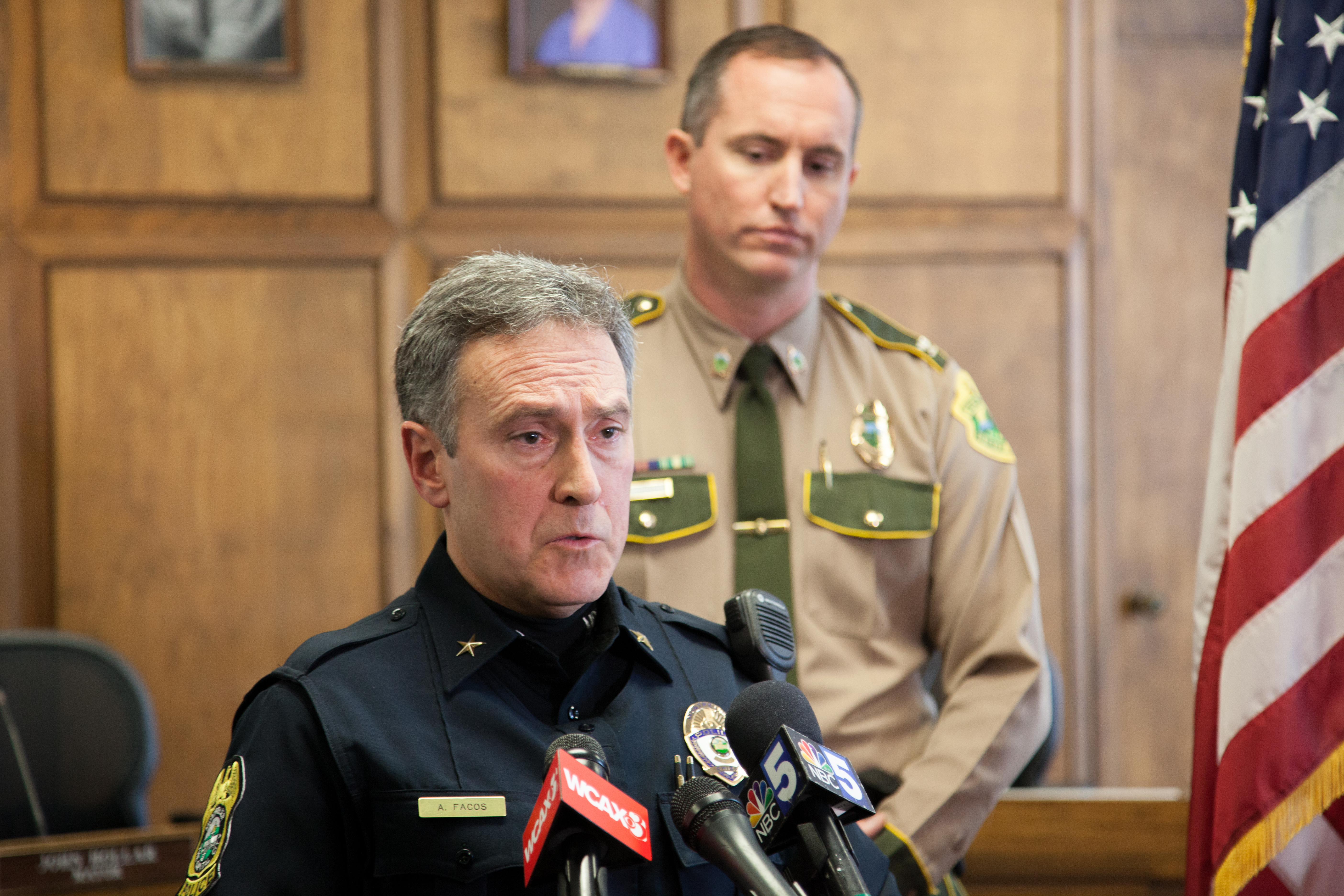
While Facos said he couldn’t talk about the specifics of the investigation, he did say the WCAX-TV video was taken from “a long distance away” and only captures some of what took place.
Asked if he was comfortable with the actions of the officers in the shooting, the police chief replied that given the situation they faced, “Very much so.”
The investigation into that shooting is being conducted by Vermont State Police. Eight of the nine officers who fired shots were members of the state police; the other was a member of the Montpelier Police Department.
Police say the officers opened fire on Giffin following a standoff that lasted 50 minutes on a field outside of Montpelier High School. Police say Giffin had just robbed the nearby Vermont State Employees Credit Union when he was confronted by an officer on the school grounds. Police say Giffin issued threats and made suicidal statements, and displayed what appeared to be a handgun.
The investigation into that shooting by Vermont State Police was turned over last week to the Attorney General’s Office and the Washington County State’s Attorney office for independent reviews, which is the standard practice for officer-involved shootings in the state.
Who decides if force was justified?
Both Aveni and Thomas agreed that in both the Poultney and Montpelier shootings the fact the suspects had BB guns shouldn’t play a role in whether the officers were justified in their use of force. In both cases, they said, the BB guns looked like real guns and officers would have had no way of knowing they weren’t.
Thomas said he had fewer questions about the Montpelier shooting than the one in Poultney. He also reviewed the video from WCAX-TV in the Montpelier case. There is no video of the Poultney shooting, as police cameras at the scene were pointed in other directions.
In the WCAX video of the Montpelier shooting, Thomas said, Giffin can be seen moving forward toward officers, who are out of the picture and can’t be seen. “The gun is moving from the front to back,” Thomas said. That shift, he added, combined with the refusal of orders to drop the weapon left officers with little choice.
“It’s tragic,” Thomas said, “but I don’t see where they could have done anything different.”
Aveni, who has testified in both civil and criminal trials for the defense and prosecution of officers involved in fatal shootings over the years, had more questions about the Montpelier shooting than the one in Poultney.
“I’m just giving you an honest opinion here,” he said of the Montpelier case. “There are some questions here that need to be answered.”
Asked why nine officers would fire at the same suspect, Thomas said the situation in Montpelier did not lend itself to a “designated shooter” strategy, meaning each officer was making decisions about when to engage.
In a designated shooter situation, Thomas said, one or two members of a tactical team are assigned as the “marksmen,” with other officers providing back up.
“It’s based on where the location is, where the person is, and who has the best shot,” Thomas said. “That’s more like the sniper, we can put them in a position to have the best shot.”
However, he said, such situations involving tactical teams can be very dynamic, like the one in Montpelier, where the suspect has lots of room to roam.
“If (a different officer) feels the threat, they can shoot, too, it can change in a moment’s notice,” Thomas said. “It’s milliseconds that you’re talking about. If they feel they are threatened, or see that another person is threatened, then they will respond accordingly.”
In any police-involved shooting, Thomas said, the best way to instill public confidence in the outcome of an investigation is to have a grand jury decide whether charges should be brought against an officer.
In Vermont, the standard practice has been to have the state Attorney General’s Office and the elected state’s attorney in the county where the incident took place conduct independent reviews and decide whether an officer-involved shooting is justified.

“Where I am, in my county, it’s always going before a grand jury,” said Thomas, who lives in Florida. “That is an independent body of citizens who looks at all the facts.”
He added, “The grand jury thing to me is gold, it takes it out of everybody’s hands, and they are independent.”
Aveni agreed, as long as the same process was applied to all officer-involved shootings in that constituency.
“I think a grand jury proceeding is not a bad idea for police shootings, it gives it public scrutiny,” Aveni said. “If you’re going to do it for one, you’ve got to do it for all. If you’re doing it for the sake of transparency and accountability, OK, I’ll buy into that.”
Regardless of who conducts the probe, Aveni said he still had that one lingering question about the Montpelier shooting: “I’d like to know why the gunfire persisted.”
