

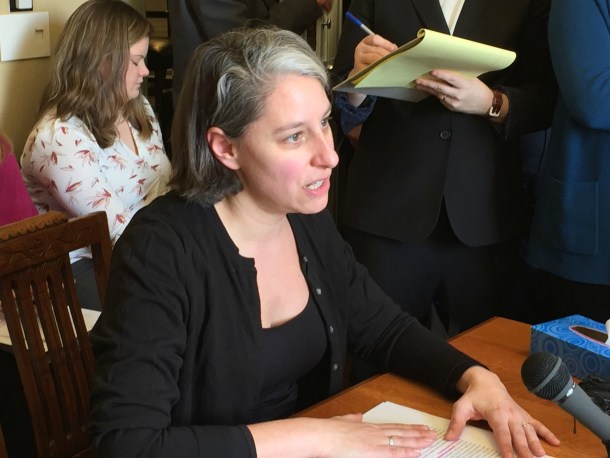
[G]ail Auclair doesn’t mince words about the impact of Vermont’s loan-repayment program for doctors and nurses.
Auclair, chief executive officer of Bradford-based Little Rivers Health Care, says without that program, “We might not even be here.”
The loan repayment fund in question makes it possible for rural communities to attract doctors and nurses who might otherwise pass up small town pay for big city bucks, Auclair says.
The program now is on the chopping block as the Vermont Department of Health eyes budget cuts for fiscal year 2019. Commissioner Mark Levine says the state loans aren’t driving doctors to underserved areas. More to the point: Eliminating the program would save $667,000 in state and federal dollars. The state’s share is less than half of that, at $308,221.
“We have to prioritize the areas that we know work and are successful and are good investments, versus those that don’t show that track record,” Levine said.
But there’s growing opposition to the cut from legislators and the medical community.
Elizabeth Cote, director of the University of Vermont-based Area Health Education Centers, which oversees the loan initiative, says she believes “there is some misinformation and misunderstanding of the program.” Cote said the health centers will respond to the Scott administration’s claims with data.
The state’s repayment program is a recruitment and retention tool that targets primary care doctors, nurses and dentists. There are some subgroups eligible for loans under the primary care category including psychiatrists, physician assistants and nurse practitioners.
Those who apply under the primary care doctor or dentist categories can receive $10,000 to $20,000 per year toward educational debt in exchange for a 12-month commitment to a Vermont practice. Nurses are eligible for $5,000 to $10,000 annually.
Cote, who also directs the Office of Primary Care at UVM, said there’s no shortage of demand: There have been 125 applications for 2018 loans, representing student debt of more than $13 million.
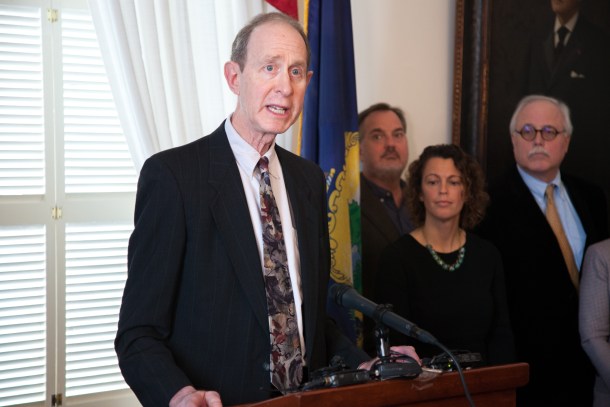
Levine, the Health Department commissioner, says the demand doesn’t necessarily represent results.
In testimony before the House Health Care Committee, Levine said he wants to maintain more than $1 million in funding in fiscal 2019 to support the Area Health Education Centers’ workforce development and educational functions.
Levine said slicing the program is difficult given his past work in graduate medical education. “I can tell you, quite genuinely, that this pains me more than anyone else,” he told committee members.
But he says the loan-repayment program should go. He argues that there is “insufficient data nationally to assess the effectiveness of these (loan) programs.” And in Vermont, “it wasn’t going to the underserved areas that we most importantly target,” Levine said. “The goal, of course, is to recruit and retain people in the areas that we need them.”
As evidence, Levine’s budget presentation included a chart showing the vast majority of loan awards from 2012 to 2016 going to doctors and nurses in more populated regions of the state. The chart showed that just four doctors in lower-population areas – defined as communities with 3,000 or more people per full-time care provider – had received loans.
Cote says the chart is potentially misleading. She produced a chart from the department’s 2016 physician census showing that only two counties that have few eligible loan recipients – Grand Isle and Essex – have 3,000 or more people per primary care physician.
Cote also argues that the loan program is a critical way to encourage young doctors and nurses to stay in Vermont. While the loans don’t wipe out large-scale debt, they are matched dollar-for-dollar by employers and are a useful incentive for recruitment, she said.
“Loan repayment is only one tool, but it’s a really important one. And we thread it throughout what we do,” Cote said. “When we’re working with undergrads, we start telling them about these programs.”
The Bi-State Primary Care Association agrees. Loan repayment is “considered best practice for ensuring we stay competitive in a national job market,” said Georgia Maheras, the association’s Vermont public policy director.
“Applicants assume there will be some loan repayment, and without it we would lose qualified candidates,” Maheras said. “Our members do not have the financial resources to backfill this funding should it go away.”
Four physicians and one nurse with Little Rivers Health Care, a federally qualified health center with offices in Wells River and East Corinth, have tapped into the state’s loan program.
While Vermont can’t necessarily retain doctors who want to practice in higher-population, higher-salary areas, Auclair says the state’s program makes a difference for those who want to stay.
“They’re looking at, can I actually make a living?” Auclair said. “This gets them over the hump.”
Eliminating the program, Auclair warned, would reduce the number of available primary care physicians and push more patients to emergency rooms, ultimately driving up health care costs.
“To cut back a program that’s encouraging the best and the brightest to come here at the beginning of their careers … that’s just so short-sighted, and it’s a real shame,” she said.
House Health Care Committee members were similarly skeptical of Levine’s proposal.
“The (federally qualified health centers) tell us that loan repayment is critical to their ability to recruit doctors to come and practice in rural areas,” said Rep. Sarah Copeland-Hanzas, D-Bradford.
In response to Levine’s assertion that Vermont’s loan repayments were “rather modest incentives” when compared to other states, Rep. Ben Jickling, I-Randolph, said, “If there is a disparity, I don’t think the answer is to make it worse.”
Some lawmakers wondered whether funding from Gov. Phil Scott’s proposed $3.2 million effort to recruit more workers to Vermont could be redirected to preserve primary care loans.
“Physicians weren’t really at the top of that list,” Levine replied. “It’s not such a tremendous need that (the governor) would target that more than some of the other areas of the workforce that he’s talking about.”
Levine said he might be open to reconsidering the loan fund if that meant finding a “novel way of utilizing it” that would produce better results. But there’s no such plan at this point.
“Let’s assume that this money goes away,” said Rep. Lori Houghton, D-Essex. “How are we going to get doctors into rural areas? What is a new game plan to make that happen?”
“That is a million-dollar question,” Levine replied.

