


BENNINGTON — The story of Bennington’s hospital, which is marking its centennial this year, can be traced to mid-1800s California, where a young entrepreneur named Henry Putnam started building his fortune by selling bottled drinking water to those who had journeyed west in search of gold.
With an expanding business empire based in New York City, Putnam quickly made himself known after moving to Bennington in 1864, building a home, maintaining manufacturing plants, winning a selectmen seat and eventually becoming the largest property owner in town.
In 1918, he opened the Putnam Memorial Hospital, an institution that despite many setbacks and financial struggles would steadily expand over the next century, becoming what is known today as Southwestern Vermont Medical Center. The hospital’s history, and the stories of the leaders who built it, has been told in two deeply researched volumes by Tyler Resch, the research librarian at the Bennington Museum.
His new book, “A Century of Caring,” covers the history of the institution from the founding to the present era as SVMC, while the first volume, “Deed of Gift: The Putnam Hospital Story,” coincided with the hospital’s 75th anniversary celebration and was published in 1991.
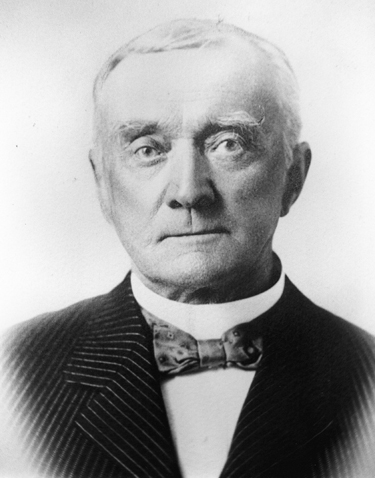
In an interview, Resch said a key factor in the hospital’s survival as others in the region have closed was the support of its original benefactors — Henry Putnam and his son, Henry Putnam Jr. — and those in the community who later stepped forward as board members to stabilize the organization during tough times.
Another key, he said, has been a line of strong and progressive — sometimes aggressive — hospital administrators.
The first, Mary D. Baker, was a registered nurse in New York City before making the move to Bennington. In the 1940s, Dr. Francis Bean pushed for new facilities, advanced equipment and specialists before resigning in frustration when the trustees failed to provide enough funding.
Bean “set the tone” for executives that followed, Resch said, even though he couldn’t convince the trustees to fund his plans during the lean financial period that followed the death of the younger Putnam in 1938, and then during the Great Depression and World War II.
“We don’t expect to see a second Mayo Clinic,” Bean said in his final report to the board in 1948, “but in a modest way we believe the hospital can do much more with its resources to serve this community than it is now doing.”

After what Resch describes as a period of difficult finances and relative stagnation through the 1950s, Robert D. Stout arrived as the administrator in 1961 and was joined by a dynamic board chairman, retired Union Carbide chemist Joseph G. Davidson. They oversaw a second period of growth for the institution and the transformation of Putnam Hospital into a regional medical facility.
Harvey M. Yorke was the next notable CEO, continuing an aggressive approach to regionwide care and advanced medical facilities and treatments, Resch said. However, Yorke’s tenure ended abruptly after nearly 18 years, when he and other top administrators were dismissed during the recession in 2009, amid surging operating deficits.
And the current CEO, Thomas Dee, has overseen expansion of satellite facilities in Pownal, the Northshire, Hoosick Falls, New York, and the Deerfield Valley, as well as far-reaching partnership agreements and collaborations with Dartmouth-Hitchcock Medical Center — bringing more advanced medical services, equipment, personnel and training to Bennington.
“Think I’d put a lot of stock in the CEOs,” Resch said of the hospital’s success. “I think it is a function of the executive pushing.”
The first half-century
The Putnam Memorial Hospital opened its doors on June 11, 1918, three years after Henry Putnam died, and nearly 20 years after he had retired to San Diego. Henry Putnam Jr. picked up where his father left off, providing $100,000 for construction of the hospital and $30,000 for equipment.
In his new book, Resch cites the “loyalty and persistence” of the younger Putnam in continuing to fund new buildings and wings to the hospital and covering annual operating deficits until his death in 1937, when his estate added $3 million to the endowment.
Even today, the Putnam legacy in Bennington remains strong, as the proposed redevelopment of the Hotel Putnam and the Old Courthouse building at the Four Corners, both built by Henry Sr., are at the heart of a major project local investors (including Southwestern Vermont Health Care) hope will revitalize the downtown.
Putnam Hospital opened during a period of rapid transition nationally for health care, particularly medical institutions, Resch writes in his 1991 book. There were approximately 178 hospital institutions listed in the US 1873, a number that number had soared to 4,359 by 1909.
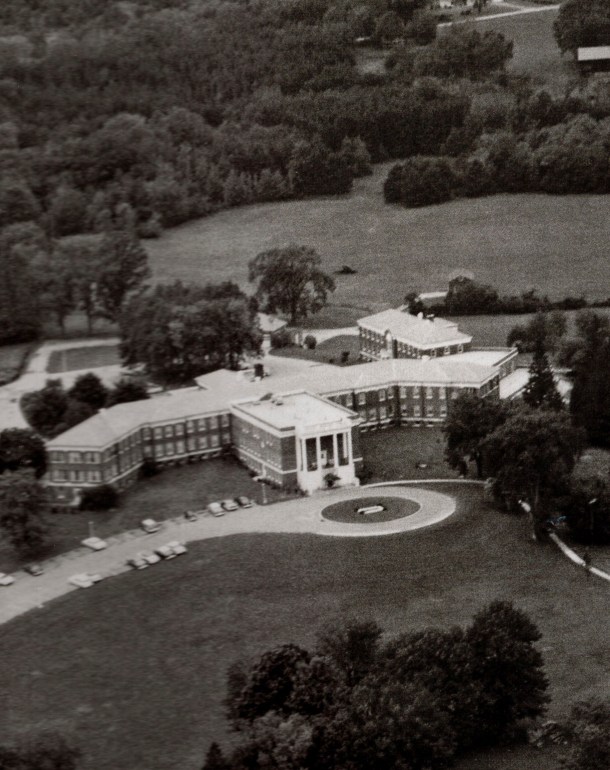
Mary Baker was selected as superintendent two years before the hospital opened. During her 25 years at the helm, she oversaw five building expansions and struggled with financial difficulties, such as mounting “charity” cases as the Great Depression wore on, and a disastrous fire in 1932 that closed the hospital for a year.
Baker managed the hospital and the nurses, who lived on the campus and worked long hours, with famously close attention, also finding time to plant flowers and tend to a vegetable garden on the grounds. She made it a point to visit every patient every day, totaling up an estimated 26,612 personal visits from 1918 through 1943, Resch writes.
A new era of growth
Robert Stout, who took over during the first years of the Kennedy administration, captured the idealism of the time by ushering in what was considered “a golden era for hospital administration,” both in terms of physical expansion and equipment but also in rapid improvements in the quality and training of the hospital staff, attracting young physicians from elsewhere with the allure of Vermont’s lifestyle, Resch writes.
Among the numerous building projects during the expansion years from 1974-91 were an 85,000-square-foot West Wing project that doubled the size of Putnam Hospital, the first phase of a medical offices building adjacent the hospital and development of the SVHC Regional Cancer Center.
The next long-serving CEO, Harvey Yorke, began in late 1991 and “by 1993 his vision had expanded into a grand — some would say grandiose — ambition that Bean and Davidson surely would have applauded: ‘To make our communities the healthiest in the nation,'” Resch writes.

He formed what was called “The Vision” for the organization, which included universal access to a continuum of care; access to the system through a primary care provider; a centralized computer system to share information and measure outcomes; a network operated at the local level; financial accountability to members; and incentives and education to promote a healthy lifestyle.
Quality of care statistics showed improvement during this period, such as in a 1999 top ranking in a Press Ganey Associates Inc. survey of 454 hospitals nationwide in patient satisfaction, waiting times and communication with patients and families.
In 2000, the corporate entities of the entire health care organization were reformed as Southwestern Vermont Health Care. The medical center had received its current name in 1984.
The financial crisis that led to the ouster of Yorke and other top administrators in 2009 occurred during the Great Recession amid changes and new financial complexities in health care that led to deficits at a number of hospitals, including the former North Adams (Massachusetts) Regional Hospital.
Mark Novotny, the chief medical officer then serving as interim CEO, had to oversee a reduction in staff costs and take other steps to slash the deficit. A national search for a new CEO was launched, and Dee was chosen from among 300 candidates and six finalists.
The new administrator pursued several initiatives that helped stabilize the institution’s finances, including exploring an affiliation with another institution, establishing a hospital foundation board separate from the board of trustees to concentrate on fundraising, and expanding and reviving the SVHC board, Resch said.
SVHC’s reach also continued to expand through the county into other states, including expansion of a clinic in Wilmington, a new Pownal primary care office, enhanced facilities in the Northshire, and in a satellite clinic in Hoosick Falls, New York.
SVHC also now has a 2020 plan, which envisions partnerships and collaborations with organizations such as United Counseling Service and further affiliations with Dartmouth-Hitchcock.
Dee has said major investments in the health care system here are under consideration that would extend beyond 2020, including expanded or renovated facilities and technical improvements, including remote video consultation with physicians at Dartmouth-Hitchcock Medical Center and elsewhere.
Copies of the newly released book, “A Century of Caring – From Hospital to Heath System: The story of Southwestern Vermont Health Care,” are available for $50 at the Bennington Museum and at the medical center gift shop.

