

The first in-depth survey of those enrolled in Vermont’s medication-assisted treatment program for opioid addiction shows “dramatic reductions” in drug use, overdoses, hospital visits and arrests.
The study, based on interviews with 80 people, also found improved “family life, housing stability and emotional health” among those who are participating in the state’s hub and spoke program.
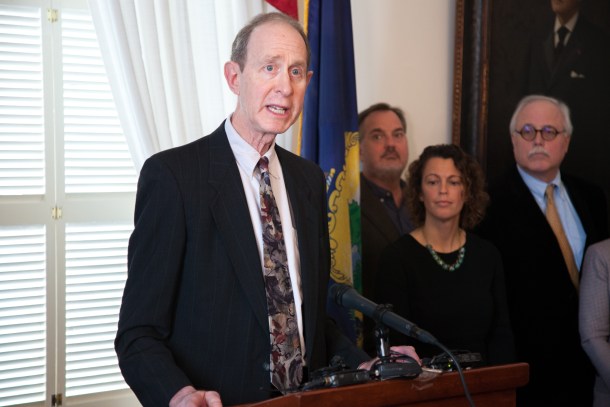
The report also makes recommendations for improvement, and state health Commissioner Mark Levine said he’s taking those seriously. But one of those recommendations – adding more hubs – is not an immediate priority for the health department because there is “very little in the way of wait lists,” Levine said.
“We’re actually meeting demand in our current, existing hub structure,” Levine said.
Medication-assisted treatment is one response to the opioid epidemic that has been claiming an increasing number of lives in Vermont.
There were 106 “accidental and undetermined” opioid fatalities statewide in 2016, a 41 percent increase from the year prior, according to a Health Department report. The 2016 rate equates to 16.9 fatalities per 100,000 Vermonters.
The latest statistics show 72 opioid deaths in 2017 through September.
Officials introduced the hub and spoke model for treating opioid addiction in 2013 and fully implemented it the following year.
The program currently consists of eight geographically distributed “hubs,” which are outpatient programs that dispense buprenorphine and methadone. There also are 77 “spokes” – physician offices that offer less-intensive medication-assisted treatment.
Enrollment in both portions of the program has been growing steadily.
State statistics show the hub census now approaching 3,500; it was less than 2,000 in January 2014. The spoke census topped 2,500 in early 2016 and has stayed there since.
The job for Richard Rawson, a professor at the Vermont Center on Behavior and Health at the University of Vermont, was to look beyond general statistics and conduct a “patient-centered evaluation” of the hub and spoke program.
Rawson surveyed 40 patients receiving methadone from hubs and 40 who get buprenorphine from spoke facilities. While participants were “self-selected,” they were divided evenly between male and female and were from all regions in the state.
They also had substantial histories of addiction and treatment: On average, participants had been using opioids for 14 years and had been in treatment for 30 months.
As a comparison, Rawson questioned 20 opioid users not currently enrolled in medication-assisted treatment. Half of those had received treatment in the past.
There are stark differences between those who are in treatment and those who are not, according to Rawson’s report.
The treatment group reported a 96 percent drop in “average days of opioid use” when comparing the 90 days before entering treatment and the 90-day period prior to Rawson’s interview.
Additionally, 20 people from the in-treatment group said they had overdosed at least once in the 90 days before joining the program. But the entire group reported zero overdoses in the 90 days before participating in Rawson’s survey.
The study also found that those in treatment had “large and statistically significant” reductions in “emergency department visits; illegal activities and arrests/contacts with police; and days of family conflict.” And there was reduced depression, anxiety and anger among the group.
Additionally, program participants reported less alcohol, tobacco and “illicit drug” use, though marijuana use did not decline significantly.
In contrast, the out-of-treatment group “showed no statistically significant change … in any measure of functioning, including drug use, over a 12-month period,” the report says.
“Although there is still work to be done, there is no question that the services provided within this model have saved many lives and have allowed many Vermonters to discontinue opioid use and improve their lives,” Rawson wrote in summarizing his findings.
Levine said “the first real, well-done, organized study” of hub and spoke participants suggests that the program is “beginning to bend the curve against the opioid epidemic.”
He also said he was not surprised by the results. “This study essentially validates what we’ve known about opiate-use disorder and medication-assisted treatment,” Levine said.
While offering praise for the state’s efforts thus far, Rawson offered a list of recommendations for the future. Those were in part based on concerns raised by patients; their family members and significant others; Vermont Blueprint for Health program managers; and spoke staffers who were contacted for the study.
The report’s top two recommendations are “continue to increase spoke capacity” and “add hub locations or medication units to improve access and reduce high clinic censuses.”
“The Blueprint for Health managers and spoke staff interviewed reported that many opioid users in Vermont were not accessing treatment due to distance and other logistical issues,” Rawson wrote.
Levine said he understands that “the geography of Vermont can make it very challenging to get to a hub.”
But he said the department has drastically reduced wait lists for hub treatment. For example, after last year’s opening of a new hub in St. Albans, “the wait list went to zero” in that area, Levine said.
Levine said the Rutland hub still is “somewhat stressed,” and a department report last fall found a 35-person wait list in the Rutland/Bennington area. But Levine said administrators now are making contact with and prioritizing every person who seeks treatment there.
“That hub has been very effective at managing that list now,” Levine said.
In addition to increasing access to the hub and spoke system, Rawson also thinks the state should be providing patients with more mental health and vocational services.
Levine said everyone who enters the hub and spoke program has “access to a licensed drug and alcohol abuse counselor and, if needed, a mental health physician.”
Those with more severe mental health issues may need to seek more intensive treatment elsewhere, Levine said. But he also acknowledged that state officials “need to have more emphasis on connecting people with mental health” within the hub and spoke system.
On the vocational front, Rawson’s report found that, for the in-treatment group, “the only measured domain that did not show positive change over the treatment period was employment status.”
Levine said there’s already action on that front. Gov. Phil Scott’s Opioid Coordination Council issued a report this month, and one of the council’s recommendations is ramping up employment-support services in order to “expand the number of Vermonters in recovery who have a job.”
Looking beyond Rawson’s report, Levine said his goals in the fight against opioid addiction include connecting more Vermonters to treatment services when they need it.
In a visit to Vermont last year, a top federal drug official estimated that eight out of 10 people who are addicted to opiates don’t seek treatment.
“We’re only treating the people who actually said to us, ‘We want to be treated,’” Levine said. “A big challenge for us to get (more) people in with the promise of a better life, and how do you accomplish that?”
Levine said he also wants to boost the state’s addiction-prevention efforts.
On another prevention-related note, a recent report from Blue Cross Blue Shield of Vermont indicates that the state’s new limits on painkiller prescriptions is having a big effect on the number of such pills distributed in the state.
Since the rules went into effect July 1, the “average number of opioid pills dispensed to (Blue Cross Blue Shield) members each month has fallen 25 percent,” the insurer says.
Blue Cross Blue Shield estimates that is members will get 672,000 fewer opioid pills annually due to the state’s new rules.
