



Like many Vermonters, Dan Egan grew up playing in and around water.
This was in Green Bay, Wisconsin, in the early 1970s, and Egan enjoyed roaming with his older siblings at the Fox River a few blocks from his house.
But his parents soon put an end to it.
“I had two older brothers, and we used to catch some hell from my parents for playing around near the river,” Egan said, “not because they were afraid we’d fall in and drown, but because it was like playing at the dump.”
This was a few years after the Cuyahoga River, another Great Lakes tributary, caught fire in Cleveland in 1969. Cleveland’s mayor at that time, Carl Stokes, declared a “war on pollution.”
Today, the raw sewage and industrial waste that once polluted the Fox River have largely been diverted, but Stokes’ war has not yet been won.

The Great Lakes are polluted in the same way Lake Champlain is: Bacteria that can photosynthesize, called cyanobacteria, feed on phosphorus in the lakes, multiplying until large areas of green and toxic algae cover the lakes.
The source of the bacterial blooms is also the same: Phosphorus from fertilizers farmers spread on their fields. Other sources like wastewater treatment plants and runoff from paved surfaces contribute, but farms are the primary source of phosphorus pollution, both in the Great Lakes and in Lake Champlain.
Government regulation curbed the effluent from other industries that long polluted the Great Lakes and their waterways, Egan said. He argues it will again take government regulations to slow or stop pollution from farms.
Egan is not a scientist, he is a two-time Pulitzer Prize finalist who is a reporter with the Milwaukee Journal Sentinel. Egan spoke last week before a crowd of scientists attending a Lake Champlain research conference at the University of Vermont.
His new book, “The Death and Life of the Great Lakes,” describes a sequence of endemic woes and unlikely fixes over the past century that have affected 94,000-square-mile watery ecosystem.
Many of the challenges the Great Lakes states grapple with are similar to ones the Green Mountain State residents face. They include invasive species, agricultural runoff, cyanobacteria blooms and foot-dragging by politicians.
Egan said that as the work of a journalist, not a scientist, the book is meant to communicate what scientists have already learned. He hopes to help Americans demand action from political leaders.
“My job is to take the work that people like you do, and try to get it out into the public realm so people understand what is going on, and that can feed more funding for more research, and that can also lead to some kind of public awareness that will demand a change, and I think that that is as necessary now as it was even 40 or 50 years ago,” Egan told the scientists.
The need to act is urgent, Egan said, because a host of contributing ills — most if not all preventable, he said — are speeding the spread of cyanobacteria and bringing other marine changes that likely carry consequences of which we aren’t yet aware.
Industrial farming is the primary contributor to the bacterial blooms, but invasive species and global warming are responsible for conditions that encourage larger and more persistent blooms, Egan said.
Zebra and quagga mussels are invasive species that, one after the other, carpeted the Great Lakes soon after appearing there in the late 1980s and early ’90s. So far only zebra mussels have done the same in Lake Champlain, but the quaggas are poised for a takeover, Egan warned.
Both types of mussels eat nontoxic species of cyanobacteria, but not the toxic type, which means their selective eating habits actually promote the dominance of the toxic cyanobacteria when bacterial blooms form, Egan said.

In addition, the mussels have vastly increased the clarity of the Great Lakes by devouring native plankton. That allows sunlight to pierce into deeper waters, encouraging the one type of bacteria that can photosynthesize — cyanobacteria — to flourish on an even greater scale, Egan said.
Foreign organisms are brought into the Great Lakes inadvertently in the ballast water of seagoing vessels from all over the globe, Egan said. More than 168 invasive species are already documented in the lakes.
He sees a simple way to prevent more from invading: Close the lakes to oceangoing vessels. A single locomotive could haul the same freight that all the ships combined carry each day through the St. Lawrence Seaway, the network of canals and rivers that links the Great Lakes to the ocean, Egan said.
The seaway brings in $55 million annually, Egan said, but the Great Lakes fisheries that it threatens bring nearby regions $4 billion to $7 billion each year.
But politicians refuse to close the seaway, he said.
Meanwhile, the farming industry has doubled the amount of phosphorus it sends each year into the Great Lakes since the 1990s. That has spurred worsening annual blooms of toxic cyanobacteria.
In 2014, a cyanobacteria bloom in Lake Erie made Toledo’s municipal water supply undrinkable for days. City officials told residents they could suffer liver damage and experience nausea and numbness if they drank the water.
“People thought that would wake people up, but it hasn’t,” Egan said.
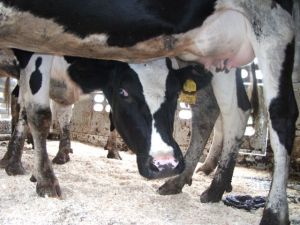
Farming continues in the Great Lakes watershed, regulators continue to approve ever-larger farms, and the entire affair, Egan said, remains “woefully unregulated.”
Like Vermonters, Wisconsin residents value their dairy industry, and when dairies flourish, “that stuff flows downhill,” Egan said.
“It’s just common sense: You can’t overload a system like that,” he said.
Climate change will probably worsen the situation, he added.
Runoff from rain carries phosphorus from farms into rivers and lakes. Because warm air can hold more water vapor, global warming is expected to result in more intense rainfall, increasing the migration of agricultural pollution from fields into lakes, Egan said.
In the end, he said, the fate of the lakes rests in the hands of politicians. It’s up to Americans with a stake in the future of the lakes to force politicians to act, he said.
“It’s important that (children) have a relationship with the lake, whether it’s fishing or swimming or whatever, because you need people to care about the lakes in order for them to demand politicians to take the necessary steps to care for the lakes,” Egan said.
“Which brings me to the question: Is Lake Champlain a Great Lake, or a pretty, pretty great lake, or a good lake? I don’t care. It doesn’t matter. What matters is: The same issues facing the Great Lakes are facing Lake Champlain, and the more people realize this, and the more people start working together, the better the likelihood that we’re going to get the funding, that we’re going to get the political attention, that we need.”
