

[T]he agencies responsible for overseeing the universal pre-kindergarten program in Vermont are recommending changes to the way it is paid for and administered.
A division of the Agency of Human Services jointly administers the program with the Agency of Education. At an education summit this week, Education Secretary Rebecca Holcombe and Human Services Secretary Al Gobeille said they will ask lawmakers to put the Education Agency in the lead when contracting and paying for pre-K programs.
A system run by two agencies wasn’t working, according to Gobeille.
“We made the decision together that AOE is in the best position to take the lead,” he said.
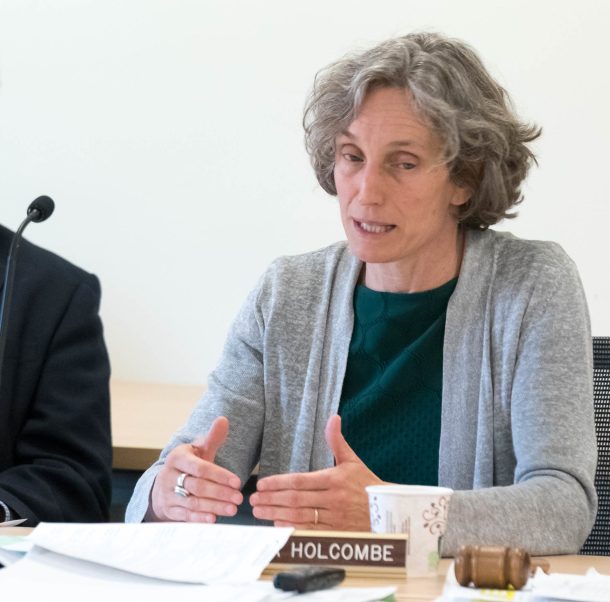
“We are responsible for the (education) fund,” said Holcombe, adding “these 10 hours are distinct from child care and are meant for education.”
Under Act 166, the universal pre-K law, both agencies are responsible for making sure 3- and 4-year-old children get a voucher for 10 hours of early education delivered by a qualified teacher 35 weeks a year.

“The dual oversight issues created lots of problems,” said Rep. David Sharpe, D-Bristol, who chairs the House Education Committee. Last session, the committee tried to get legislation on the floor that would have put the Education Agency in charge of pre-K programs in public schools and the Child Development Division at AHS in control of care centers and other private programs.
A law passed this year asked the two agency heads to work out a path forward. The recommendations this week came after months of meetings, according to Gobeille.
The additional administration duties caused by Act 166 have cost school districts about $4 million, according to Holcombe. Some supervisory unions had contracts with 40 or 50 pre-K partners, and many pre-K partners had contracts with multiple school districts.
There was a lot of duplication and overlap, causing confusion, according to Gobeille.
The agency heads were looking for a way to reduce that cost and burden while keeping options open for parents where to place their children. Holcombe said it will be easier and less expensive if the state contracts directly with the private providers. The program is paid for from the education fund.
Centralizing accounting will “substantially reduce the burden” on everyone, Gobeille said.
Jeff Francis, executive director of the Vermont Superintendents Association, called the decision a step in the right direction, but details will need to be worked out. “The implementation has not been smooth, and until the administration of the law is led by a single agency, it is hard to make any evaluation of how well the law is going to work as written,” he said.
Aly Richards, head of the Permanent Fund for Vermont’s Children, an advocate for quality, affordable child care and early learning, said the organization supports the recommendations.
“We are hopeful it will streamline the administrative burden from the field. Our interest is in making sure as many kids as possible get access to pre-K and it’s an effective and efficient system,” she said.
