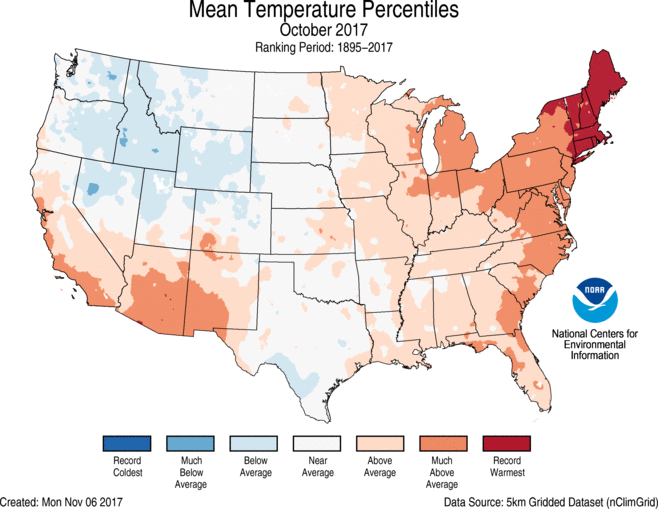
[V]ermont just experienced its warmest October on record, according to the National Oceanic and Atmospheric Administration.
With an average temperature of 52.9 degrees, October exceeded the average of 45.2 degrees for that month in Vermont by 7.7 degrees.
Much of the rest of New England also experienced record heat.
Continued record high temperatures are a virtual certainty, according to a report published this month under the aegis of a bevy of federal agencies including NASA, the EPA, the Department of Commerce and the Department of Energy.
The report, which is required by an act of Congress and is the fourth of its kind, portrays a grim outlook for a global phenomenon driven overwhelmingly by China and the United States.
“The frequency and intensity of extreme heat and heavy precipitation events are increasing in most continental regions of the world (very high confidence). … The frequency and intensity of extreme high temperature events are virtually certain to increase in the future as global temperature increases (high confidence),” states the U.S. Global Change Research Program’s “Climate Science Special Report.”
Temperatures globally could average 9 degrees more than was seen in the pre-industrial era, with potentially disastrous consequences, the report says. There is little convincing evidence this phenomenon is being driven by forces other than human activity, it says.
Ski area operators are beginning to spin lifts in the state this week, and as in previous years they’re taking the unseasonable temperatures in stride.
“It hasn’t really impacted our operating plan,” said Sugarbush owner Win Smith.
“In some ways it’s helped,” as the sunny fall days made it easy for resort staff to prepare for opening, Smith said.
Sugarbush has consistently experienced warming temperatures since the early 2000s, Smith said, but that doesn’t necessarily hurt resort operators.
Most resorts make the bulk of their profits during a few key holiday periods, Smith said, around Christmas, Martin Luther King Day and President’s Day. Warm weather leading up to and following these holidays isn’t necessarily going to hurt a resort’s bottom line, he said.
“We tend to lose money until Christmas and lose money after March,” Smith said. It’s mainly employees and the “die-hard skiers” who are hurt the most by a shrinking winter season, he said.