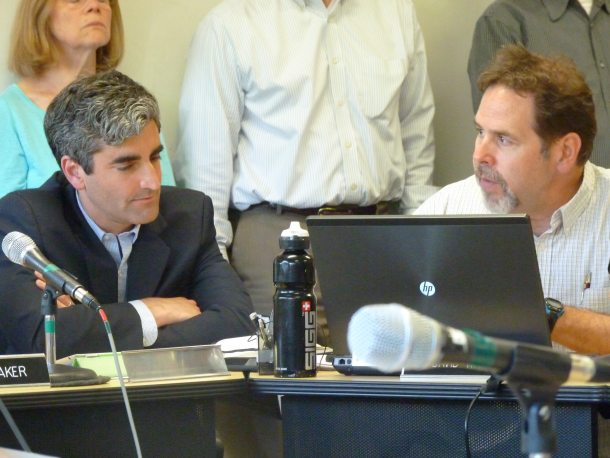
[B]URLINGTON — One year after launching monthly meetings of department heads to track and analyze performance data, the city is launching a website to share that information with the public.
The meetings, known as BTV Stat, follow the model pioneered by agencies like the New York Police Department and cities like Baltimore. Burlington and regional allies have applied the same model to tackling the opioid crisis through the Chittenden County Opioid Alliance.
Mayor Miro Weinberger touts the model and the monthly meetings as an opportunity for problem solving, with city leaders asking hard questions of each other and holding one another to account.
The new online dashboard is intended to further increase accountability, the mayor said.
“I look forward to the public using the new BTV Stat dashboard to engage with the data we have collected and to track our progress,” he said.
At Tuesday’s BTV Stat meeting, Code Enforcement Director Bill Ward gave a presentation on the metrics he’s tracking. One slide in his presentation showed an increase in the number of disconnected smoke detectors found during inspections.
That led to a discussion of how Ward and his team could reach out to landlords about a problem tenants may be slow to report.

Each department has made at least two presentations at BTV Stat meetings in its first year, Weinberger said, with some departments that are tackling large and complex problems or new initiatives making as many as four.
On Tuesday the group also discussed the city’s use of the website See Click Fix to collect reports of problems and requests for city services, from cleaning up graffiti to reporting potholes and illegal trash dumping.
Data from September showed 15 requests for service related to potholes, with 10 of those requests closed out in an average of 11 days. The city had set a goal of resolving those requests in seven days. Weinberger wanted to know why that target was being missed.
Public Works Director Chapin Spencer, whose department is in the midst of greatly expanding its use of See Click Fix, said that currently reports of “pot holes” are a catchall for road problems because there are limited fields for reporting road paving issues.
Some of the reports that come in as potholes are actually larger structural issues that take longer to resolve, Spencer said. The metrics are likely to improve when the department completes its expansion into See Click Fix, he said, because there will be several fields within the pothole category to more accurately reflect reports.
A larger issue that will need to be addressed is that although See Click Fix is a great tool for gathering service requests, Spencer said, it’s not an asset management platform, meaning it’s not a tool for allocating resources.
Beth Anderson, the city’s chief innovation officer and interim chief administrative officer, said there are 11 different asset management programs in the city, some of which aren’t organized through a digitized system.
Spencer said bringing asset management protocols into a more unified, streamlined system would help Public Works respond more efficiently to service requests.
Weinberger, who peppered his department heads with questions throughout the meeting, said he wasn’t aware of the need to streamline asset management.
He asked Spencer and Anderson to compile a report on the issue with steps that can be taken to address it.