

But some see the process of developing a recommendation for the governor as skewed toward one vendor and lacking in needed information.
Up for debate among members of Vermont’s Public Safety Broadband Commission is whether to urge Scott to sign on with an agreement struck earlier this year between the federal FirstNet program and telecom giant AT&T. The alternative is for Vermont to take up to $25 million in federal grant money and strike out on its own.
Here’s why it matters: A Vermont version of the national FirstNet project is expected to involve spending tens of millions of dollars on expanding broadband and cellphone networks in the state during the next 25 years. The winning bidder will get to use a valuable and until now reserved portion of the telecommunications spectrum, and could see a bump in subscribers as users such as police officers and volunteer firefighters switch to the chosen provider.
For the state, there’s an opportunity to expand broadband and cell service in areas where it’s currently spotty.
Rep. Robin Chesnut-Tangerman, P-Middletown Springs, and a member of the House Energy and Technology Committee, said in an interview that what AT&T is offering may be better suited to large urban areas than to Vermont.
Planning for FirstNet has been percolating for two years and intensifying in the past few months. Among recent developments:
• Vermont received its “state plan,” an outline of the services AT&T and FirstNet are offering, in late September; a 90-day review period began Sept. 28. It is slated to end with Scott announcing his opt-in or opt-out decision in late December. Some have criticized information about what AT&T is offering as vague and have sought – unsuccessfully so far – to see a copy of the contract between AT&T and FirstNet, a program of the U.S. Department of Commerce.
• One piece of information that has emerged is that AT&T was initially offering to provide “deployables” – trucks with mobile cell towers – for use in emergencies in remote areas. It said it could get such a truck to the scene of an incident within 14 hours. Terry LaValley, director of radio technology services for the Department of Public Safety and chairman of the state broadband commission, called that unacceptable. He said in an interview last week that the state had been negotiating with AT&T and had gained assurances of a quicker response time. How much quicker he would not reveal, saying he didn’t want to upset the negotiations.
• The Public Safety Broadband Commission voted in July to seek alternative proposals from other vendors to inform its decision on a recommendation to the governor. Three proposals also arrived Sept. 28.
• The state was notified recently that if it chooses to opt out and find its own vendor to build the next generation of public safety communications networks, it will be eligible for up to $25 million in federal grant money to help pay for the work.
• Meanwhile, in New Hampshire, the Statewide Interoperability Executive Committee, the Granite State’s analog to Vermont’s broadband commission, voted Thursday to recommend to Gov. Chris Sununu that New Hampshire take its share of federal money and find its own vendor. John Stevens, chair of the New Hampshire committee, said the state would continue to work, as it has been, with a company called Rivada Networks, if the governor agrees to opt out of FirstNet. It wasn’t immediately clear what impact, if any, New Hampshire’s vote could have on Vermont.

He said one reason Vermont might want to go it alone could be a wish simply to expand cellphone coverage to rural areas, so first responders have better communications there. America’s big cities are more likely focused on data, he said; for example, transmitting to first responders the floor plans of buildings where disasters might be unfolding.
He said there does not appear to be a level playing field for opting in or opting out of the AT&T proposal. “What I’m afraid of is we’ll just kind of say, ‘Oh, yeah, this sounds good,’ and we’ll let AT&T develop a plan,” one that could come with “serious shortcomings and doesn’t really meet the needs of Vermont.”
LaValley, chair of the broadband commission, agreed that it might be simpler for Vermont to opt in with the FirstNet AT&T plan. He said that as currently structured, that path could save Vermont in the long run, since it wouldn’t end up with the federal grant money running out and Vermont needing to start spending state money.
“We always worry about this total cost of any project. (The AT&T FirstNet proposal) is an offer that has been submitted that has no cost to the state,” he said.
One sign of something other than a level playing field: If the state opts out and pursues a deal with a vendor other than AT&T, state law would require an independent expert review of what that vendor is offering before a contract is signed. Vermont won’t be able to apply that same standard to AT&T if it opts in, officials said.
But LaValley said no one should expect something like a level playing field between competing bidders. While opt-out bidders would be looking to contract with the state, AT&T is working with the federal program. “AT&T is not bidding on anything with the state of Vermont,” he said.
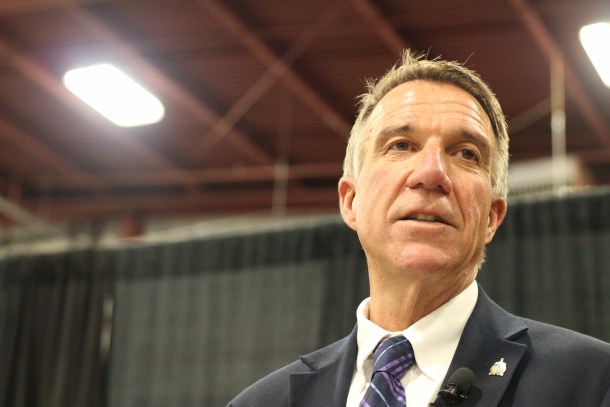
As for Scott, his spokeswoman, Rebecca Kelley, said last week that the governor will delve into the issues after he gets the recommendation of the Public Safety Broadband Commission – which LaValley said likely will come in November.

