[B]RATTLEBORO – When someone asks Brandie Starr for money on the streets of Brattleboro, she often offers to buy the person a sandwich.
“I’ve never had anybody turn me down,” Starr said. “I usually buy a sandwich, a bag of chips and a drink. And sometimes a brownie, because everybody needs a brownie.”
But Starr, a Brattleboro Selectboard member, knows that not everyone can be so accommodating – especially if they’re trying to run a small business and fear that panhandlers are driving away customers.
That’s why she and other Selectboard members are searching for ways to deal with what some say is an increasing panhandling problem in downtown Brattleboro.
Having tried unsuccessfully to deal with the situation in the past, officials now are considering solutions including a police/social services “outreach team” as well as a jobs program that could follow an example set by other municipalities.
“Regardless of your personal opinion on the topic … it’s enough of a legitimate concern to enough of our community that I think we, as a Selectboard, should try once again to give it some attention,” Selectboard member Tim Wessel said.
While panhandling is a concern, it’s difficult to determine the extent of problems. That’s one reason representatives of the Downtown Brattleboro Alliance and Brattleboro Area Chamber of Commerce are planning a survey of downtown businesses and residents.
The goal is “to really get some numbers, if we can, about the frequency of panhandling and/or harassment,” said Michelle Simpson-Siegel, the alliance’s board president.
Anecdotally, though, some say the situation seems to be getting worse. “Our merchants are having to ask people to leave their stoop, their storefront, daily,” Simpson-Siegel said.
While poverty is a complex social issue, “crippling our downtown businesses and crippling the downtown economy does not help this issue,” she told Selectboard members during a recent meeting. “It is not a news flash to anyone here that people panhandling in storefronts deters customers from entering the stores.”
Brattleboro resident Dick DeGray, whose wife owns a Main Street business, said panhandling is most common in high-traffic areas such as the Harmony Lot and the Main Street bridge near the Brattleboro Food Co-op.
“When you’re walking around downtown, you can get hit five or six times,” DeGray said. “If you wonder if that’s not having an impact, it is.”
DeGray said aggressive panhandlers cause safety concerns and that the resulting word of mouth could hurt downtown businesses.
Not everyone sees it that way.
“I don’t really look at it as a problem. It’s just part of the community,” Brattleboro resident Tom Zopf told Selectboard members. “You’re going to have some people who don’t have income, they don’t have a home, they don’t have places to stay. But they’re still our neighbors.”
Zopf is a board member at Groundworks Collaborative, a Brattleboro social service organization where staffers conducted a brief survey of those who panhandle. While the number of respondents (eight) is too low to be statistically significant, that survey underscored the complexity of the issue.
Panhandlers generally were homeless or “housing insecure,” with “limited or no natural supports to fall back on” in terms of friends or family, said Groundworks Executive Director Josh Davis.
The respondents said they brought in about $20 a day on average, and they spent it on a diverse list of items including food, beer, cigarettes, phones, drugs, socks and camping gear.
Overall, “no one reported enjoying or even liking panhandling,” Davis said. And they generally said they were interested in work, if it was available.
Wessel acknowledged there is “a huge amount of backstory” for each person asking for money on the street. Poverty, health care, mental health and drug use all can be part of that narrative, he said.
So Selectboard members are trying to take a cautious, multifaceted approach.
“I’d like to approach this issue with compassion both for our neighbors we see on the streets and for our neighbors who are the merchants who keep our downtown vibrant,” Wessel said.
One thing the Selectboard won’t be doing is crafting any new “anti-begging” ordinances.
But the Vermont chapter of the American Civil Liberties Union has said anti-panhandling laws could conflict with the First Amendment. And Brattleboro officials say they’ve already got a similar ordinance that is “unenforceable” for the same reason.
Nevertheless, Davis believes the town has “choices and options in terms of strategies and solutions.”
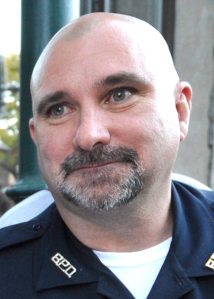
One possible solution is an outreach team Fitzgerald proposed. The team could include police officers, a mental health provider, recovery specialists “and maybe even a volunteer that formerly was a panhandler,” the police chief said.
The team would approach panhandlers “to build relationships, while informing them of the various resources and assistance that is available to them, with the goal of making them self-sufficient and improving the quality of life for everyone downtown,” Fitzgerald said.
That idea won praise during the Selectboard’s debate, as did Davis’ proposal to look into a program offering panhandlers temporary employment. Other cities have begun giving people on the street “a job for the day, typically around beautifying public spaces, in exchange for a day’s wages and food,” he said.
Davis believes that could be beneficial for the town and for the employee. That’s what officials in Portland, Maine, are finding since they launched an employment pilot program called the Portland Opportunity Crew this spring.
The program offers panhandlers money to clean up public land while connecting them with services like job training. The city hires up to five people a day, two days a week, and pays $10.68 an hour.
“So far, we’ve had a total of 10 different participants,” said Jessica Grondin, a spokeswoman in the Portland city manager’s office. “We’ve collected about 120 bags of trash. They’ve been able to hit some areas of the city that we don’t normally have the resources for.”
While the program ideally would decrease instances of panhandling in Portland, “the goal really is to reach people who have had barriers to finding employment or accessing other services that they qualify for, or accessing housing opportunities,” Grondin said.
The city budgeted about $42,000 for Portland Opportunity Crew’s initial 36-week run and is soliciting donations to bolster the program. Such an investment may not be feasible for Brattleboro, where Selectboard Chairwoman Kate O’Connor said the town “does not have money to put toward the issue, at least for now.”
But Brattleboro officials are pledging to take action using whatever resources are available.
“We’re all committed to moving something forward,” O’Connor said.