

BENNINGTON — Bennington officials want to expedite creation of a tax increment financing district now that the state has opened the door to more use of the mechanism meant to attract development.
A first meeting of town staff, local officials and consultants is expected before the end of June.
Assistant Town Manager and Planning Director Daniel Monks briefed the Selectboard this week on the layered process of applying for a TIF district and bonding for infrastructure improvements within the designated area to spur private development.
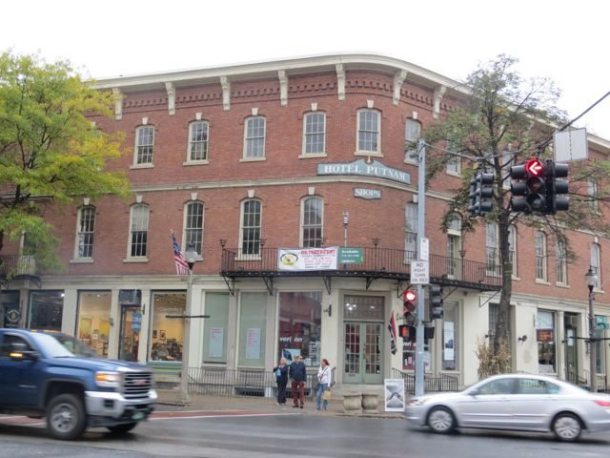
In Bennington’s case, Monks said, officials hope to expedite the lengthy application process in time to assist a proposed $54 million-plus redevelopment of several downtown buildings and lots around the former Putnam Hotel at the intersection of Vermont Routes 7 and 9.
Language allowing up to six new TIF districts in Vermont passed the Legislature this year, but it doesn’t go into effect until Gov. Phil Scott and legislative leaders agree on a budget for the next fiscal year.
A special session to deal with the budget and other legislation Scott vetoed is set to start Wednesday.
Monks said White & Burke Real Estate Investment Advisors Inc., of Burlington, which helped Bennington and several towns lobby for the cap on new TIF districts to be lifted, will compile studies and other documentation about the town and the proposed area of the district prior to a meeting here later this month.
He said members of the Selectboard, other town officials and staff will huddle with the consultants to begin answering questions like “what is Bennington’s TIF story? (and) why do we need this tool?”
With a TIF district in place, a community can issue bonds for infrastructure improvements expected to encourage private development. The municipality can then pay off the bond using a portion of the resulting increased tax revenue — money that otherwise would have gone to the state education fund.
The town will apply for a district designation and ultimately for project and bonding approvals to the Vermont Economic Progress Council, which issues TIF approvals and annually reviews progress toward the financial and other goals of the projects.
“We want this to be as open as possible,” Monks said of the application process. “We want everyone to understand how it works.”
The final steps in the process include approval by town voters.
At some point, there will be a tour of district sites for stakeholders, Monks said, and each aspect of the district plan will be analyzed by the consultants, town officials and the council. Those include determining the exact boundaries of the district — which properties should be included — current and projected property values with redevelopment, tax increase projections and bond payment estimates for the infrastructure work.
Monks said examples of work a town might bond for include street reconstruction, sidewalk or streetscape projects, utility work and parking expansion or improvements. He said a community would likely look to a private developer to fund an entertainment venue, housing, retail or similar projects.
He said that, for instance, St. Albans erected a parking garage that led to expansion of a local company and other private development in the downtown.
The council will hold at least three meetings on a TIF district plan, including one in the community and two others in Montpelier, he said.
Bennington isn’t alone in considering a TIF district. Newport, Rutland, Montpelier, Brattleboro, Springfield and St. Johnsbury have expressed an interest as well.
